Kilah Fox: Philadelphia’s Quietly Indispensable Comedian
In an industry that rewards loudness, Kilah Fox built a following by being absolutely, unmistakably herself.
Quick Facts
| Full Name | Kilah Fox |
| Birthplace | Philadelphia, Pennsylvania, USA |
| Nationality | American |
| Profession | Stand-up comedian, actress |
| Known For | Tires (Netflix, 2024–present), Gilly and Keeves (2020–2021) |
| Breakthrough Role | Kilah — Tires, Netflix |
| Major Awards | None on public record (as of 2026) |
| Charity Work | Camp Erin (grief bereavement camps for children) |
| Relationship Status | Private; unconfirmed |
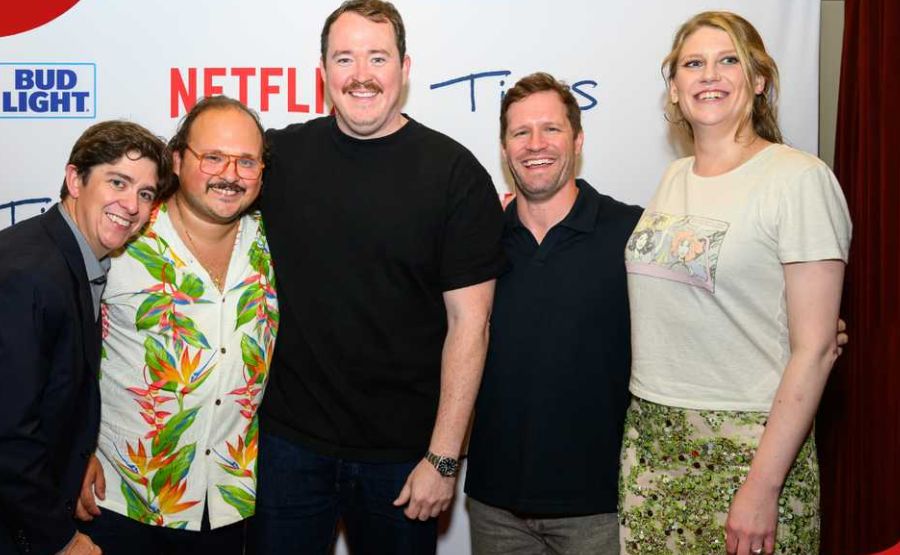
| Key Collaborators | Shane Gillis, John McKeever, Steve Gerben |
| Notable Trait | Competed in Junior Olympics for swimming; played varsity volleyball |
The Woman Behind the Cigarette
There is a particular kind of performer who survives not by dazzling audiences but by convincing them they’re watching a real person accidentally caught on camera. Kilah Fox is that kind of performer.
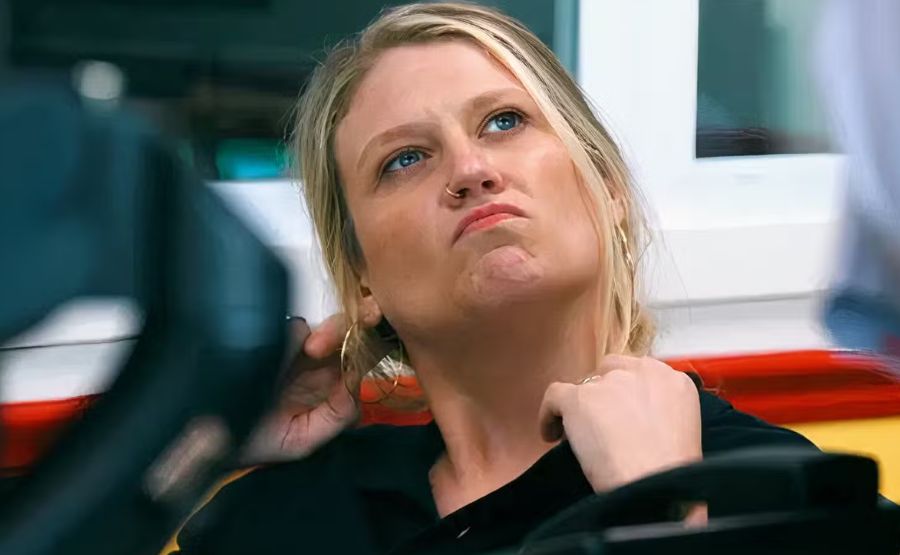
She arrived on Netflix in May 2024 as part of Tires, a low-budget workplace comedy set in the fictional Valley Forge Automotive Center outside Philadelphia. On paper, her character — a receptionist who smokes constantly, contributes minimally, and meets every managerial request with a stare of oceanic indifference — sounds like a throwaway part. In practice, Fox turned it into the show’s most reliable comic instrument.
Tires is now entering its third season in August 2026, renewed by Netflix before its second season had even finished its run. Fox has been there from the first episode. She didn’t arrive as a star. She arrived as someone who had spent years earning the right to walk into a room and own it without trying.
See also ”Selena Green Vargas: The Woman Behind the Meme, and What the Internet Owes Her”
Roots: Philadelphia and the Water
Kilah Fox grew up in Philadelphia, Pennsylvania — a city with its own accent, its own pace, and its own very specific brand of civic skepticism. She was raised, at least in part, through athletics. Her mother was a swimming coach, and Fox spent much of her childhood in the pool. She eventually competed in the Junior Olympics for swimming before pivoting in eighth grade to volleyball, which she played through high school.
The shift from swimming to volleyball was more than a scheduling change. Fox has described volleyball’s high-stakes team dynamics in vivid terms, recalling a championship match during her senior year when she was the only upperclassman on the squad. The pressure to lead younger players in a must-win game gave her an early lesson in composure under duress — a quality that would serve her well decades later in front of an audience.
What the sports record doesn’t show is what was happening simultaneously inside her. Fox has spoken openly about suffering panic attacks from childhood, triggered by seemingly ordinary things: thunderstorms, the feeling of getting ill, even the awareness that time was passing. By high school, those attacks had escalated into agoraphobia. She stopped leaving the house because the fear of having a panic attack in public was itself paralyzing.
It is one of the more striking contradictions in her story: a girl good enough at volleyball to lead her team in a championship, and simultaneously so afraid of the outside world she’d rather stay home. Both things were true at once.
Climbing Out: The Path to Comedy
How exactly Kilah Fox found her way to stand-up comedy is not something she has mapped out in extensive interviews. The public record thins considerably here. What is clear is that at some point after high school, she worked her way into the Eastern Pennsylvania comedy circuit — the loose constellation of clubs, open mics, and podcast recording sessions that runs from Philadelphia to its surrounding suburbs.
That world is small, insular, and intensely tribal. Comedians who come up together tend to stay together. Fox became part of a cohort centered on Shane Gillis and John McKeever, two performers from the same region who shared a sensibility: observational, blue-collar, unapologetically Pennsylvanian. She didn’t just watch from the edges. She performed alongside them, built her own material, and earned a reputation as someone with genuine instincts — a performer who could walk into a sketch and make every other person in the room funnier simply by reacting.
Those who encountered her in that period used language you don’t often hear about comedians: genuine, raw, unpredictable. A 2022 podcast description called her “easily the most genuinely raw humans you’ll ever meet,” noting she “could just as easily be the most charismatic person at the bar or she could be the reason a bar fight breaks out.” That dual quality — warmth and menace, likeability and unpredictability — became the core of what made her interesting to watch.
Gilly and Keeves: The Apprenticeship
Before Netflix, before Tires, there was Gilly and Keeves — a sketch comedy web series co-created by Shane Gillis and John McKeever that ran on YouTube from 2020 to 2021. Fox appeared in nearly half its ten episodes, taking on a range of recurring characters. Of the entire cast, only Gillis himself appeared more frequently than she did.
The sketches she inhabited weren’t principal roles. Fox typically appeared in a supporting capacity, and that positioning was almost certainly deliberate. Gillis occupied the center; Fox orbited it, arriving to detonate a scene and then withdrawing. But in that orbit, she demonstrated something more valuable than lead-character charisma: she demonstrated range.
In one sketch she played a devoted wife defending her husband’s bizarre OnlyFans enterprise against their horrified adult children. In another, she appeared as the sole “Lady Uncle” in a daycare for misogynistic uncles — handed a pack of cigarettes, a robe, and a window to glare out of. In a car dealership sketch built around an unfortunate business name (“ISIS Toyota”), her character’s solution to the PR crisis was to lean into it. The joke worked because Fox delivered it with total conviction.
These weren’t star turns. They were something more useful: proof of a comedian who could disappear completely into a premise and still be the funniest person in the frame.
Tires: Arrival on the National Stage
Tires began as a self-financed project. Shane Gillis funded the first season himself — six episodes, shot on a modest budget, set in a deliberately unglamorous auto shop. The show’s premise was modest too: a nervous, underqualified manager named Will tries to turn around a struggling family business while his obnoxious cousin Shane makes everything worse. Netflix acquired the series and it debuted in May 2024.
Within five days of its premiere, Tires reached number two on Netflix’s television Top 10 in the United States. The first season drew more than four million views in its opening days. Critics were mixed — the show’s Rotten Tomatoes Tomatometer score sat at a mediocre 58% — but audiences told a different story, awarding it an 89% audience score on the same platform.
Kilah Fox appeared in all six episodes of the first season as Kilah, the Valley Forge Automotive Center’s receptionist. The character did very little in a functional sense. She smoked. She glared. She offered comments that suggested she had long since abandoned any interest in the shop’s actual fortunes. And in that studied disengagement, Fox found something genuinely funny: the comedy of a person who has made a private peace with her own uselessness and defends it as a kind of dignity.
Season 2, which premiered on June 5, 2025, expanded to twelve episodes and brought in a parade of guest stars including Vince Vaughn, Jon Lovitz, and Ron White. Netflix renewed Tires for a third season less than a month after Season 2 debuted. Season 3 is scheduled to premiere August 13, 2026 — with Fox’s name among the core cast.
The critical reception to Season 2 was more favorable than Season 1, though dissenting voices remained. Some critics objected to the show’s masculine insularity and its treatment of female characters as peripheral figures. The A.V. Club’s review of Season 2 noted that Fox and another female character received more screen time than in the first season, while still observing that women in the Tires universe generally occupied a supporting orbit. It is a fair observation. Whether the show’s expansion in Season 3 addresses it remains to be seen.
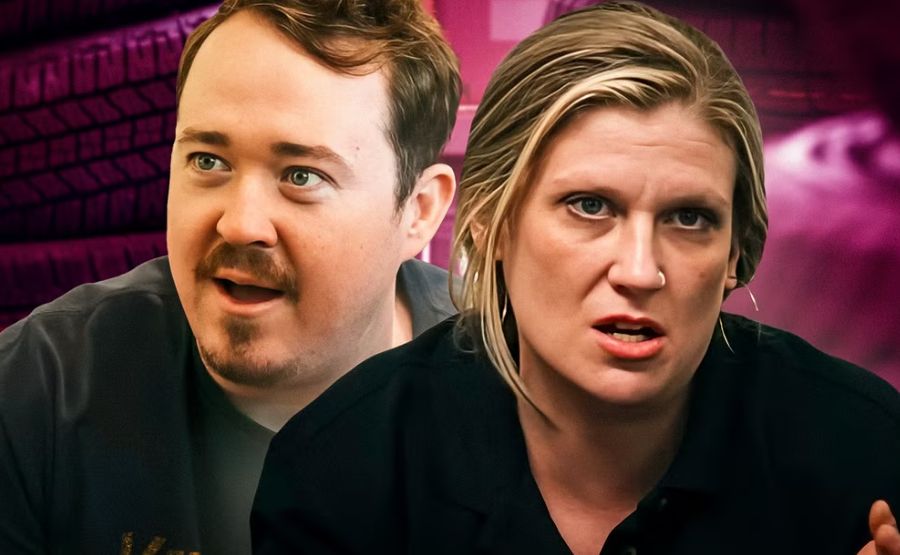
The Controversy Question: Comedy in a Divided Landscape
Any honest account of Kilah Fox’s career must reckon with context. Tires is a Shane Gillis production, and Gillis is one of the most polarizing figures in contemporary American comedy. He was famously fired from Saturday Night Live in 2019 — before his first episode aired — after old podcast recordings surfaced in which he made racist and homophobic remarks. He later hosted SNL in 2024 and 2025, with reception that remained divided.
Gillis’s work, including Tires, has been accused by some critics of functioning as “anti-woke” comedy — humor that positions itself against perceived cultural sensitivities and in doing so risks tipping into something less benign. These are legitimate critiques, and Fox’s continued presence in that orbit places her adjacent to that conversation.
Fox herself has not weighed in publicly on these broader arguments. She has maintained a low public profile that is notable given the visibility Tires has earned her. There are no documented statements from her on the controversies surrounding Gillis’s past, nor on the political interpretations of the show she anchors. Whether this silence reflects strategic positioning, personal preference, or simple disinterest in public discourse is not knowable from outside.
What is observable is that Fox’s character, as written and performed, doesn’t seem to carry ideological weight. Kilah is not a symbol of anything. She is just a person in a car shop who doesn’t care very much — and Fox plays that disengagement with a specificity that feels earned rather than invented.
Personal Life: What Is and Isn’t Known
Kilah Fox guards her private life with notable consistency. Her relationship status has generated speculation online — Reddit threads have linked her romantically to a comedian known as “Beezer” (Brian Six), based on podcast appearances and social media adjacency — but no public confirmation of any relationship exists. Fox has never addressed these theories.
What she has shared publicly, particularly in the 2022 Two Jacked Bros podcast appearance, is considerably more interesting than relationship status anyway. She spoke at length about her childhood anxiety, her competitive athletic career, and the psychological journey from a high school student too afraid to leave the house to a performer who stands in front of strangers and tries to make them laugh.
That arc — from agoraphobia to stand-up — is worth sitting with for a moment. It isn’t the straightforward redemption narrative that show business usually prefers. Fox didn’t overcome her anxiety so much as negotiate with it. She developed, by necessity, an internal resilience that allowed her to move through the world despite the fear rather than because it disappeared. The competitive instinct she built through volleyball — the capacity to perform under pressure when it matters — seems to have crossed over.
She volunteers with Camp Erin, the largest network of grief bereavement camps for children in the United States, serving young people between the ages of seven and seventeen who have experienced loss. Founded in 2002, the organization runs thirty-two locations and has served tens of thousands of children. Fox has spoken warmly about the work, emphasizing the isolation that follows childhood loss and the value of giving grieving children community.
It is a charitable commitment that sits in deliberate contrast to the character she plays on television. Kilah of Tires would almost certainly refuse to volunteer anywhere. The real Kilah Fox drives out and helps kids process grief.
Legacy and Influence
Kilah Fox is not yet a legacy figure. She is thirty-something (her exact age is not on public record), two seasons into a breakout role, and at what most would describe as the beginning of her mainstream career. Legacy talk feels premature.
And yet she is already doing something worth noting. Fox is an example of a kind of comedian that never receives this kind of exposure: the extremely local, neighborhood-based, underground-scene comedian who shows up on a platform like Netflix not because a casting director discovered her, but because a decade of doing the work made her the obvious choice. She is a product of the Philadelphia comedy ecosystem, not of traditional entertainment industry pipelines.
That path matters because it’s increasingly rare. The comedy industry has tilted dramatically toward social media discovery — toward TikTok personalities, viral moments, and algorithmic celebrity. Fox got here the old way: by being funny in rooms, over years, until the rooms got bigger.
She also represents something specific for women in a comedy world that still tilts heavily male. Her character on Tires is not soft-edged or nurturing. Kilah doesn’t exist to make the men around her more likable. She is her own weird entity, accountable to no one, interested in her own survival, occasionally caustic, always specific.Fox’s Kilah has developed a personality over the course of three seasons that is wholly her own in a show where female characters sometimes appear underwritten.
Whether Fox moves beyond Tires into stand-up specials, film work, or her own creative projects is something the next few years will reveal. The talent is demonstrably there. The ambition, if she has any, has been kept very private.
Final Words
Kilah Fox’s story, as it can presently be told, is a story about the long way around. She grew up afraid to leave her house. She played volleyball at the highest amateur level while panicking inside. She spent years building a following in comedy clubs and on YouTube sketch shows that most people outside of Philadelphia comedy circles had never heard of. She replied by becoming just as good as those who knew her when a Netflix series came along and exposed her to millions of viewers work always expected.
What she has not done — yet — is define herself on her own terms, in her own project, with her own voice at the center. Tires is Shane Gillis’s world. She is excellent in it. But the most interesting chapter of her career may be the one that hasn’t been written.
There is also, somewhere beneath the deadpan and the cigarette, a person of genuine generosity — someone who gives her weekends to grieving children, who has been honest about her mental health struggles, and who seems, by all available evidence, to have navigated a complicated inner life without losing either her humor or her humanity.
That combination — the self-aware anxiety and the deadpan exterior, the private warmth and the on-screen indifference — is not a contradiction. It is a portrait. And it suggests that whenever Fox steps into her own spotlight, there will be something worth watching.
FAQs
1. Who is Kilah Fox?
Kilah Fox is an American stand-up comedian and actress from Philadelphia, Pennsylvania, best known for playing Kilah on Netflix’s comedy series Tires alongside Shane Gillis.
2. Where is Kilah Fox from?
She was born and raised in Philadelphia, Pennsylvania, and grew up within the Eastern Pennsylvania comedy scene.
3. What is Tires and what is Kilah’s role in it?
Tires is a Netflix workplace comedy set in a struggling auto repair shop in Valley Forge, Pennsylvania. Fox plays Kilah, a receptionist who does the bare minimum and remains cheerfully indifferent to the shop’s fate.
4. When did Tires premiere and how successful has it been?
Season 1 premiered on May 23, 2024. It reached number two on Netflix’s U.S. TV Top 10 within five days and drew over four million views in its opening stretch. It has been renewed for a third season, premiering August 13, 2026.
5. What did Kilah Fox do before Tires?
She performed stand-up comedy on the Philadelphia and Eastern Pennsylvania circuit and appeared in nearly half the episodes of Gilly and Keeves, a YouTube sketch series co-created by Shane Gillis and John McKeever.
6. Did Kilah Fox have a significant athletic background?
Yes. Her mother was a swimming coach, and Fox competed in the Junior Olympics for swimming before switching to volleyball in eighth grade, which she played through high school.
7. Has Kilah Fox discussed mental health in public?
Yes. In a 2022 appearance on the Two Jacked Bros podcast, she discussed experiencing panic attacks from childhood — triggered by thunderstorms, illness, and time anxiety — and developing agoraphobia in high school, which prevented her from going out.
8. Is Kilah Fox in a relationship?
Her romantic life is private. Unverified online speculation has linked her to comedian Brian Six (“Beezer”), but Fox has never publicly confirmed a relationship of any kind.
9. What charity work does Kilah Fox do?
She volunteers at Camp Erin, the largest network of bereavement camps for children in the U.S., which serves young people aged 7–17 who have experienced tragedy or loss.
10. What is Kilah Fox’s relationship with Shane Gillis?
They are long-standing professional collaborators and friends who came up through the same Philadelphia-area comedy scene. Their creative partnership predates Tires by several years.
11. Has Kilah Fox released a stand-up special?
As of July 2026, no solo stand-up special by Kilah Fox has been released on any major platform.
12. How have critics received her performance in Tires?
Audience reception has been enthusiastic. Some professional critics have noted that female characters, including Kilah, receive less narrative space in the show’s male-dominated world — though Season 2 gave Fox more screen time than Season 1.
13. Is Kilah Fox on social media?
Yes, she maintains an Instagram account (@kilahfox) where she posts photos from comedy events, sets, and time with collaborators including the Tires cast.
Discover more, learn every day, and fuel your curiosity with Daily Discover.