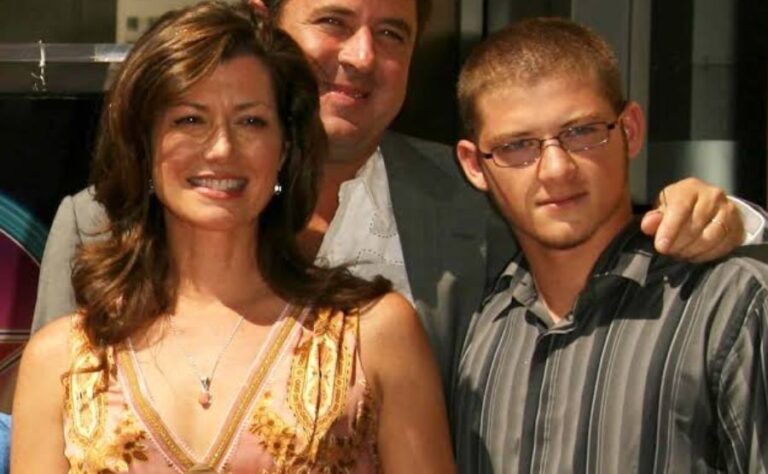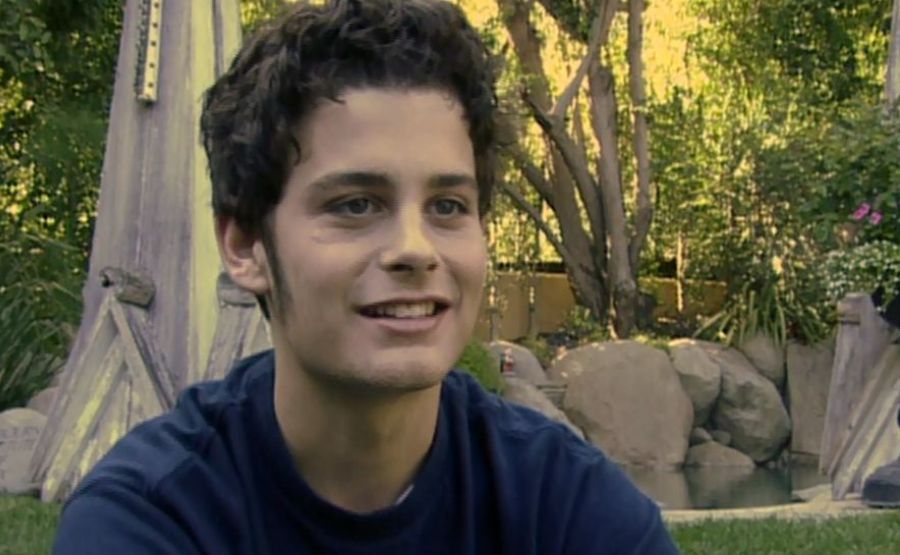
Robert Marcato: The Boy the Osbournes Promised to Keep
His story endures not because he sought fame, but because he never did — and because it reveals, quietly and without melodrama, what celebrity families owe the people they absorb into their orbit.
Quick Bio
| Detail | Information |
| Full Name | Robert Marcato |
| Born | November 21, 1983, California, USA |
| Nationality | American |
| Known For | Appearances on The Osbournes (MTV, 2002–2005) |
| TV Credits | The Osbournes (7 episodes); Intimate Portrait (1 episode, 2002) |
| Learning Difference | Dyslexia |
| Mother | Reagan Erin Marcato (d. July 30, 2002, age 36, colon cancer) |
| Biological Father | Estranged during early years; reconnected later |
| Informal Family | Sharon and Ozzy Osbourne (de facto guardians from 2002) |
| Education | Acting school, attended 2004 |
| Last Known | Residing in Rhode Island; working in retail; largely private |
A Pledge Made in the Face of Death
Reagan Erin Marcato arrived in Southern California around Christmas of 1987 with a son not yet four years old, a suitcase’s worth of ambition, and no safety net worth mentioning. She had driven the idea of a new life west from Mays Landing, New Jersey, and she built one — modest, disciplined, and entirely her own. She found work managing a 1950s-style diner on Sunset Boulevard. She navigated the Los Angeles school system on behalf of a boy with dyslexia. She did not have money, or connections, or a partner. She had tenacity.
When Reagan was diagnosed with colon cancer in the early 2000s, the disease moved fast. She was in her mid-thirties. Her son, Robert, was a teenager with a learning disability and no father in the picture. In her final weeks, she asked a favor of her friend Sharon Osbourne: look after him. Sharon said yes.
That promise — whispered between two women, one of them dying — set in motion a story that has never found a tidy resolution. Robert Marcato would move into one of the most famous households in America, appear on a landmark reality television program, pursue an acting career, suffer a mental health crisis, lose contact with the family that had taken him in, and eventually land somewhere quiet and out of reach of cameras. He is 42 years old now. Most people who remember him wonder, in passing, what became of him.
The answer, like most honest answers, is complicated.
See also “Kevin Corke: The Quiet Authority in the American Newsroom“
The Woman Who Made Him
To understand Robert, you have to understand Reagan. She was a single mother who had him while still a teenager — a fact that defined the texture of their early years together, that particular closeness born between parent and child when there is no buffer, no second income, no one else to call.
Reagan relocated the family to Los Angeles seeking a better version of their life. She worked in food service — visible work, physical work, the kind that does not appear on résumés later cited as achievements. She managed a diner. She raised her son alone.
When school administrators in Los Angeles proved slow to accommodate Robert’s dyslexia, Reagan fought them. She pushed until the district funded a special-education program that met his needs. This was not a woman who accepted institutional indifference. She advocated loudly and won. Robert’s capacity to move forward in school — to eventually attend acting school, to imagine a career — owed itself directly to her willingness to fight for it.
She died on July 30, 2002, at thirty-six. The same cancer, colon cancer, was simultaneously threatening her friend Sharon Osbourne, who was in treatment at the time. Two women fighting the same disease: one survived, one did not.
The Friendship That Preceded Everything
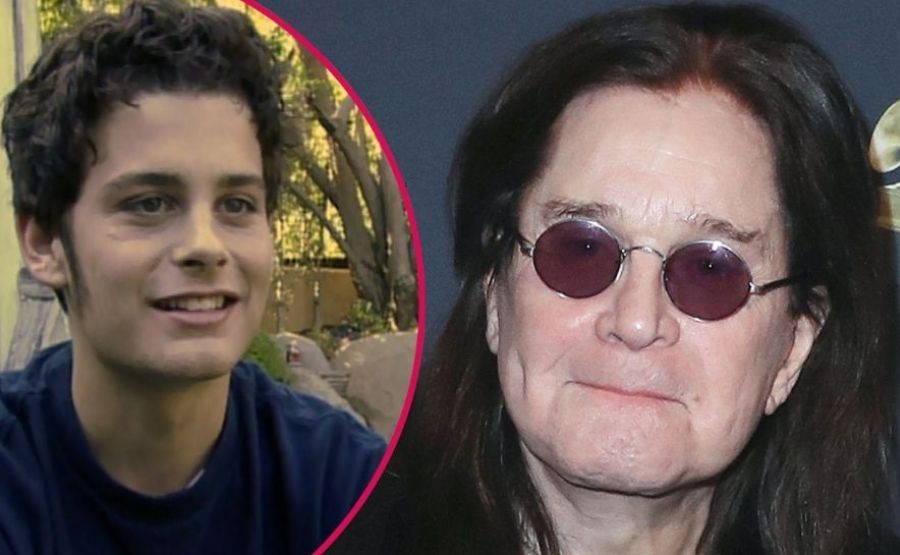
Robert did not walk into the Osbourne family as a stranger. The connection predated tragedy by years. He met Aimee and Kelly Osbourne at school in Los Angeles — Kelly in particular became a close friend, a relationship that in Robert’s own later description felt like a sibling bond. They hung out constantly. They were best friends in the way that teenagers are, unguarded and present.
Sharon came to know Robert through her daughters. The friendship between the two women — Reagan and Sharon — reinforced what already existed between the children. By the time Reagan became gravely ill, both families had long been woven together. There was no awkward introduction required, no careful negotiation. When Sharon promised to look after Robert, she was promising to look after someone she already knew.
This history matters. It distinguishes Robert’s story from tales of celebrity largesse extended to strangers. He was not a charity project. He was a friend. Then he was a friend without a mother.
Moving In, Becoming “Baby Osbourne”
In the summer of 2002, eighteen-year-old Robert Marcato moved into the Osbourne family home. Sharon Osbourne declared the arrangement publicly and without hesitation, telling the press they were “moving him in as part of the family.” She vowed to fund his college education, to give him the stability his mother’s death had stripped away.
Sharon reportedly referred to him on the show as “Baby Osbourne” — a term that stuck, one carrying more affection than accuracy, since Robert was by then a legal adult. The designation pointed to something real, though: the family’s intention to treat him not as a houseguest but as a member, however informally that membership was conferred.
The arrangement was never formalized through legal adoption. Sharon has explicitly denied that a formal adoption occurred. What existed instead was something harder to categorize — a domestic integration rooted in grief and old loyalty, documented partly on camera and partly not.
Seven Episodes and the Edge of the Frame
The Osbournes debuted on MTV in March 2002 and became one of the defining artifacts of early-2000s reality television. It was raw, irreverent, and strangely moving — a portrait of a dysfunctional family that was unmistakably a family. Ozzy shuffled through hallways in a robe. Kelly and Jack bickering with the specific savagery of siblings. Sharon manages everything with alarming competence. It won an Emmy. It launched careers. It changed what audiences expected from unscripted television.
Robert appeared in seven episodes over the show’s run, credited simply as “Self — Friend.” He was often in the background. He rarely spoke. He was the calm figure at the edge of a chaotic frame, notable for precisely the quality that made him poor television: he was sensible.
While Kelly and Jack argued and Ozzy struggled and Sharon held the household together with ferocious will, Robert watched. He did not create drama. He did not need an intervention. He was, by the reckoning of the show’s fan community, the only person in the household who consistently kept his head.
He left the show after the second season. His absence went largely unremarked by the production. Life behind the camera had begun to fracture.
Personal Life, Private Struggles
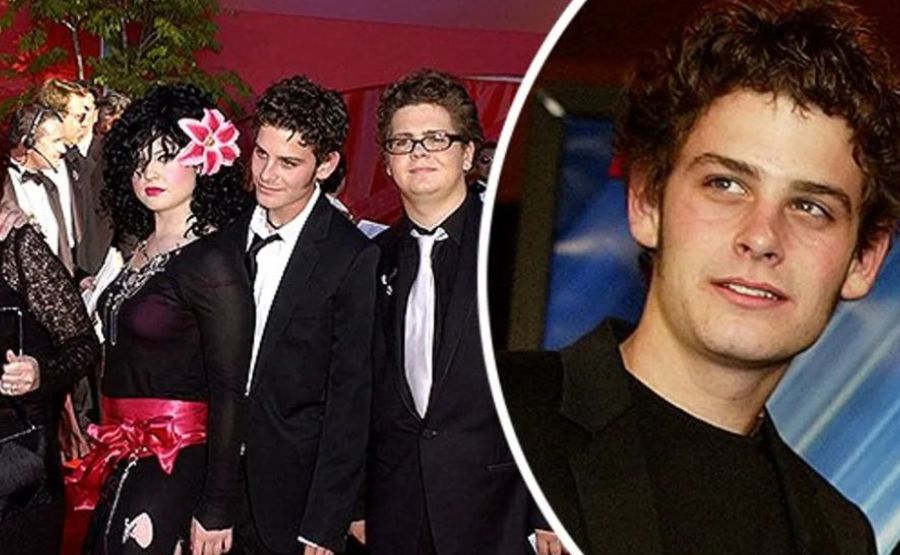
Robert’s relationship with the Osbournes during his time in their home appears to have been genuine. He and Kelly, by his own account, shared something close to a sibling dynamic — constant, easy, loyal. He was grateful for the family’s support. He did not take the arrangement for granted.
But he also entered adulthood carrying losses that do not resolve quickly. His mother was dead. His biological father had been largely absent during his childhood. He had dyslexia. He had grown up without money in a city that worshipped it. Then he had been placed, abruptly, inside the most famous household in America — a transition that might have unsettled anyone.
He attended acting school in 2004, supported by the Osbournes. He graduated. Then came the question that follows every graduation: what next?
Robert did not know. By his own account, shared in a 2016 interview with Australian magazine New Idea, finishing school left him rudderless. He described a sliding descent into depression — the disorientation of someone who had survived extraordinary trauma and then found, on the other side of the structure, a void he did not know how to fill.
“I thought, ‘What now?'” he said. “I didn’t know where I was going and the family didn’t know what to do with me.”
The Osbournes encouraged him to seek psychiatric help. He checked himself into a hospital. He then checked himself out. His aunt, Russelle Marcato, later alleged that the family had effectively sent him away after the mental health crisis — that the arrangement which had felt like family proved, under pressure, to be something more conditional. Sharon Osbourne pushed back on that characterization, saying the family was proud to have supported him through a hard period.
Both accounts may hold partial truth. Families — real ones, informal ones — often cannot agree on what they owed each other, or whether they delivered it.
Robert moved to Rhode Island to live with his biological father. The reconnection with a man he had barely known as a child added yet another layer of complexity to an already complicated interior life.
By 2016, when New Idea tracked him down, he was living in a garage and working in a supermarket’s stock room. He said he missed Kelly. He said he hoped they might reconnect. He was careful to say he held no grudge.
“I will always be grateful they paid for me to go to school,” he told the magazine. “But I do miss them and it’s sad we’re no longer in touch.”
The Question of the Promise
Sharon Osbourne made a promise to a dying woman. By every available account, she honored its initial terms: she took Robert in, she funded his education, she gave him a home and a family name, she put him on television. What she — what anyone — owes after that is less clear.
Robert’s aunt suggested the support had conditions attached, visible only when Robert’s needs became inconvenient. Sharon framed the relationship as one of care and pride. Robert himself expressed neither anger nor demand, only longing.
The gap between a promise and its fulfillment can be vast and impossible to measure from outside. What is clear is that Robert Marcato, by the time he spoke publicly, had no bitterness to show. He had sadness — a more durable and more honest emotion. He missed his friend. He missed belonging somewhere.
Legacy and What the Story Illuminates
Robert Marcato is not famous. He doesn’t have a well-maintained Wikipedia page, a noteworthy social media presence, or a side gig.He temporarily lived with one of America’s most well-known families before withdrawing into private life; if you look closely, this journey appears less like failure than like a choice to protect what remained of himself.
His story does something useful: it holds up, against the spectacle of reality television, the experience of the peripheral figure — the person absorbed into a famous household not because they pursued fame but because circumstance delivered them there.He was caught at the outside of the picture by the cameras, but what was going on inside of him was never captured.
Reagan Marcato’s legacy lives partly in the fact that her son survived the years following her death, found some footing, and managed to articulate his experience without cruelty toward anyone who hurt him. She raised a person capable of grief without malice. That is not a small thing.
Ozzy Osbourne died in 2025. Robert was not mentioned in the family’s public statements. The omission said something, though what precisely remains private between the people involved.
Final Words
Robert Marcato’s life resists the grammar of celebrity biography. He was never the protagonist of anyone’s story but his own. He was peripheral to The Osbournes, peripheral to the Osbourne family’s public identity, and has been entirely absent from public life for a decade. What remains is a handful of documented facts, a 2016 interview conducted by a magazine most Americans have never read, and the resonant outlines of a life shaped by forces far larger than him.
He lost his mother at eighteen. He was taken in by strangers who were not quite strangers. He was shown warmth, given opportunity, put on television, and then, when he needed more than education could provide, found himself without a clear path back to belonging. He ended up in a garage in Rhode Island.
There is no comfortable moral to draw. The Osbournes acted, by most measures, with genuine generosity. They also appear to have reached a limit. Robert acted with dignity in circumstances that would test most people’s capacity for it. He also drifted, struggled, and vanished.
What his story asks of us is not judgment but recognition — that the people on the edges of famous lives are living lives of their own, with their own weight. Reagan Marcato fought for her son against school administrators in Los Angeles, and what she built for him outlasted her. That is the real legacy here: not a television appearance, not a family’s public promise, but a mother’s insistence that her child would not be overlooked.
He wasn’t. Not entirely. And that, perhaps, is enough.
FAQs
1. Who is Robert Marcato?
Robert Marcato is an American who became informally associated with the Osbourne family after his mother’s death in 2002. He appeared in seven episodes of the MTV reality series The Osbournes between 2002 and 2005.
2. Was Robert Marcato legally adopted by the Osbournes?
No. Sharon Osbourne has explicitly denied that a legal adoption occurred. Robert was welcomed into their household and treated as family, but the arrangement had no formal legal basis.
3. Who was Robert Marcato’s mother?
Reagan Erin Marcato, a single mother who moved to Southern California from New Jersey in 1987. She worked as a restaurant manager and died of colon cancer on July 30, 2002, at age thirty-six.
4. How did Robert meet the Osbourne family?
He met Kelly and Aimee Osbourne at school in Los Angeles. Their friendship lasted roughly six years before his mother’s death changed the nature of the relationship. Sharon Osbourne and Reagan Marcato were also pals on their own.
5. What is Robert Marcato’s condition and how did it affect him?
Robert has dyslexia. His mother fought the Los Angeles school district to secure him a special-education program, which allowed him to progress academically and eventually attend acting school.
6. What role did Robert play on The Osbournes?
He appeared in seven episodes credited as “Self — Friend,” mostly in the background during the show’s second season. He was not a central figure and rarely spoke on camera.
7. After The Osbournes, what became of Robert?
He attended acting school in 2004. After graduating, he experienced depression and a mental health crisis, was hospitalized briefly, then moved to Rhode Island to live with his biological father.
8. Did Robert and Kelly Osbourne remain close?
They lost touch. In 2016 Robert said publicly that he missed Kelly and hoped to reconnect, describing their former relationship as like brother and sister.
9. What remarks regarding the Osbournes did Robert make in public?
In a 2016 interview with New Idea magazine, he expressed gratitude for the family’s support of his education and said he bore no grudge. He said he was saddened that contact had ended.
10. Where is Robert Marcato now?
As of the most recent reports, he has been living in Rhode Island, working in retail, and keeping a low public profile.
11. Did Ozzy Osbourne make a promise to Robert’s mother?
Reports indicate that Ozzy made a deathbed commitment to Reagan Marcato that he would ensure her son was cared for and supported in his education. The family fulfilled that commitment through Robert’s time with them.
12. What was the controversy around Robert leaving the Osbournes?
Robert’s aunt, Russelle Marcato, alleged that the family effectively sent him away after his mental health crisis, suggesting their support had unspoken limits. Sharon Osbourne disputed this characterization, saying the family was proud of the help they provided.
13. Was Robert included in tributes following Ozzy Osbourne’s 2025 death?
No. The Osbourne family’s public statements following Ozzy’s death did not mention Robert Marcato, reflecting the distance that had developed between them over the years.
14. Did Robert pursue an acting career?
He attended acting school in 2004 with the Osbournes’ support but developed no subsequent professional acting credits. His career in entertainment did not progress beyond the reality television appearances.
15. What does Robert Marcato’s story tell us about reality television?
His story illustrates the particular vulnerability of peripheral figures drawn into reality television by circumstance rather than ambition. The cameras documented his presence without capturing his experience, and the audience that watched the show had little awareness of what would follow for him off-camera.
Discover more, learn every day, and fuel your curiosity with Daily Discover.