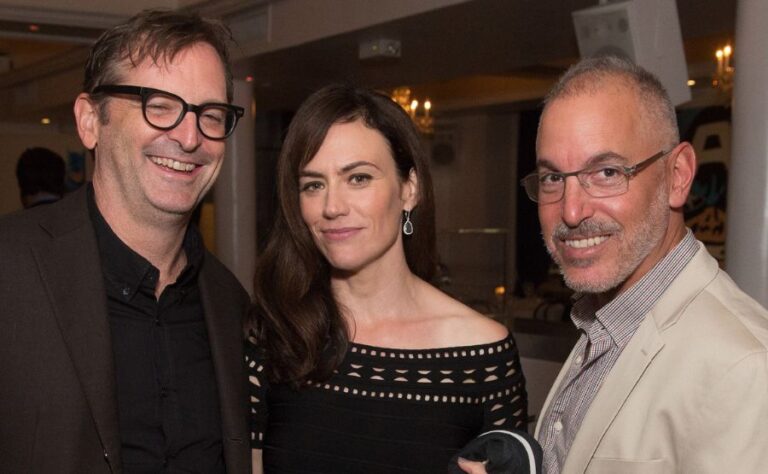
Henry Patterson Davis: The Man Behind the Memoir
He did not write the book, but his choices made it inevitable.
Henry Patterson Davis built a distinguished career in finance quietly — Cornell summa cum laude, Yale Law School, partner at one of New York’s premier investment firms, president of an $11.8 billion hedge fund empire. For two decades, he moved through Manhattan’s elite financial circles with the measured confidence of a man who had earned his position. Then, in March 2020, as the world locked down, he walked out of a Martha’s Vineyard house without saying goodbye to his children — and set in motion a chain of events that would make his private life the subject of a New York Times bestseller, a Netflix film, and a national conversation about money, trust, and power in marriage.
Davis has not spoken publicly about any of it. In that silence, he has become — fairly or not — the defining antagonist of one of the most talked-about divorce narratives of recent years.
Quick Facts
| Full Name | Henry Patterson Davis |
| Born | October 6, 1965 |
| Nationality | American |
| Education | Cornell University (B.A., summa cum laude, Phi Beta Kappa, 1988); Yale Law School (J.D., Class of ’93) |
| Key Roles | Lawyer at Davis Polk & Wardwell; President and Chairman of Arden Asset Management; Managing Director of Arden Asset Management; Select Equity Group Partner |
| Industry | Law; Hedge Fund / Alternative Asset Management |
| Marriage | Belle Burden (married June 1999; divorced October 2021) |
| Children | Three (Carrie, Evie, Finn) |
| Notable Association | Subject (pseudonym “James”) in Strangers: A Memoir of Marriage by Belle Burden (2026) |
A Quiet Ascent
Henry Patterson Davis arrived at Cornell University sometime in the mid-1980s and departed with every credential a serious young man could want. He graduated summa cum laude, was elected to Phi Beta Kappa in 1988, and proceeded directly to Yale Law School, where he earned his J.D. as part of the class of 1993. These were not accidental achievements. They were the product of sustained intellectual rigor from someone who came, by most accounts, from ordinary financial circumstances — a detail that would later acquire considerable irony.
Davis joined the renowned corporate legal firm in Manhattan, Davis Polk & Wardwell, after graduating from Yale.There he specialized in corporate and asset management work, gaining fluency in the world of investment vehicles and institutional finance. It was at Davis Polk, in 1988, that he first encountered a young associate named Belle Burden — a Vanderbilt descendant, Harvard graduate, and NYU-trained lawyer who moved in circles Davis had not yet entered.
That initial meeting would not produce a marriage for another eleven years. Davis first followed the money, transitioning from law into finance. He became an investment advisor, then found his professional home at Arden Asset Management, a New York-based firm that built and managed portfolios of hedge funds for institutional and individual clients. Davis joined as a Managing Director supervising research activities in 2001, and over the following decade climbed to become President, Chairman of the Executive Committee, and a member of the Investment Committee. He also served as President and CEO of the Arden Investment Series Trust and led the team that launched Arden’s mutual fund family in 2012.
See also ”Kilah Fox: Philadelphia’s Quietly Indispensable Comedian”
The Architecture of a Career
Arden was, in the parlance of the industry, a fund-of-funds manager — a firm that did not run a single trading book but instead selected and allocated capital across other hedge funds. Under Davis’s presidency, Arden managed roughly $11.8 billion in assets and served both institutional clients and high-net-worth individuals. The firm had started in 1993 and positioned itself as a disciplined, research-driven operator in a space crowded with less rigorous competitors.
Davis was, by industry accounts, a credible figure at Arden. He moderated panels at the SALT Conference in Las Vegas on the evolution of liquid alternatives and ETFs. He guided the firm through a significant strategic shift as the traditional fund-of-funds model came under pressure in the post-2008 landscape, where institutional investors began questioning the value of paying extra fees to managers who selected other managers. Keeping Arden relevant during that period required adaptability — and Davis appeared to supply it.
In August 2015, Aberdeen Asset Management Inc. reached an agreement to acquire Arden — a transaction that represented both a validation of what the firm had built and a transition point for its leadership. Davis subsequently moved to Select Equity Group, a New York-based investment firm, where he became a Partner and member of the firm’s Management Committee, Executive Committee, and Compensation Committee. At Select Equity Group, which manages approximately $50 billion across long-only and long/short equity strategies, he took responsibility for business development, investor relations, and client service.
His career arc traced a clean line: elite education, prestigious law firm, ascent through the alternative investment world, senior partnership at a major equity manager. By the time his marriage fell apart in 2020, Davis was a wealthy and professionally accomplished man — which made the financial dynamics of that marriage all the more pointed.
The Marriage
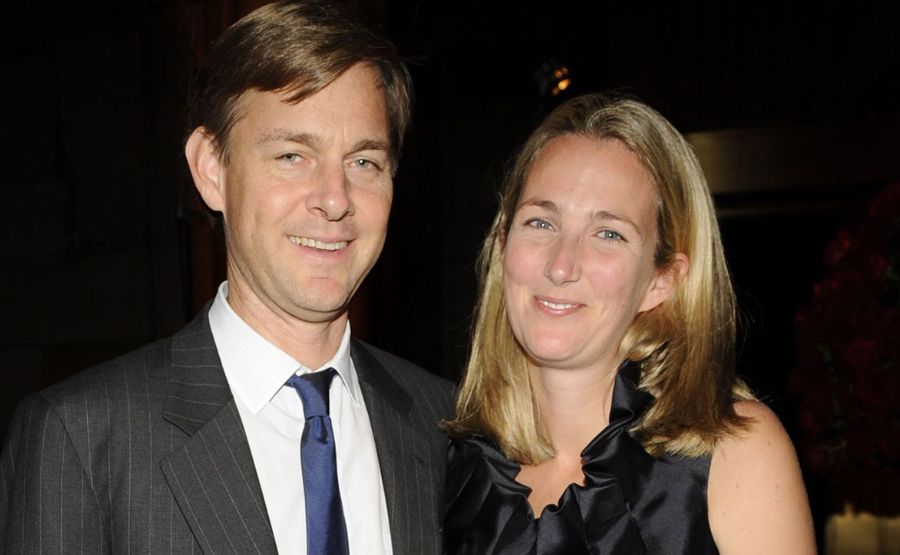
Belle Burden and Henry Davis married in June 1999 at a private ceremony at the Water Mill, Long Island home of Burden’s stepmother, Susan L. Burden. Their families occupied entirely different rungs of American social history. Burden was the granddaughter of socialite and Vogue editor Babe Paley, the great-great-niece of silent film star Douglas Fairbanks, and a descendant of Cornelius Vanderbilt. She had grown up in the orbit of old money, inherited trusts, and the particular expectations that come with dynastic American wealth.
Davis came from no such world. He had achieved his goals in both his career and his studies. That asymmetry would quietly define the marriage’s financial structure from the start.
Five days before the wedding, Davis proposed a change to the prenuptial agreement his wife’s lawyer had drafted. The original terms followed a standard approach: marital assets would be split equally in the event of divorce. Davis proposed instead that each spouse would keep only what was titled in their own name, and that only jointly held assets would be divided. Burden’s own attorney advised against the change. Burden accepted it anyway, persuaded by Davis’s assurances and her own trust in him.
The consequence was structural rather than immediately visible. Over the twenty-one years of the marriage, Burden largely stepped back from her law career to raise their three children — Carrie, Evie, and Finn — while Davis built his hedge fund career and, according to Burden’s later account, accumulated earnings in separate accounts she knew nothing about. Burden purchased the family’s Tribeca apartment and their Martha’s Vineyard home using her own trust funds. Because Davis’s name appeared on both deeds, however, the prenuptial terms gave him claim to half the value of properties his wife had paid for entirely.
Burden, meanwhile, reportedly earned $800,000 annually herself in the years before the divorce — a fact later surfaced by The New Yorker that complicated her account of financial vulnerability. The picture that emerges is not of a woman with no resources, but of one who had ceded financial knowledge and oversight to a husband she trusted completely.
The Collapse
In March 2020, the Davis family quarantined at their Martha’s Vineyard property as the COVID-19 pandemic descended. Six days after their arrival, Burden received a voicemail from a number she did not recognize. The message was from a man whose wife, he said, was having an affair with her husband.
Davis initially minimized the relationship and expressed remorse. By the following morning, he had changed his position entirely. He told Burden he wanted a divorce, packed a bag, and left the house without saying goodbye to their children. According to Burden’s account, he later mocked her in a phone call — his voice described as adopting a singsong, taunting tone — when she pressed him for an explanation.
The divorce filing followed roughly six months later. The terms Davis initially invoked — those he had persuaded Burden to accept five days before their wedding — would have required the sale of both family homes, displacing their children from the properties their mother had purchased with inherited money. Davis, by Burden’s account, had also been quietly accumulating personal savings in accounts she had no access to throughout their marriage, while asking her to annotate credit card statements to justify her own spending.
Davis ultimately backed away from the most aggressive application of the prenuptial terms, and the divorce was finalized in October 2021. He does not maintain overnight visits with the children; by multiple accounts, his co-parenting involvement is minimal.
Personal Life and Private Struggles
What is known of Davis’s interior life comes almost entirely from one perspective — that of the woman he left. He has not granted interviews, issued statements, or offered any public accounting of his decisions. That silence is his prerogative, though it has also meant that his wife’s narrative has filled the vacuum completely.
The picture of Davis that emerges from Strangers is that of a man who was, for two decades, a competent and present — if emotionally opaque — husband and father, and who then executed a withdrawal from family life so swift and complete as to suggest long premeditation. Whether that reads as cruelty or as the behavior of someone who had been quietly miserable for years and finally acted on it is a question the available record cannot answer.
What can be said is this: Davis does not come from money. He earned his status entirely through merit and professional performance. He then married into one of America’s most storied family lineages and spent more than two decades building wealth while his wife financed their domestic life. The prenuptial maneuver five days before the wedding — whatever motivated it — created a financial structure that would systematically disadvantage the person who trusted him most.
He has since, by multiple reports, remarried or is in a relationship with the woman for whom he left. He travels frequently. He sees his children occasionally. He has not spoken publicly about any aspect of the marriage, the divorce, or the memoir that has made his choices a subject of sustained national debate.

The Memoir and Its Consequences
Belle Burden first published a condensed account of her marriage’s collapse in The New York Times Modern Love column in June 2023. The response was overwhelming. She expanded the essay into a full memoir, Strangers: A Memoir of Marriage, published in January 2026, in which Davis appears under the pseudonym “James.” The memoir debuted on the New York Times bestseller list and remained there for eighteen weeks.
In March 2026, Netflix acquired the rights to adapt the memoir into a film, with Gwyneth Paltrow set to star. Oprah Winfrey, on her podcast, called the book “the manual for every woman.”
The memoir’s impact extended well beyond the literary world. It catalyzed a broad public conversation about financial literacy in marriage, the power dynamics embedded in prenuptial agreements, and the particular vulnerability of women who step back from their careers to raise children while trusting their spouses to manage shared financial life.
The New Yorker subsequently obtained and reviewed documents from the couple’s divorce proceedings — including the original prenuptial agreement — and raised questions about the degree to which Burden had characterized herself as financially imperiled. The documents revealed that at the time of the marriage, Burden herself had a share in a charitable trust valued at $8 million, additional assets tied to her family’s holdings, and an income of $800,000 annually in the years before the separation. Davis, by contrast, had entered the marriage with under $400,000 in wages and liquid assets.
Those revelations complicated the memoir’s financial narrative without invalidating its emotional core. Sources close to Burden told The New York Post they believed Davis’s team had been responsible for leaking the documents — an attempt at reputational damage control after the memoir’s success caught him off guard.
Davis did not comment. He has not commented on anything.
The Counternarrative Problem
It is worth pausing on the epistemological situation that Henry Patterson Davis now occupies. He is the central figure in a cultural phenomenon — a bestselling book, a forthcoming Netflix film, a national conversation — and he has said nothing. Every fact attributed to him in public discourse comes from sources that are either hostile to him or filtered through his ex-wife’s interpretation of events.
This is not unusual in divorce memoirs, and it does not make Burden’s account false. But it does mean that Davis exists in the public record as a character rather than a person — “James,” the phantom hedge funder, the man with the singsong voice and the rewritten prenup.
The New Yorker‘s reporting complicated Burden’s self-presentation without exonerating Davis. A woman can have generational wealth, earn $800,000 annually, and still be harmed by a husband who manipulates financial arrangements, accumulates hidden savings, and then exits without warning. Those two things are not in contradiction. What the counternarrative does establish, however, is that the story is more complex than either the memoir’s admirers or Davis’s apparent defenders would prefer.
Legacy and Influence
Henry Patterson Davis will likely never be remembered for his decade and a half at the helm of Arden Asset Management, or for his subsequent work at Select Equity Group, or for the disciplined financial career he constructed from the foundations of an elite legal education. He will be remembered — to the extent he is remembered — as the man who left, and what that departure set in motion.
That is an unfair reduction of a complete human life. It is also, by some measure, the consequence of his own choices.
Despite its injustice, his unintentional cultural legacy is fruitful.The conversation his marriage’s collapse has generated — about financial transparency within marriage, about prenuptial agreements as tools of structural power, about the economic invisibility that can accompany domestic labor — is substantive and necessary. The warning Burden’s book offers to women who cede financial oversight to their partners is genuine, regardless of the precise contours of her own situation.
In the alternative investment industry, Davis’s professional legacy is more straightforwardly positive. He helped lead Arden through a challenging period for the fund-of-funds model, managed the transition through its acquisition by Aberdeen, and continued to work at the senior level of the equity management world. His career in finance was, by the available evidence, marked by competence and institutional trust.
These two legacies — the professional and the personal — do not reconcile easily. They belong to the same man, and they stand in irresolvable tension.
Final Words
Henry Patterson Davis is a self-made man who married into American aristocracy, built a career of genuine distinction, and then dismantled, in a single March morning, the family structure he had spent two decades inhabiting. He is also a private individual who has chosen — whether out of shame, legal caution, or simple disinterest in public discourse — to let someone else’s account of his life stand unchallenged.
There is something almost perverse about a biography of a man who has done everything possible to prevent one from existing. The record of his professional life is relatively clear: an elite education deployed with purpose, a meaningful career in alternative investments, a transition to one of New York’s prominent equity managers. The record of his personal life is almost entirely his ex-wife’s testimony, offered with evident pain and — as the New Yorker suggested — some degree of selective emphasis.
What can be said with confidence is that Davis’s choices in March 2020 — and the years of financial behavior that preceded them — caused genuine harm to people who had trusted him. What cannot be said with confidence is whether the man who committed those acts is the full and complete person his ex-wife describes, or something considerably more ambiguous.
He remains, in this sense, the one person in this story we do not actually know.
FAQs
1. Who is Henry Patterson Davis?
Henry Patterson Davis is an American financier and former attorney who served as President of Arden Asset Management and later became a Partner at Select Equity Group. He is also the ex-husband of author and Vanderbilt heiress Belle Burden, and appears under the pseudonym “James” in her 2026 memoir Strangers.
2. Where did Davis go to school?
Davis graduated summa cum laude from Cornell University in 1988, where he was elected to Phi Beta Kappa. He then earned his J.D. from Yale Law School as part of the class of 1993.
3. What was Davis’s role at Arden Asset Management?
Davis served as President and Chairman of the Executive Committee of Arden Asset Management, overseeing a firm that managed approximately $11.8 billion in alternative assets. He also led the launch of Arden’s mutual fund family in 2012 and was CEO of the Arden Investment Series Trust.
4. Where does Davis work now?
After Aberdeen Asset Management acquired Arden in 2015, Davis moved to Select Equity Group, a New York-based investment firm managing roughly $50 billion. He became a Partner with responsibility for business development and investor relations.
5. When and where did Davis and Belle Burden marry?
They married in June 1999 at the Water Mill, Long Island home of Burden’s stepmother Susan L. Burden. They had first met in 1988 as young associates at Davis Polk & Wardwell.
6. What happened with the prenuptial agreement?
Five days prior to the wedding, Davis suggested changing the provisions of the prenuptial agreement so that instead of dividing marital earnings equally, each spouse would only keep assets held in their own names.Burden’s own attorney advised against the change. She accepted it anyway. The revision ultimately disadvantaged her when Davis’s hedge fund earnings went into separate accounts she could not access.
7. How did Burden discover the affair?
In March 2020, while quarantining at their Martha’s Vineyard home, Burden received a voicemail from a man who identified himself as the husband of Davis’s mistress.
8. How did Davis respond initially?
Davis initially claimed the affair was brief and meaningless and that he loved his wife. By the next morning, he had reversed course, announced he wanted a divorce, and left the house without saying goodbye to their children.
9. What has Davis said publicly about the divorce or the memoir?
Nothing. Davis has maintained complete public silence on every aspect of the marriage, the divorce, and the bestselling memoir that has made his actions a subject of national debate.
10. Did The New Yorker’s reporting change the story?
It complicated Burden’s account of financial vulnerability. The prenuptial documents revealed she had entered the marriage with significantly more wealth than she implied, and that she had earned $800,000 annually in the years before the separation. Critics of Burden argued she had overstated her precarity; her supporters maintained that financial resources do not negate the harm done by hidden accounts, manipulated legal documents, and emotional betrayal.
11. What happened with custody of the children?
According to Burden’s memoir and subsequent reporting, Davis largely withdrew from active co-parenting after the separation. He sees the children occasionally but declined overnight visits and holiday arrangements.
12. What is Strangers about, and how successful has it been?
Strangers: A Memoir of Marriage is Belle Burden’s account of the collapse of her marriage. Published in January 2026, it reached the top of the New York Times bestseller list and remained there for eighteen weeks. Netflix acquired the rights in March 2026, with Gwyneth Paltrow set to star.
13. Has Davis remarried?
Reports indicate he is with the woman for whom he left Burden, though Davis has made no public statements about his personal life.
14. Is it fair to judge Davis solely on his ex-wife’s account?
No — and this is a genuine limitation of the public record. Burden’s memoir is a compelling and emotionally credible document, but it is one-sided by design. Davis has not offered any account of his own. A complete picture of what happened in this marriage is simply unavailable.
15. What broader significance does Davis’s story carry?
Whatever one concludes about the specific facts, Davis’s conduct — the prenuptial revision, the hidden accounts, the abrupt departure — has become a widely cited illustration of the financial vulnerabilities that can accumulate in long marriages where one partner cedes economic oversight. That contribution to a necessary cultural conversation is, ironically, the most lasting mark Henry Patterson Davis will leave on public life.
Discover more, learn every day, and fuel your curiosity with Daily Discover.