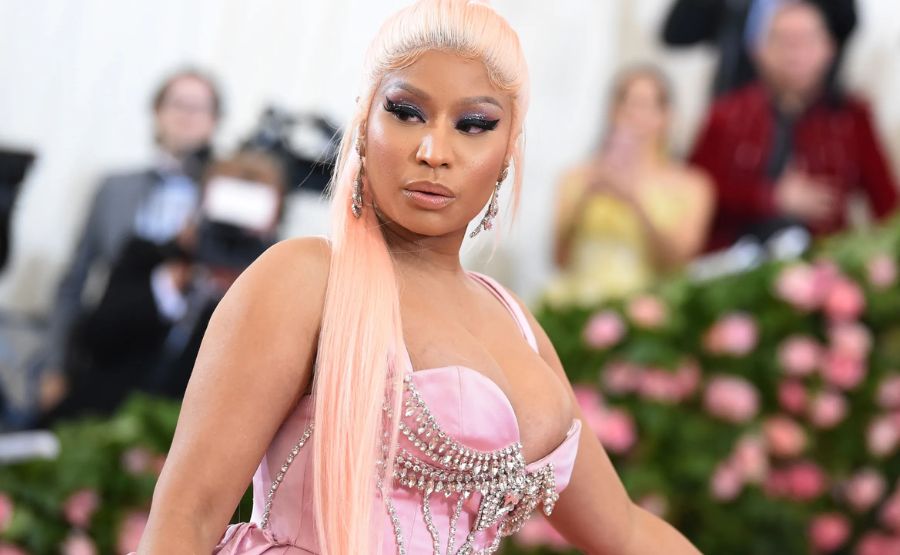
Nickiminaj: The Queen Who Built the Throne
She did not simply survive the music industry — she restructured it for every woman who came after her.
Quick Facts
| Detail | Information |
| Full Name | Onika Tanya Maraj-Petty |
| Born | December 8, 1982, St. James, Port of Spain, Trinidad and Tobago |
| Nationality | Trinidadian-American |
| Roles | Rapper, Singer, Songwriter, Actress, Television Personality |
| Active | 2002 – Present |
| Major Labels | Young Money Entertainment, Republic Records |
| Major Albums | The Pinkprint (2014), Queen (2018), Pink Friday (2010), Pink Friday: Roman Reloaded (2012), and Pink Friday 2 (2023) |
| Billboard Records | Three No. 1 albums on the Billboard 200; most No. 1s among female rappers; longest-charting female rapper on Hot 100 |
| Key Awards | MTV Video Vanguard Award (2022); BET Hip Hop Album of the Year (2023); multiple BET Awards |
| Grammy Nominations | Over 10 nominations; no wins as of 2026 |
| Spouse | Kenneth Petty (married October 21, 2019) |
| Children | One son (born September 2020), known publicly as “Papa Bear” |
| Signature | Colorful wigs, theatrical alter egos, rapid-fire multi-syllabic rhyme schemes |
The Girl from St. James
Before she was a queen, she was a child alone with her grandmother in a small house in St. James, Trinidad, waiting for her mother to come back.
Onika Tanya Maraj was born on December 8, 1982, in the Saint James suburb of Port of Spain, Trinidad and Tobago. Her parents, Carol and Robert Maraj, had already left for New York by the time she was three years old, chasing the dream that most Caribbean immigrant families knew well — establish a foothold first, send for the children later. For two years, young Onika stayed behind with her grandmother, suspended between the world she knew and a future she couldn’t yet picture. That early experience of abandonment and geographic dislocation would leave a mark she has never fully outrun.
When Carol secured legal resident status, she brought her children to Queens, New York — specifically to the South Jamaica neighborhood, one of the borough’s most economically stressed communities. Onika was five. She arrived, by her own account, as an undocumented immigrant who would eventually gain legal status. The family was together again, but reunion did not mean stability.
Robert Maraj struggled with severe drug and alcohol addiction. He was violent. At one point, he set the family home on fire in what Minaj has described as an attempt to kill her mother. The trauma of that childhood never fully disappeared — it migrated, instead, into her art. She has spoken publicly about retreating into fantasy as a child, constructing internal worlds rich enough to crowd out the chaos outside. She once remarked, “Fantasy was my reality.” It was from this instinct — the survival instinct of the imaginative child — that her many alter egos would eventually spring.
She attended Clarence Witherspoon School, Elizabeth Blackwell Middle School, and then LaGuardia High School of Music and Art and Performing Arts in Manhattan, the institution that inspired the film Fame. There she studied drama, learned the clarinet, and began writing her first rap verses at age twelve. She was, by all accounts, a natural performer — someone who inhabited characters more easily than she inhabited her own difficult reality.
See also ”Zachary John Denver: The Quiet Son of a Loud Legacy”
Struggling Before the Spotlight
The road from LaGuardia to Young Money was not a quick one. After graduation, Minaj tried to break into acting, landing a small role in a 2001 Off-Broadway production. But the parts dried up, and she found herself taking on a series of unglamorous jobs. She worked as a waitress at the Red Lobster in midtown Manhattan — and was fired, she has recalled, for being rude to customers.
She pivoted toward music, taking backup singing roles for local New York rappers. She started writing her own material and posting it online. The early-2000s internet, with its MySpace pages and homemade videos, was one of the few stages that didn’t require an invitation. Fendi, the CEO of Dirty Money Entertainment, found her there and signed her to his label, giving her the first real platform she’d had.
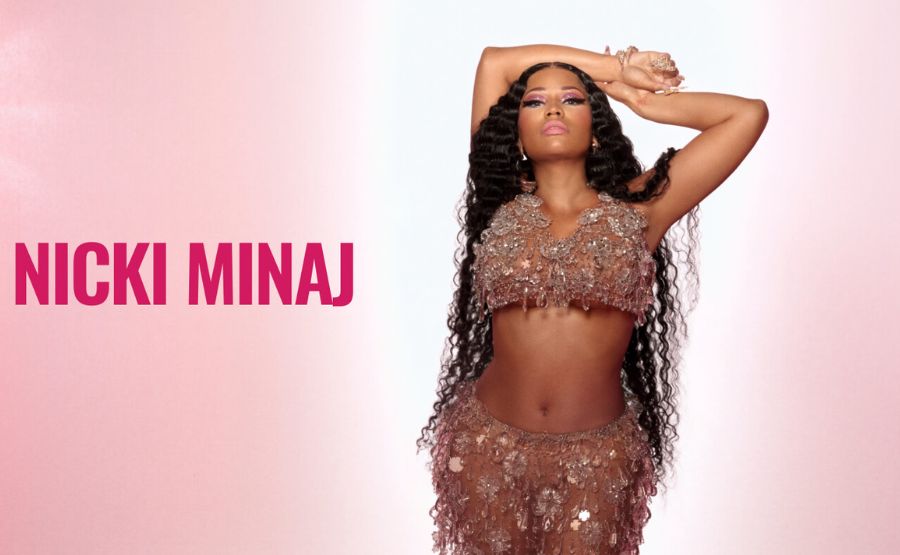
From Dirty Money, she began recording. In April 2007, she released her debut mixtape, Playtime Is Over — twenty tracks of her rapping over established hip-hop beats, showcasing a dual quality that would become her signature: the polished “Harajuku Barbie” image on the cover, and a raw, technically demanding lyrical assault inside. The underground took notice.
The Lil Wayne Co-sign and the Young Money Years
Lil Wayne heard the tapes. He was, at the time, one of the most dominant forces in American music, and his imprimatur could move careers like continental plates. He reached out to Minaj after she appeared in a Young Money DVD series, and eventually convinced her to join his roster. In August 2009, she became the first female artist signed to Young Money Entertainment.
The timing was precise. She had already released Sucka Free (2008) and Beam Me Up Scotty (2009), each strengthening her reputation among rap’s underground faithful. Beam Me Up Scotty featured her first Billboard chart entries. She appeared on the We Are Young Money compilation, rapping alongside Drake and Lil Wayne, and the hip-hop world began processing the magnitude of what she could do.
Her debut studio album, Pink Friday, dropped on November 22, 2010. It debuted at number two on the Billboard 200 before climbing to number one, eventually going triple platinum. It produced “Super Bass,” the bubbly, kinetic track that crossed every demographic barrier imaginable and became one of the defining songs of the early 2010s. It produced “Moment 4 Life” with Drake, and “Your Love,” which reached the top fifteen of the Hot 100. Pink Friday was not just a rap album — it was a pop event. And it announced that a woman could once again dominate the charts in a genre that had steadily pushed women to the margins.
The Art of Many Faces
One of the most consistently misunderstood aspects of Minaj’s artistry is her use of alter egos. Critics have occasionally treated them as gimmick — as theater rather than depth. This reading misses the point.
Her most famous character, Roman Zolanski, was by her own description born from rage. He is a gay British male — brash, unhinged, ungovernable — and he arrived during the earliest days of her career as a vessel for the fury she couldn’t always release as herself. Roman’s mother, Martha, was another character: prim, English-accented, and frequently appalled by her son’s behavior. The Zolanski family became a running narrative throughout her second album and beyond, reaching its theatrical peak at the 2012 Grammy Awards, where Minaj delivered a five-minute staged exorcism, complete with priests, monks, and a levitation sequence, that polarized viewers and cemented her as one of the most theatrically ambitious artists of her generation.
There was also “Harajuku Barbie” — the hyper-feminine, almost plastic perfection she deployed on pop crossovers — and “Nicki Lewinsky,” the unabashedly sexual persona who showed up when she wanted to be explicit without apology. These were not performances of instability. They were a deliberate artistic strategy, rooted in her childhood habit of constructing internal worlds. She had always lived among imaginary characters. She simply figured out how to make the world pay to meet them.
Her second album, Pink Friday: Roman Reloaded (2012), was a sprawling, schizophrenic record — half hard rap, half Euro-pop — that confused critics but still debuted at number one. “Starships” became a global anthem. “Pound the Alarm” was inescapable in clubs from Queens to London. The album demonstrated that she could code-switch between genres at will, a flexibility most artists spend entire careers trying to develop.
The Pinkprint (2014) showed yet another face: a woman in pain. The album contained some of the most emotionally direct material of her career, including “All Things Go,” in which she disclosed her teenage pregnancy and abortion with a plainness that shocked fans accustomed to her armor. It was a reminder that the characters and the costumes could coexist with genuine vulnerability.
Queen (2018) arrived after a particularly difficult personal period, and Pink Friday 2 (2023) — her most commercially successful project — closed a circle that had opened thirteen years before.
The Records She Broke
The statistics alone justify the argument she has made for years: that no female rapper has done what she has done.
She became the first female rapper to place seven singles simultaneously on the Billboard Hot 100. She surpassed Missy Elliott’s record to become the longest-charting female rapper in the chart’s history. “Super Freaky Girl,” released in August 2022, made her the first female rapper to debut solo at number one on the Hot 100 since Lauryn Hill did it in 1998. Pink Friday 2 debuted at number one on the Billboard 200 in December 2023, making her the first female rapper to top the chart in two different decades. She now holds more number-one albums than any female rapper in Billboard history.
Over 133 songs have charted on the Hot 100. She has sold over 100 million combined units worldwide. The Pink Friday 2 World Tour in 2024 became the highest-grossing concert tour ever mounted by a female rapper.
The Grammy Awards have been a notable absence from her mantle, despite more than ten nominations. Whether this reflects industry bias, the Academy’s complicated relationship with hip-hop, or something else, it remains a conspicuous gap in the official record — one that her fans (the “Barbz,” as they call themselves) discuss with the persistent grievance of people who believe a historical wrong is being committed in real time.
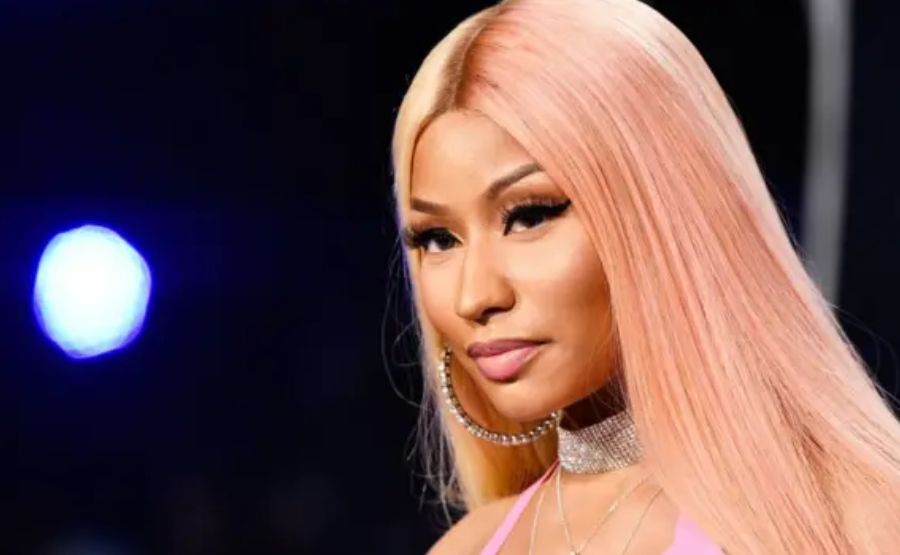
Personal Life, Private Struggles
Minaj has spent most of her adult life negotiating the space between the person she is and the personas she performs. That negotiation has not always been clean.
Her relationship with Kenneth Petty — her husband since October 2019 — brought both personal happiness and sustained public controversy. The two were childhood sweethearts from Queens who reunited in 2018. Petty is a registered sex offender in New York, convicted in 1995 of attempted first-degree rape of a then-16-year-old girl, for which he served more than four years in prison. When they went public as a couple, Minaj defended him, saying the offense occurred when he was a teenager. The victim, Jennifer Hough, later filed a lawsuit in 2021 alleging that Minaj’s associates pressured her to retract her account. Minaj was ultimately dropped from the civil suit, but the episode damaged her public standing in ways that lingered.
Petty accumulated additional legal trouble over the years: he failed to register as a sex offender after moving from New York to California, for which he received a probation sentence, and was later placed under home detention after posting social media videos that appeared to threaten rapper Offset during the ongoing feud between Minaj and Cardi B.
The couple welcomed a son — whom Minaj has called “Papa Bear” — in September 2020. She has kept his legal name private and has been fiercely protective of his public presence. Motherhood appears to have deepened something in her. Pink Friday 2 addresses the experience obliquely — the grief, the self-doubt, the insistence on leaving a legacy worth inheriting.
Her brother Jelani Maraj was convicted in 2017 on charges of rape and child sexual assault. Minaj paid his bail during the case, a decision that drew sharp criticism. She has not publicly disavowed her brother, a posture that many found impossible to accept.
These are the contradictions she has not resolved, and which no profile of her can honestly leave aside. She is, on one hand, a woman who spent a decade making space for other women in a hostile industry. She is, on the other, someone who has remained loyal to men whose conduct caused serious harm to others. Both things are true simultaneously.
The Feuds That Define an Era
The cultural history of hip-hop in the 2010s and 2020s cannot be written without an honest account of the feuds Nicki Minaj entered — and often initiated.
Her rivalry with Cardi B began around 2017 and erupted physically at a Harper’s Bazaar party during New York Fashion Week in September 2018, where the two came within feet of an altercation. It escalated into years of social media exchanges that ranged from pointed to genuinely vicious. In late 2025, the feud reignited with an online exchange that pulled in their children, their husbands, and their respective fanbases — a spectacle that generated enormous attention and equal amounts of discomfort.
Earlier, she faced a sustained challenge from Remy Ma, who released the diss track “ShETHER” in 2017 — widely considered one of the most lyrically devastating attacks in recent rap history. Minaj did not respond with a direct diss, a choice her fans defended as dignified and her critics read as retreat.
She has also feuded with Mariah Carey (during her single season as an American Idol judge in 2013), with Megan Thee Stallion, with Taylor Swift (briefly), and with various figures in the industry.Occasionally, these disputes have brought to light genuine problems about respect, credit, and the financial aspects of female celebrity.They have also, at times, simply been exhausting — a sustained note of grievance that has sometimes obscured her genuine artistic achievements.
She was arrested at Amsterdam’s Schiphol Airport in May 2024 for suspected marijuana possession before a European tour date. She was detained, released, and subsequently deported. The incident added to a perception, fair or not, that her personal life had become increasingly chaotic.
Legacy and Influence Today
The generation of female rappers currently dominating popular music — Cardi B, Megan Thee Stallion, Doja Cat, Ice Spice, GloRilla — did not emerge in a vacuum. They emerged from the space that Nicki Minaj cleared with her body.
When she signed to Young Money in 2009, the lane for women in mainstream hip-hop was nearly closed. There was no structural expectation that a female rapper could headline arenas, move millions of albums, or dictate terms to major labels. She did all of those things, over more than a decade, largely by refusing to accept the industry’s unstated suggestion that women should occupy a secondary lane.
She proved that female rappers could sell pop records without abandoning their identities. She proved that technical virtuosity — multi-syllabic rhyme schemes, dramatic vocal modulation, the ability to flip registers within a single bar — was not reserved for men. She proved that a woman could build a devoted, multigenerational fanbase capable of sustaining a career across economic cycles, shifting musical tastes, and personal controversies.
The influence is architectural. Artists who came after her have access to a music industry that was at least partially rebuilt in her image. The mechanisms — the marketing conventions, the streaming strategies, the expectation of female rap as mainstream currency — were not always there. She helped put them in place.
She has also, crucially, endured. In an industry that tends to reward female artists with brief windows of relevance before discarding them, Minaj has remained a primary presence for more than fifteen years. Whether this is tribute to her talent, her stubbornness, her fanbase’s loyalty, or some combination of all three, it is historically unusual.
Final Words
To assess Nicki Minaj fairly is to hold two accounts open simultaneously and resist the temptation to close either one.
The artistic account is extraordinary. She is, by any measurable standard, the most commercially successful female rapper in the history of American music. She created a template for how women could navigate hip-hop on their own terms — not by imitating men, not by softening into pure pop, but by holding both worlds at once with the force of genuine talent. She turned her childhood habit of inventing fictional people into one of the most distinctive artistic frameworks in contemporary music. Her best verses — on “Monster,” on “Roman’s Revenge,” on “Only,” on “Chun-Li” — are technical achievements that hold up against any period of the genre’s history.
The personal account is harder. She has defended people whose actions caused real harm. She has allowed feuds to calcify into years-long hostilities that occasionally crossed into cruelty. She has, at times, seemed to prioritize the performance of power over the exercise of wisdom. The Grammy absence — whatever its cause — has fed a corrosive frustration that has made some of her public behavior difficult to watch.
What emerges from the full picture is a woman of enormous talent and real contradictions, operating under extraordinary pressure in an industry designed to exploit both. She grew up in a household where safety was never guaranteed. She arrived in a country where her status was uncertain. She entered an industry that had no real blueprint for someone like her. She built the blueprint herself.
The question of how history will ultimately judge her is genuinely open. The records are not. The influence is not. The throne she claimed and the generation she empowered are not. Whatever else is true, she was not a footnote. She was the argument.
FAQs
1. What is Nicki Minaj’s real name?
Her full birth name is Onika Tanya Maraj.In 2019, she formally became Onika Tanya Maraj-Petty after married Kenneth Petty.3. How did Nicki Minaj enter the music business?
2. Where was Nicki Minaj born, and when did she move to the United States?
She was born on December 8, 1982, in the St.James neighbourhood of Trinidad & Tobago’s Port of Spain.She moved to Queens, New York, at age five, initially arriving as an undocumented immigrant before gaining legal resident status.
3. How did Nicki Minaj enter the music business?
After posting content online and recording early material, she was discovered by Dirty Money Entertainment CEO Fendi, who signed her to his label. This led to her connection with Lil Wayne, who signed her to Young Money Entertainment in August 2009 — as the label’s first female artist.
4. What was her breakthrough album?
Pink Friday (2010) was her debut studio album and commercial breakthrough. It reached number one on the Billboard 200, went triple platinum, and produced “Super Bass” — one of the defining pop-rap crossover hits of the decade.
5. How many albums has she released?
She has released five studio albums: Pink Friday (2010), Pink Friday: Roman Reloaded (2012), The Pinkprint (2014), Queen (2018), and Pink Friday 2 (2023). She also released three major mixtapes before her debut.
6. What Billboard records has she broken?
She has placed over 133 songs on the Billboard Hot 100 and holds the record for the most number-one albums among female rappers (three). She became the longest-charting female rapper in Hot 100 history, surpassing Missy Elliott. “Super Freaky Girl” made her the first female rapper to debut solo at number one since Lauryn Hill in 1998.
7. Has she ever won a Grammy?
As of mid-2026, she has received more than ten Grammy nominations but has not won. This remains one of the most frequently debated points among music critics and her fanbase.
8. Who is Kenneth Petty, and why has the marriage been controversial?
Kenneth Petty is Minaj’s husband and childhood sweetheart from Queens. He is a registered sex offender, convicted in 1995 of attempted first-degree rape. He has faced additional legal troubles since their marriage, including violations of sex offender registration requirements and a stint under home detention. Minaj’s defense of him has been a persistent source of public criticism.
9. What is Roman Zolanski?
Roman Zolanski is Minaj’s most famous alter ego — a gay British male described as having been “born from rage.” He appeared first on early mixtapes and was famously deployed at the 2012 Grammy Awards during a theatrical staged exorcism. He gave his name to her second album’s concept.
10. What is the feud between Nicki Minaj and Cardi B?
Commercial domination, perceived disrespect, and contradicting stories of several incidents are the main points of contention in this rivalry, which started about 2017.It escalated to a physical near-confrontation at a 2018 New York Fashion Week party and has continued through years of social media exchanges, reigniting sharply in 2025.
11. Does Nicki Minaj have children?
She has one child — a son born in September 2020, whose nickname is “Papa Bear.” She has kept his legal name private.
12. What is the Pink Friday 2 World Tour?
The tour launched in March 2024 in support of Pink Friday 2. It became the highest-grossing concert tour ever by a female rapper and the fourth-highest-grossing hip-hop tour in history.
13. What controversies has she been involved in beyond her marriage?
Notable controversies include her brother Jelani Maraj’s 2017 rape conviction (she paid his bail), a 2024 arrest in Amsterdam for suspected marijuana possession, her abbreviated single season as an American Idol judge (2013) where she clashed repeatedly with Mariah Carey, and years of public feuds with various artists.
14. What influence has she had on other female rappers?
Artists including Cardi B, Megan Thee Stallion, Doja Cat, and Ice Spice have cited her as a foundational influence. She is widely credited with reviving mainstream interest in female rap at a moment when it had largely been sidelined, and with demonstrating that women could achieve commercial parity with male rappers.
15. Is she still active in 2026?
Yes. Minaj remains an active recording and touring artist. The Pink Friday 2 World Tour ran through 2024, and she continues to release music and maintain one of the largest social media presences of any recording artist, with over 227 million Instagram followers.
Discover more, learn every day, and fuel your curiosity with Daily Discover.