Zachary John Denver: The Quiet Son of a Loud Legacy
Quick Facts
| Detail | Information |
| Full Name | Zachary John Denver (also known as Zak Deutschendorf) |
| Date of Birth | May 23, 1974 |
| Place of Birth | Colorado, United States |
| Nationality | American |
| Ethnicity | African-American with Cherokee heritage |
| Adoptive Father | John Denver (Henry John Deutschendorf Jr., 1943–1997) |
| Adoptive Mother | Annie Martell Denver |
| Siblings | Anna Kate Denver (adopted, b. 1976); Jesse Belle Deutschendorf (half-sister, b. 1989) |
| Spouse | Jennifer Deutschendorf |
| Children | One son |
| Current Residence | Basalt, Colorado |
| Known Roles | Social worker, political activist (United Party of America, c. 2000) |
| Notable Connection | Subject of John Denver’s song “A Baby Just Like You” (1975) |
| Father’s Awards | Grammy Award, Emmy Award; two state songs; Hollywood Walk of Fame star (2014) |
A Name That Arrives With Weight
Some inheritances are financial. Some are emotional. For Zachary John Denver, the inheritance was all of those things — plus a melody.
He was barely an infant when his adoptive father, John Denver, co-wrote a Christmas song with lyricist Joe Henry at Frank Sinatra’s request. Denver wrote the song at the request of Frank Sinatra on the occasion of the birth of his first grandchild, Nancy Sinatra’s daughter Angela. When Denver recorded the song himself, he substituted the name of his then-infant son, Zachary. The line “Merry Christmas, little Zachary” drifted from radio speakers into millions of American homes each December, cementing a private name into a very public tradition.
Zachary John Denver has lived with that gift his entire life. The song is tender. The burden, at times, must have been considerable.
See also ”Steve Bartman: The Fan Who Became a Curse, and the Reckoning That Followed”
The Adoption: A Family Built by Choice
John Denver and Annie Martell married in 1967 after meeting at a Minnesota concert. Their love life was so sensational that he wrote the ageless ballad “Annie’s Song” for her in just ten minutes while riding a ski lift in Colorado. But the relationship that produced one of the most famous love songs in American history struggled in the privacy of a doctor’s office. When the Denvers discovered that John’s admitted sterility prevented him from fathering children, they made the decision to adopt.
John and Annie Martell adopted Zachary, and he became the oldest of the three Denver siblings. He spent his early years growing up in the beautiful town of Aspen, Colorado. Two years later, the family welcomed Anna Kate, a girl of Japanese-American descent. Declaring that they were destined to be his and Annie’s children, their father was undoubtedly delighted to have them. John Denver even declared at the time that he would be overjoyed to be known as the father of Zachary and Anna Kate upon his death.
John Denver made his priorities explicit. He told interviewers that he wished to be remembered not for “Rocky Mountain High” or “Take Me Home, Country Roads,” but as a father and a husband. That sentiment, offered in the early 1980s when his fame was at its height, was not performance. The man who filled arenas chose to define himself by the boy who grew up in Aspen asking what all the fuss was about.
On May 23, 1974, Zachary John Denver was born.He is of American nationality, and his ethnicity is African-American, with one-quarter of his being Cherokee. His biological parents were never identified publicly. John Denver guarded that information with intention, treating its absence not as a gap but as a boundary — one drawn out of love for a child who deserved to belong fully to the family that chose him.
Growing Up in John Denver’s Colorado
The landscape of Zachary’s childhood was not metaphorical. The Rocky Mountains were literally outside the window. Zachary, along with his adopted sister Anna Kate, was raised with values of kindness, simplicity, and respect for nature — principles that were important to their father. John Denver’s environmentalism was not a political brand; it was a daily orientation toward the physical world, and it shaped how Zachary experienced childhood.
The Aspen of the 1970s and early 1980s was already a playground for the wealthy, but the Denver household maintained a certain groundedness. After retiring from music [for a period], Denver would return to Aspen to raise his family, and while Martell did all the cooking in their restaurant, he would wait tables and sing. This image of a Grammy-winning artist seating diners and carrying plates is striking. It suggests a father who wanted his son to see him as a person before a celebrity.
One anecdote captures Zachary’s childhood perspective precisely. During a limousine ride to one of his father’s performances, the young boy watched crowds gather outside and asked, with complete sincerity, if all those people had come to hear “some guy’s dad sing.” John Denver reportedly found the moment profoundly moving — not because it was funny, but because it confirmed that his son saw him clearly. At home, John Denver was not a star. He was Zachary’s father.
On May 23, 1974, Zachary John Denver was born.As a result, he inspired some of the late American singer’s hit songs like “A Baby Just Like You.” The bond was real. It was documented in melody and lyric. And then, with the abruptness life sometimes imposes, it was severed.
The Divorce and Its Aftermath
After fifteen years of marriage, Denver and Martell got divorced in 1982.Denver claimed in a 1983 interview that their separation was caused by his professional expectations. Annie Martell, for her part, said the couple were too young and too inexperienced to weather the pressures that sudden international fame imposed on a marriage. Denver’s touring schedule, his environmental causes, his increasing time away — the accumulating absences wore down what had once seemed indestructible.
Zachary was eight years old when his parents divorced. He was old enough to understand that something fundamental had changed. John had visited Zachary and his sister Anna Kate in Aspen on occasion despite their divorce. The family did not dissolve entirely; it rearranged. John Denver remarried Australian actress Cassandra Delaney in 1988, and their daughter Jesse Belle was born in 1989. The siblings welcomed their half-sibling from Denver’s second marriage, and they were really close to each other as they grew up in the same house.
Zachary navigated what many children of public figures must: a divided household, an absent parent whose absences were sometimes broadcast on national television. He watched his father accept awards and testify before Congress on environmental issues. He also watched his father’s marriage to Cassandra Delaney end in 1993, another rupture in a life that had already known several.
John Denver died at age 53 when the experimental homemade aircraft he was piloting crashed into California’s Monterey Bay on October 12, 1997. Zachary John Denver was 23 when his father passed away. He was a young adult — old enough to carry grief as an adult, young enough to still need a father.
Estate, Inheritance, and the Weight of What Was Left Behind
John Denver left behind an estate, a legacy, and a legal complication. Singer John Denver didn’t have a will when his experimental plane crashed in 1997. His $19 million estate took six years to settle. Denver was single when he died without a will, and first ex-wife Annie was named as the executor of his estate.She gave his three children an equal share of his possessions.
Although Denver did not have a will, he had established trusts worth $7 million each for his mother, father, ex-wife Annie, and for each of his three children when they were born. Zachary, Anna Kate, and the young Jesse Belle each received a $7 million trust. Properties were divided among the siblings. The estate that had once seemed ordered by John Denver’s expressed wishes became a six-year legal process managed by the courts of California.
Denver’s three children — Jesse Belle Denver, Zachary Deutschendorf, and Anna Kate Deutschendorf — and his mother, Erma Deutschendorf, sued Gould Electronics and a supplier of parts for homemade aircraft. Their suit blamed a fuel valve problem for taking the life of the singer. The suit was eventually settled, though the terms were never disclosed.
It is worth pausing on a detail embedded in the lawsuit’s paperwork. Zachary filed under the name “Zachary Deutschendorf” — his father’s legal surname, not the stage name the world recognized. Instead of using his father’s on-screen name, Zachary often uses his late father’s real surname, Deutschendorf.His sister, Anna Kate, also follows suit and uses the same surname. In claiming the family’s legal name over the famous one, both siblings made a quiet but pointed statement about identity. They were not brand custodians. They were children of Henry John Deutschendorf Jr.
A Career Built on Service, Not Song
It would have been easy — perhaps expected — for Zachary to move toward musicHis father’s catalogue was large, cherished, and long-lasting.The royalty streams alone represented a foundation. But Zachary chose a different kind of public life entirely.
He became well-known as a United Party of America member in the early 2000s by supporting causes that he found meaningful.His political affiliation and personal endeavors, although not as extensively documented, offer a glimpse into Zachary’s personality and his commitment to effecting change. The United Party of America was a centrist third-party movement that gained brief traction around the 2000 election cycle. Zachary’s involvement suggests a man drawn to civic engagement rather than celebrity, to process rather than platform.
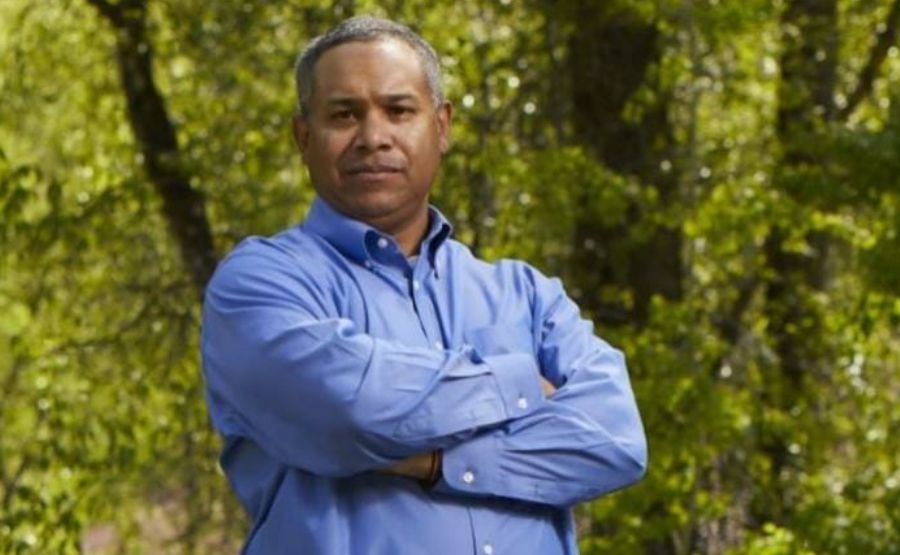
Zachary seemed to move into a position that matched his commitment to public service after leaving politics: social workAccording to reports, he is working as a social worker in Colorado, where he was born.The specifics of his work remain private, which is consistent with how he has managed his entire adult life.
One notable effort includes his collaboration with Take Note Colorado, a nonprofit providing musical instruments and lessons to K-12 students. At a 2018 event, Zachary emphasized how music education fosters creativity and confidence in children, reflecting his father’s belief in art’s transformative power. That appearance — quiet, purposeful, attended rather than headlined — is characteristic. Zachary appears at events that matter to him. He does not appear to seek the occasions themselves.
Personal Life: Marriage, Family, and Chosen Privacy
Zachary John Denver married Jennifer Deutschendorf, and the couple has one son. Jennifer prefers a quiet and private life. The couple has one son, but they have chosen to keep him out of the public eye. In 2010, Jennifer was seen with Zachary’s mother, Annie Martell, at a special event hosted by famous dog trainer Cesar Millan in Aspen.
The family lives in Basalt, Colorado, a small Roaring Fork Valley community located between Aspen and Glenwood Springs. Basalt is not Aspen — it is quieter, more working-class in character, a place where people live rather than vacation. The choice to settle there, rather than in the resort town where Zachary grew up, feels deliberate.
The Deutschendorf family name Jennifer took on marriage carries its own meaning. It connects Zachary to the man his father actually was — not a persona, not a brand — and to the siblings who made the same choice. Anna Kate Deutschendorf now lives in New Zealand with her husband, a private equity investor. Jesse Belle Deutschendorf, John’s daughter from his second marriage, has also maintained a relatively low profile. The siblings are working with Brian Schwartz to put together a biographical film of Denver’s life, a documentary of his activism, and a Broadway musical inspired by his songbook. In that collaboration, the three children have found a shared purpose: not exploitation of a legacy, but stewardship of one.
Public Appearances: Few and Meaningful
Zachary’s appearances in public life have been sparse and selective. In 2011, he attended the Colorado Music Hall of Fame ceremony where his father was inducted posthumously. In 2013, he appeared in John’s documentary “John Denver: Country Boy.” The BBC-produced film offered intimate accounts from those closest to Denver, and Zachary’s participation marked one of the few times he has allowed himself to be seen on camera discussing his father’s life and meaning.
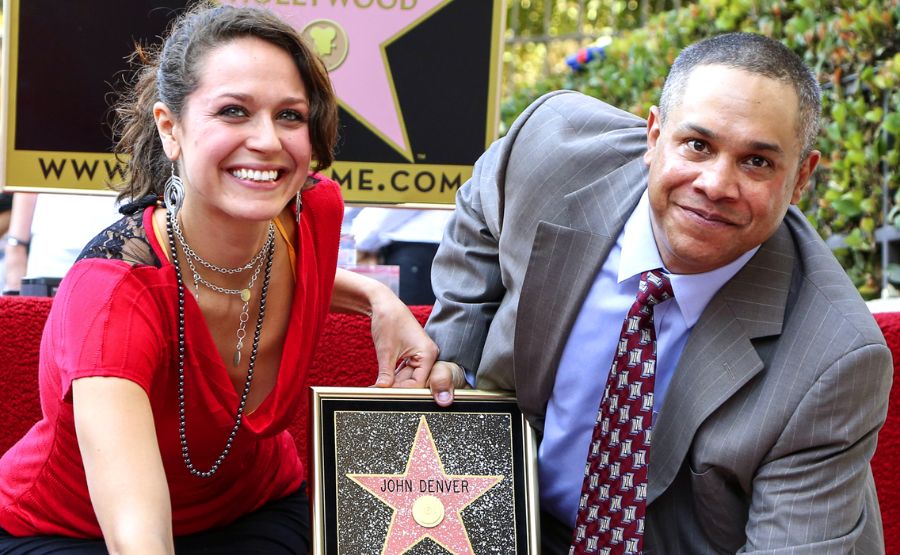
In October 2014, the Hollywood Chamber dedicated the 2,531st Walk of Fame star to the late John Denver. Helping unveil the star were two of Denver’s three children, Zak Deutschendorf and Jesse Belle Denver, accepting the honor on behalf of the family. The ceremony took place seventeen years after John Denver’s death. Zachary stood in the California sun, accepted the honor as his father’s son, and returned to Colorado.
Each public appearance Zachary has made has involved honoring someone else: his father, a community organization, a nonprofit. He has not sought occasions to be known for himself. This is not passivity. It is a coherent value system, enacted consistently across decades.
The Song That Named Him
“A Baby Just Like You” deserves its own consideration. Denver wrote the song at the request of Frank Sinatra on the occasion of the birth of his first grandchild, Nancy Sinatra’s daughter Angela. When Denver recorded the song, he substituted the name of his then-infant son, Zachary. The song — co-written with Joe Henry — is a Christmas meditation on parenthood and wonder, on the way a child restores a parent’s sense of the world’s possibilities.
The lyric calls Zachary a “shining light” who set his father’s “soul to dreaming.” It speaks of joy returned, meaning restored. These are not the sentiments of a man performing fatherhood. They are the words of someone who found, in adoption, something that completed him.
For Zachary, the song is both gift and artifact. It preserves a version of his infant self in amber, publicly available to anyone with a streaming subscription or a holiday radio station. He cannot hear December without hearing his name in his father’s voice. Carrying anything like that is just remarkable. Whether it has been primarily tender or primarily painful — or both at once, in the way the most meaningful things usually are — is something only Zachary knows.
Legacy and Influence Today
John Denver’s music has proven more durable than his critics once predicted. John Denver’s music is still relevant today, thirty albums and forty years after he started.His humanitarian work continues to strengthen our global village, and his dynamic celebration of life, spirit and nature is a powerful inspiration.In 2014, “Take Me Home, Country Roads” was designated as one of West Virginia’s official state songs.”Rocky Mountain High” holds the same distinction in Colorado. Both songs are now part of American civic identity, not just cultural memory.
Zachary has navigated this legacy thoughtfully. He does not monetize it in visible ways. He does not appear on legacy tours or lend his name to tribute albums. Instead, he shows up at a nonprofit music education event and talks about what music can do for children’s confidence. He participates in a documentary about his father’s life and lets the film speak. He stands at the Walk of Fame ceremony and accepts a star on behalf of a family.
The planned biographical film, activism documentary, and Broadway musical — developed in collaboration with his siblings — represent the most deliberate act of legacy stewardship Zachary has undertaken. These projects, if completed, would bring John Denver’s story to new audiences without reducing it. They would also give Zachary, Anna Kate, and Jesse Belle the opportunity to shape the narrative rather than simply inherit it.
Final Words
Zachary John Denver is, by any conventional measure, a private man. He has given relatively few interviews. He has not pursued fame. He has not written a memoir or launched a foundation bearing his name. He lives in a small Colorado town, works in social services, and raises a son whose face the public has never seen.
This could be read as retreat. It is more accurately understood as self-determination.
The children of famous parents occupy an almost impossible position. They did not choose their circumstances. They cannot unremember a childhood shaped by extraordinary wealth, by public scrutiny, by a parent who was both intimately known and publicly mythologized. They must decide, at some point, what relationship they want with a legacy they did not create.
Zachary’s answer has been consistent: he honors his father without being defined by him. He carries the name — sometimes the stage name, sometimes the legal one — and he does the work of a citizen. He shows up when it matters. He steps back when it doesn’t.
John Denver once said he would be content to be remembered as Zachary’s father. Zachary, in turn, appears content to be known, quietly and without ceremony, as his own person. That symmetry — a father who wanted to be a father above all else, and a son who grew up to become fully himself — is the quietest kind of story. It is also, in its way, the most complete.
FAQs
1. Who is Zachary John Denver?
Zachary John Denver is the adopted son of legendary American singer-songwriter John Denver and his first wife, Annie Martell. He was born on May 23, 1974, and raised in Aspen, Colorado. He works as a social worker and has been involved in community politics.
2. Was John Denver and Zachary John Denver biologically related?
No. John Denver was sterile and could not father biological children. He and Annie Martell adopted Zachary shortly after his birth in 1974, and adopted Anna Kate two years later.
3. What is known about Zachary’s biological parents?
Very little. John Denver deliberately protected this information throughout his life, and it has never been publicly disclosed. Zachary is of African-American descent with Cherokee heritage.
4. What song did John Denver write about Zachary?
“A Baby Just Like You,” co-written with Joe Henry. Originally composed at Frank Sinatra’s request for the birth of Sinatra’s first grandchild, John Denver later recorded his own version substituting Zachary’s name, including the line “Merry Christmas, little Zachary.”
5. What career did Zachary pursue?
He moved away from the music world entirely. He joined the United Party of America, a moderate third-party movement, circa 2000. He subsequently shifted to social work, which remains his primary vocation in Colorado.
6. Is Zachary John Denver married?
Yes. He is married to Jennifer Deutschendorf, and the couple has one son. Both maintain a very private life and rarely appear in public together.
7. How much did Zachary inherit from his father?
John Denver died without a will in 1997, leaving a $19 million estate. Prior to his death, he had established $7 million trusts for each of his three children. His ex-wife Annie Martell was appointed estate executor and divided the remaining assets equally among the three siblings.
8. Why does Zachary sometimes go by “Deutschendorf”?
Deutschendorf is John Denver’s actual legal surname — his stage name was an adopted pseudonym. Both Zachary and his sister Anna Kate have chosen to use the family’s legal name rather than the stage name, a decision that reflects their sense of personal identity.
9. Did Zachary appear in any documentaries about his father?
Yes. He appeared in the 2013 BBC documentary “John Denver: Country Boy,” which profiled his father’s life and career. He also attended the 2014 Hollywood Walk of Fame ceremony when his father received a posthumous star.
10. What is Zachary’s relationship with his siblings?
He maintains close ties with both sisters. The siblings are working together with Brian Schwartz on a biographical film of Denver’s life, a documentary of his activism, and a Broadway musical inspired by his songbook. Jesse Belle Deutschendorf and Zachary appeared together at the 2014 Walk of Fame ceremony.
11. Where does Zachary John Denver live today?
He, his wife, and their son reside in the little Roaring Fork Valley town of Basalt, Colorado.
12. Did John Denver consider Zachary his “real” son?
By all accounts, unconditionally. Denver spoke openly and emotionally about fatherhood, stating in multiple interviews that being remembered as Zachary and Anna Kate’s father would be legacy enough. The personal song he wrote about Zachary reinforces this bond.
13. Has Zachary spoken publicly about his father’s death?
Rarely and briefly. His 2013 documentary appearance is one of the few occasions on record. He tends to honor his father through action — attending commemorations, supporting music education — rather than through extended public statements.
14. What is the planned Broadway musical about John Denver?
It is a musical inspired by John Denver’s songbook, reportedly being developed in collaboration with Zachary, Anna Kate, and Jesse Belle along with producer Brian Schwartz. Details about its timeline and scope have not been publicly confirmed.
15. What is Zachary’s most significant legacy contribution?
His most visible contribution to his father’s legacy may be his participation in the 2013 documentary and the collaborative stewardship projects planned with his siblings. More broadly, his choice to live a grounded, service-oriented life in Colorado reflects the same values — love of community, environmental respect, human dignity — that his father expressed through music.
Discover more, learn every day, and fuel your curiosity with Daily Discover.