Hudson Westbrook Age: The Cattle-Farm Kid Who Kicked Country’s Door Wide Open
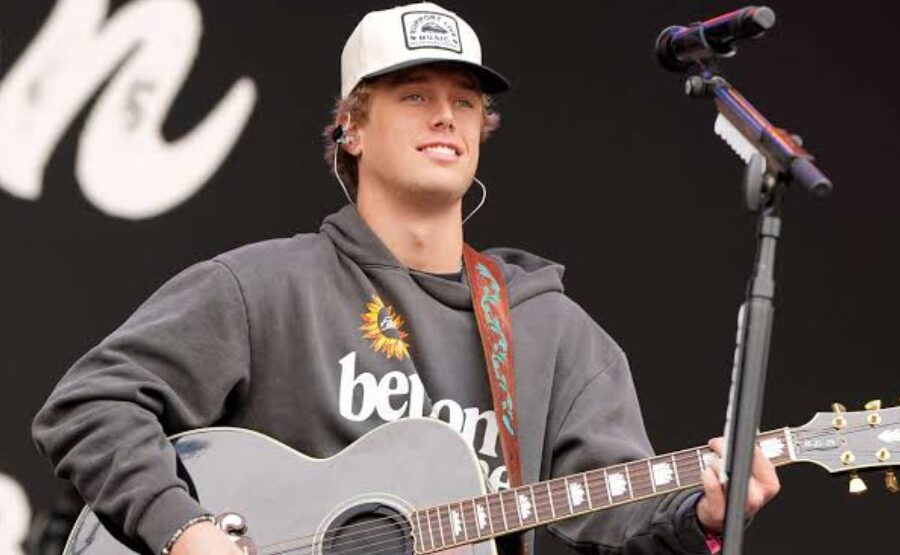
At twenty-one years old, Hudson Westbrook has already done what most artists spend a decade trying to do — land a number-one single, break a chart record, and make Miranda Lambert take notice, all without ever having planned to make music a career.
Quick Bio
| Detail | Information |
| Full Name | Hudson Brown Westbrook |
| Born | May 21, 2004 |
| Age (2026) | 21 |
| Birthplace | Stephenville, Texas, USA |
| Hometown | Stephenville, TX; based in Lubbock, TX |
| Nationality | American |
| Genre | Country, Texas/Red Dirt Country |
| Occupation | Singer-Songwriter, Musician |
| Label | River House Artists / Warner Music Nashville |
| Debut Single | “Take It Slow” (2024) |
| Debut Album | Texas Forever (July 25, 2025) |
| Chart Record | Youngest solo male to top Mediabase Country chart with a debut single (2026) |
| Certifications | “House Again” — 2× Platinum (RIAA) |
| Mother | Heidi Westbrook |
| Siblings | Two older brothers, one older sister |
| Partner | Stormie Goldsmith (since 2024) |
| ACM Nominations | New Male Artist of the Year (2026) |
The Unlikely Artist
There is a particular type of American story in which a young man with no grand ambition stumbles into the thing he was built for. Hudson Westbrook is that story, lived fast and at volume.
He was not the kid who practiced scales in a bedroom or dreamed of Nashville. He was working a feed store in Lubbock, studying energy commerce at Texas Tech University, and laying groundwork for a career as a landman — the person who negotiates oil and mineral rights on behalf of energy companies. Music, in his telling, was something he did for his mother and a few friends in the hallways of high school. He never believed he was good enough to make it a profession.
That self-doubt dissolved in the summer of 2024, when his fiddle player posted a video of their recording session online and Westbrook woke up to ten million views.
See also ”Who Is Kylie Jenner Dating: The Architecture of a Modern Empire”
Roots: Stephenville and the Soil That Made Him
Stephenville, Texas, sits west of Fort Worth in Erath County — cattle country, rodeo country, a place where the land is not a decorative backdrop but the central fact of daily life. Westbrook grew up on a working cattle farm there, doing the kind of labor that builds more than muscle: early mornings, physical accountability, the understanding that things do not happen unless you make them happen.
He was not raised in a musical household in the conventional sense. But he absorbed country music the way children absorb the accent of where they’re from — through church, Texas radio, and the recordings of artists who shaped the state’s sound: Cross Canadian Ragweed, Parker McCollum, Koe Wetzel, Stoney LaRue, Randy Rogers. These were not just influences. They were, as Westbrook has said, the recordings he played loud enough to signal that the conversation was over.
His early years included a high school football career serious enough to compete at the state championship level. The discipline of team athletics — the early practices, the willingness to subordinate ego to group performance — would later translate into a work ethic that surprised even industry veterans watching him navigate a sudden career.
He did not pick up a guitar seriously until the pandemic years, sometime around 2020. The self-teaching process shaped what he became. Without formal instruction to flatten idiosyncrasies into correct technique, he developed a voice and style that felt entirely his own — not polished into somebody else’s template, but worn naturally, like old denim.
The Accidental Beginning: “Take It Slow”
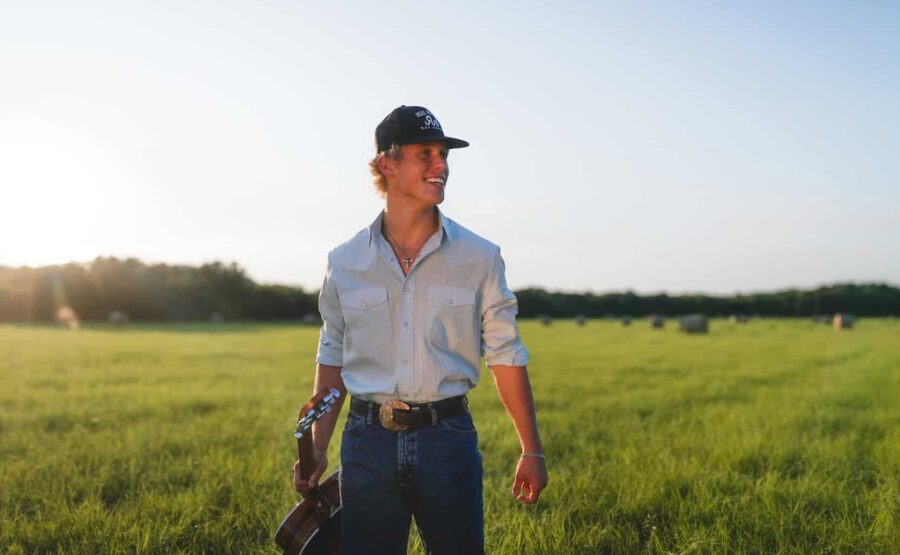
Westbrook wrote “Take It Slow” during his freshman year at Texas Tech. He was nineteen years old, sitting at his feed store job between tasks, thinking about a long-distance relationship. The song, by his own admission, felt more like an honest thought than a professional composition. He recorded it after a chance meeting at a Guitar Center — a bassist who knew a drummer who knew a lead player — a chain of coincidences that sounds implausible until you remember that most origin stories do.
His fiddle player, Silas Clark, filmed the studio session and posted the video. What happened next — tens of millions of views, comparisons flooding comment sections to Parker McCollum, a sudden and disorienting swarm of attention — was not the result of a marketing campaign or an industry push. It was the internet reacting to something it recognized as authentic.
Westbrook has described that morning with characteristic understatement: he woke up, checked his phone, and found a number that did not seem real. He was, by his own account, not certain what a good viral moment even looked like. But a senior buyer at Mammoth Live, Pat Fielder, knew immediately. Within weeks, Fielder had assembled a run of club shows across the Midwest. A Kansas City venue that started as a 900-capacity booking quickly moved to a 2,400-seat hall — and sold out again.
The momentum demanded a decision. Westbrook made it on a stage: he announced to his audience that he was leaving Texas Tech to pursue music full-time. He had not yet told his mother.
The Music: What He Makes and Why It Lands
The core tension in country music between authenticity and commercial viability has defined the genre’s debates for decades. Westbrook resolves that tension — or sidesteps it entirely — by writing songs that are simply too personal to feel manufactured.
“House Again,” the lead single from his debut album Texas Forever and the song that eventually carried him to number one, was born from a June 2024 writing session in Nashville with co-writers Dan Alley and Neil Medley. The concept arrived in the room fully formed. Westbrook said he wanted to write about a home that turned into a house. His collaborators told him that was the hook. The resulting song maps the emotional geography of a place after love has left it — each room a different memory, each detail (stained concrete replacing the old floor, no wall space for the chaps that used to hang there) a small devastation.
The song was produced by Lukas Scott and Ryan Youmans. Youmans later noted that he had spent fewer than four hours with Westbrook before they recorded the track, just five weeks after that first session. The speed of it — the trust required on both sides — says something about what Westbrook brings to a room.
Texas Forever, released July 25, 2025, through River House Artists and Warner Music Nashville, stretches across seventeen tracks entirely co-written by Westbrook. The album debuted at number 59 on the Billboard 200 and reached the top ten of the country charts. It is an ambitious document for a first record, less a collection of singles than an attempt to capture a specific period of life — the disorienting passage from a young man with plans to an artist with a bus and a booking agent.
Westbrook’s influences are on the surface of the record without being imitations of it. The Red Dirt tradition of artists like Cross Canadian Ragweed and the Turnpike Troubadours — songs that take seriously the lives of working people in the American interior — runs beneath the production like groundwater.
The Record Deal and the Industry Machine
Westbrook’s signing to River House Artists and Warner Music Nashville in June 2025 followed a period of deliberate, grassroots building that distinguished him from artists parachuted into the industry through television competitions or social media management.
He did not move to Nashville. He built his following from Lubbock, played shows from a van and then a bus, wrote on planes and over Zoom, and let the work create the conditions for a deal rather than chasing a deal to fund the work. The global publishing agreement with River House Artists — later expanded into the full record partnership — came after the streaming numbers and the sold-out shows made the case on their own terms.
By the time Texas Forever arrived, Westbrook had already been named a 2025 Artist to Watch by Spotify, Country Now, Holler, and Country Wire. SiriusXM had placed him on its all-genre Future Five list for 2025. Miranda Lambert — not a figure given to casual enthusiasms — had publicly endorsed him, recorded a reimagined duet of “House Again,” and offered him the kind of advice that matters coming from someone who has navigated Nashville’s machinery for twenty years: be authentic, don’t change, and remember that the audience can always tell the difference.
A Historic Number One
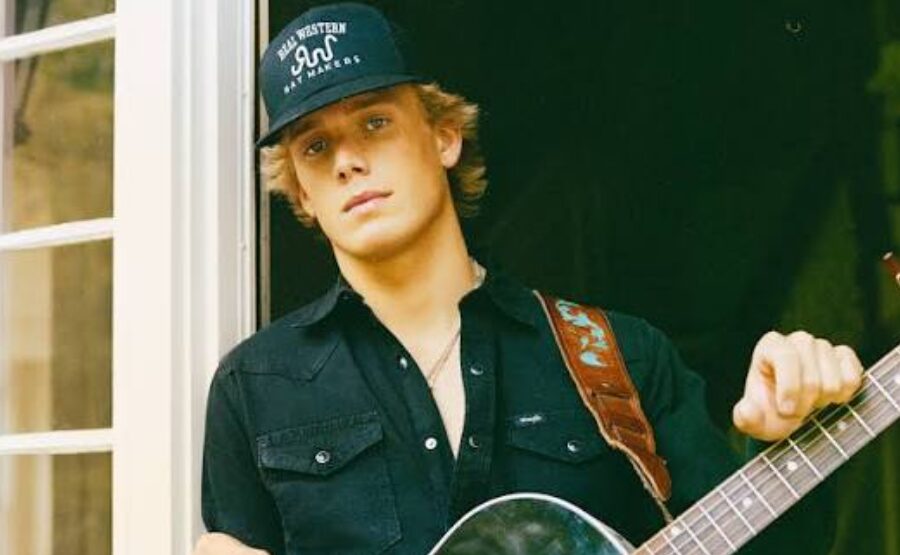
On February 9, 2026, “House Again” reached number one on the Mediabase Country radio chart. The milestone established Westbrook as the youngest solo male artist in country radio history to top the chart with a debut single.
The certification process moved fast behind it. By May 2026, the Recording Industry Association of America had awarded the track double platinum status — two million units sold or streamed. Warner Records Nashville presented the plaque at a celebration held at BMI’s Nashville office, where Westbrook took time from his prepared remarks to thank each collaborator by name, and arranged a donation to the FFA chapter at Stephenville High School, the school he had attended.
That last gesture was not incidental. It was characteristic.
His trajectory since the number one has continued upward. He has accumulated more than a billion global streams within eighteen months of his debut. He has opened arena shows for Parker McCollum, Midland, Cole Swindell, and Eli Young Band. His 2026 touring schedule includes dates opening for George Strait, Morgan Wallen, and Bailey Zimmerman — a lineup that represents the full spectrum of contemporary country’s commercial weight.
Personal Life: What the Songs Know
Westbrook is, by most accounts, more comfortable discussing his songwriting than his biography. That reticence is itself revealing. The songs do the biographical work that the interviews decline to.
His parents divorced when he was seven years old. The shift from a five-acre country property with stained concrete floors and chaps on the wall to a smaller house on a golf course — that specific loss of space and identity — surfaces directly in “House Again.” Westbrook has described the song not as allegory but as memory, the kind of childhood detail that lodges in the body and reappears decades later in writing sessions.
He grew up, by his description, as the man of the house for his mother, Heidi Westbrook. That early responsibility shaped both his seriousness and his loyalty. Heidi appears in the music video for “Texas Forever,” a choice that says more than any interview could about the role she plays in his understanding of home.
He has two older brothers and an older sister. He has credited them, with a laugh, as his primary protection against losing perspective. “If my feet aren’t on the ground,” he has said, “they’ll put me on the ground.” It is the kind of family dynamic — affectionate, slightly brutal in its honesty — that produces people who survive success.
Westbrook has been in a relationship with Stormie Goldsmith, a fellow Texan, since 2024. She appeared alongside him in the “Texas Forever” video. Their public presence is warm but not performative; Westbrook is not an artist who uses personal life as content.
He wrote most of the songs on Texas Forever on the road — in planes, cars, hotel rooms, over Zoom and FaceTime. The logistics of touring at scale while also trying to create requires a particular kind of mental discipline. He adapted.
Legacy and Influence
Westbrook arrived at a specific moment in country music’s generational argument. The genre spent much of the 2010s pulled between its traditionalist wing and the crossover ambitions of Nashville’s commercial mainstream. The emergence of the Texas/Red Dirt circuit as a parallel industry — one capable of producing its own stars and touring economy without mainstream country radio’s blessing — created the conditions for an artist like Westbrook to build an audience before the industry acknowledged him.
His chart record is more than a statistic. The youngest solo male to top the Mediabase Country chart with a debut single, at twenty-one, with a song about his parents’ divorce — that combination of youth, biographical rawness, and commercial impact is unusual in any genre. It suggests that the audience for traditional country storytelling is not diminishing. It is young and engaged and looking for voices that feel earned rather than assembled.
Westbrook’s influence on how emerging country artists approach the industry is already visible. He rejected the Nashville relocation that the industry typically demands. He built his following regionally, then let that regional credibility become national credibility. He treated social media as documentation rather than performance. These choices — some deliberate, some simply pragmatic — have given a generation of Texas artists a different model for how the early years of a career can look.
His ACM nomination for New Male Artist of the Year in 2026 placed him alongside Gavin Adcock, Vincent Mason, Shaboozey, and Tucker Wetmore — a shortlist that reads as a fair map of where country music’s new voices are coming from.
Final Words
Hudson Westbrook is not yet a complete story. He is twenty-one, with one album and one number-one hit and a touring schedule that will determine whether the momentum compounds or exhausts itself.
What the evidence suggests is an artist who came to the industry from the outside — without the benefit of formal training, industry connections, or a plan — and found that the things he lacked were replaced by the things he had: a specific biography, a voice shaped by its own history, and a family system that keeps him accountable to who he was before anyone knew his name.
The risk for any artist at this stage is that the industry’s appetite for the next thing outpaces the artist’s ability to grow. Westbrook has shown enough self-awareness to name that risk. His comments about wanting Texas Forever to capture “an era” — with the understanding that other eras will follow — suggest a longer view than the viral moment that started everything.
He is also, at his core, a songwriter. That matters. Artists who can write sustain careers. Artists who cannot write depend on others to sustain them. Every track on Texas Forever carries a co-writing credit for Westbrook, and the most personal songs — “House Again,” “5 to 9,” the ones that ache with specific detail — are the ones that have connected most deeply with audiences.
He left a cattle farm in Stephenville for a tour bus and a number-one single. The distance between those two things is not as great as it sounds. The work ethic is the same. So is the honesty about what things cost.
FAQs
1. How old is Hudson Westbrook in 2026?
He turned twenty-two on May 21, 2026. He was born on May 21, 2004, in Stephenville, Texas.
2. Where is Hudson Westbrook from?
He was born and raised in Stephenville, Texas, on a cattle farm. He later attended Texas Tech University in Lubbock, where he still bases himself.
3. What was Hudson Westbrook’s first viral song?
“Take It Slow,” written at age nineteen while working at a feed store in Lubbock. His fiddle player posted a video of the recording session; the clip gathered tens of millions of views and launched his career.
4. What is Hudson Westbrook’s debut album?
Texas Forever, a seventeen-track record released July 25, 2025, through River House Artists and Warner Music Nashville. It debuted on the Billboard 200 and reached the top ten on the country album charts.
5. What record did “House Again” set?
It made Westbrook the youngest solo male artist in country radio history to reach number one on the Mediabase Country chart with a debut single, achieving the milestone in February 2026.
6. What certification has “House Again” received?
The song was certified double platinum (2× Platinum) by the RIAA, reflecting two million units sold or streamed. The certification plaque was presented at a BMI event in Nashville in May 2026.
7. Who did Westbrook collaborate with on a reimagined version of “House Again”?
Miranda Lambert joined him for a duet version. Lambert also gave him permission to cover her song “The House That Built Me” and offered him personal advice about staying authentic in the industry.
8. What is the personal story behind “House Again”?
The song draws on Westbrook’s experience of his parents’ divorce when he was seven years old — specifically the shift from their rural property to a smaller house, and the small physical details (the chaps that no longer fit on the wall) that mark the loss of a home’s character.
9. Did Hudson Westbrook finish college?
No. After “Take It Slow” became popular in 2024, he left Texas Tech University in the autumn of 2025 to focus solely on music. He announced the decision to his mother on stage during a performance.
10. Who is Hudson Westbrook’s girlfriend?
He has been publicly in a relationship with Stormie Goldsmith, a fellow Texan, since 2024. She had an appearance in the music video for “Texas Forever.”
11. What label is Hudson Westbrook signed to?
River House Artists, in partnership with Warner Music Nashville. He signed the full record deal in June 2025, after an earlier global publishing agreement with River House.
12. Which major artists has he toured with?
He has opened for Parker McCollum, Midland, Eli Young Band, Cole Swindell, Ian Munsick, Lainey Wilson, and has 2026 tour dates supporting George Strait, Morgan Wallen, and Bailey Zimmerman.
13. What ACM award nominations has Westbrook received?
He was nominated for New Male Artist of the Year at the 2026 ACM Awards, competing against Gavin Adcock, Vincent Mason, Shaboozey, and Tucker Wetmore.
14. Who are Hudson Westbrook’s musical influences?
He has cited Cross Canadian Ragweed, Parker McCollum, Koe Wetzel, Stoney LaRue, Randy Rogers, Turnpike Troubadours, Tracy Lawrence, and George Strait — primarily the Texas and Red Dirt country tradition.
15. How many streams has Westbrook accumulated?
He surpassed one billion global streams within eighteen months of his debut, a milestone that placed him among the most-streamed country debuts of the era.
Discover more, learn every day, and fuel your curiosity with Daily Discover.