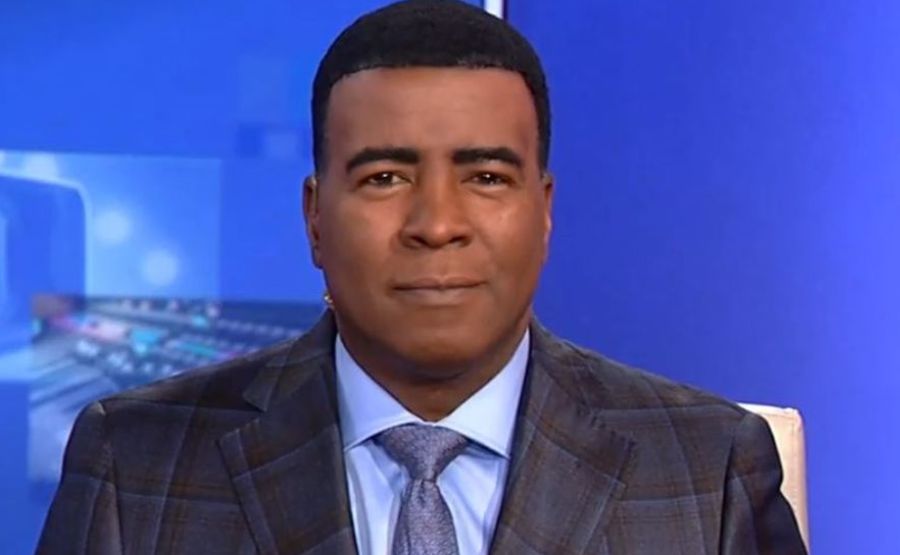
Kevin Corke: The Quiet Authority in the American Newsroom
In an era of performative journalism, Kevin Corke has built a distinguished career through a discipline now grown rare — steady, professional presence across four presidential administrations, two major networks, and more than three decades of live broadcasting.
Quick Bio
| Detail | Information |
| Full Name | Kevin Bernard Corke |
| Date of Birth | February 6, 1965 |
| Birthplace | Detroit, Michigan, USA |
| Nationality | American |
| Ethnicity | African-American |
| Current Role | Senior National Correspondent & Guest Anchor, Fox News Channel |
| Previous Networks | NBC News, ESPN, KUSA-TV (Denver), WTVJ-TV (Miami) |
| Education | B.S. & M.A. in Journalism, University of Colorado Boulder; Littauer Fellow, Harvard Kennedy School |
| Major Awards | Multiple National and Regional Emmy Awards (including Sports Emmy, 2003; News & Documentary Emmy, 2009) |
| Fraternity | Kappa Alpha Psi (Life Member) |
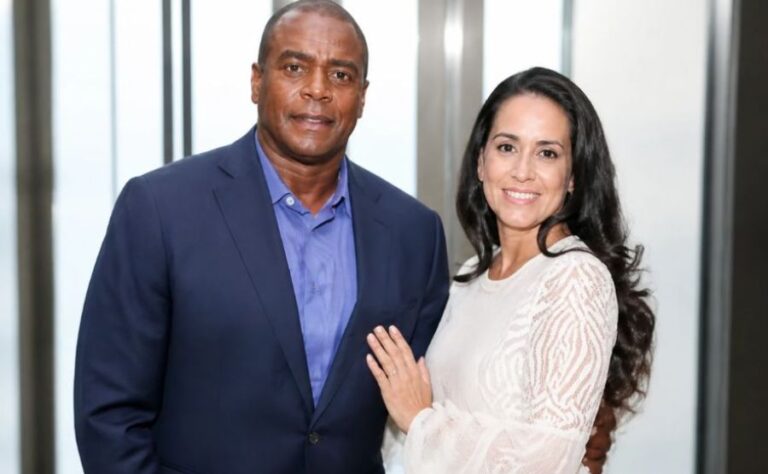
| Personal Life | Private; confirmed unmarried as of 2022 |
| Current Pursuits | Law degree, UDC David A. Clarke School of Law (expected 2027) |
| Notable Coverage | Bush, Obama, Trump, Biden administrations; Virginia Tech massacre; 2020 protests; multiple election cycles |
The Making of a Journalist: Detroit to Denver
Detroit shaped Kevin Corke before any newsroom did. The city carries its own kind of weight — industrial, Black, proud, and perpetually tested — and growing up there instilled in him an instinct for the real story beneath the official one. He would carry that instinct all the way to the White House lawn.
His academic path was deliberate and rigorous. He earned both a bachelor’s and a master’s degree in journalism from the University of Colorado Boulder, a program that gave him editorial discipline alongside broadcast fundamentals. He would later add a Littauer Fellow citation from Harvard University’s Kennedy School of Government — recognition awarded for academic excellence, leadership, and a demonstrated commitment to public service.
What those credentials cannot fully explain is why Corke chose to begin not in politics, not even in news, but in sports. He spent a decade at KUSA-TV (9News) in Denver, Colorado, from 1989 onward, anchoring morning and weekend sportscasts. Those years were not a detour. They were a proving ground where he learned to read a broadcast room, to speak precisely under time pressure, and to communicate complicated events to audiences who simply wanted clarity.
See also “Michael Cannata Jr.: The Man Behind the Curtain“
From Playing Fields to the Olympic Park Bombing
Sports journalism looks easy from the outside. It is not. It demands the same live-broadcast discipline as any breaking news environment, without the luxury of source development or deep analysis to fall back on. Corke mastered it.
He moved from Denver to ESPN in Bristol, Connecticut, somewhere between 1999 and 2004, anchoring SportsCenter — the network’s flagship program — and working as a coordinating producer on live events. The role gave him national exposure and sharpened his production instincts. As part of ESPN’s SportsCenter team, he contributed to work that earned a Sports Emmy Award in 2003.
But it was an assignment before ESPN that first put Corke in proximity to history’s sudden violent edge. In the summer of 1996, still at KUSA-TV and covering the Atlanta Olympic Summer Games, Corke was reporting from Centennial Olympic Park in the hours after a pipe bomb detonated during the Games’ festivities. Two people died; more than a hundred were wounded. He was there in the immediate aftermath, one of his earliest experiences reporting from a scene of mass casualty.
It would not be his last.
The Move That Changed Everything: NBC and the White House
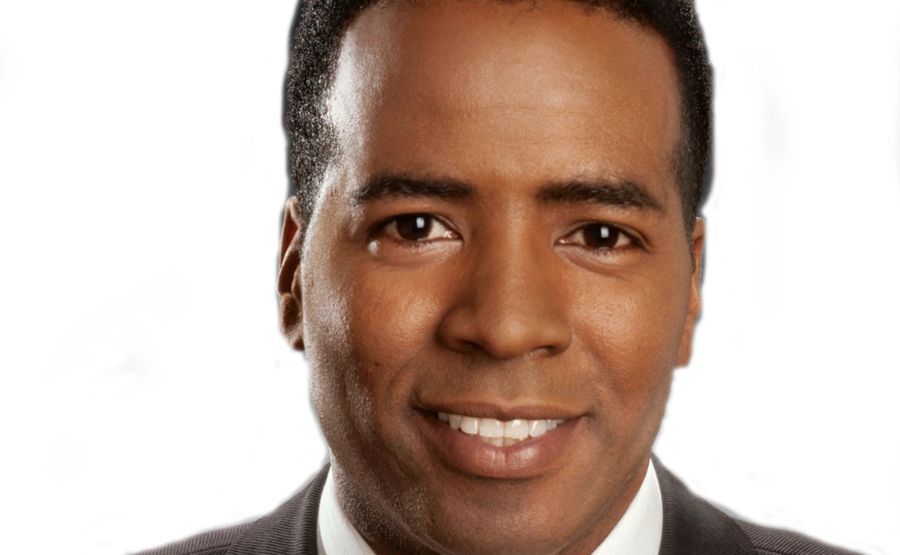
In 2004, Corke made a choice that would redefine his career. He left sports entirely and joined NBC News as a Washington-based national correspondent, entering the White House Press Corps during George W. Bush’s second presidential campaign. The transition was not obvious or guaranteed. Sports broadcasters rarely cross over into political journalism at the national level with any credibility intact. Corke managed it through sheer professionalism.
His early years at NBC placed him everywhere Washington’s power concentrated — the Pentagon, Capitol Hill, the U.S. Supreme Court, and the State Department. He contributed regularly to Today and NBC Nightly News, as well as to MSNBC programs including Hardball with Chris Matthews and Countdown with Keith Olbermann. He also anchored MSNBC’s Super Tuesday coverage during election cycles — a significant assignment in high-stakes political broadcasting.
By November 2007, NBC had named him Sunday White House Correspondent, a formal recognition of his capabilities on the beat. He had covered the Bush administration’s handling of Hurricane Katrina, the wars in Afghanistan and Iraq, border security debates, and international trade disputes. The portfolio was substantial.
The Day That Tested the Journalist
April 16, 2007, will follow Kevin Corke throughout any honest account of his career. When a student opened fire on the campus of Virginia Tech in Blacksburg, Virginia — killing 32 people in what became the deadliest college campus shooting in American history — Corke was the first NBC correspondent to reach the scene.
What he found was a community shattered in real time. He went live that evening on Countdown with Keith Olbermann, reporting from a campus where students, faculty, and police were still processing what had happened mere hours before. His tone that night was measured and precise — he acknowledged the chaos of information without amplifying it. He reported what he knew, contextualized what remained unclear, and communicated the human weight of the tragedy without sensationalizing it.
That broadcast is a small masterclass in field journalism under pressure. Corke described Blacksburg as a “small, close-knit community” where such violence seemed incomprehensible — not as a rhetorical flourish but as a factual statement about why the community’s grief ran so deep. He simultaneously delivered breaking information and acknowledged its limitations. For viewers watching from across the country, he was a steady voice at the center of a story that had none.
His reporting from Virginia Tech earned him a News & Documentary Emmy Award in 2009, recognition for outstanding live coverage of a breaking news event.
The Gap Years and the Return
Corke left NBC News in December 2008, at the end of the Bush administration. What followed was a period less visible to the public — he served as Chief Operating Officer of Archangel Communications LLC, a media consulting firm, and worked as primary news anchor at WTVJ-TV, the NBC affiliate in Miami. He provided media training services, including work with the U.S. Tennis Association.
This interlude is often treated as mere biographical connective tissue. It was more than that. The move to Miami and the consulting work showed a journalist willing to step outside the prestige track, to understand the business of media from an operational perspective, and to absorb local news rhythms from the anchor desk rather than from Washington’s political bubble. These are the kinds of experiences that make correspondents more dimensional.
In January 2014, Fox News Channel hired him as a Washington-based correspondent, filling positions vacated by the retirements of veterans Wendell Goler and Jim Angle. It was a significant hire, and Corke brought with him a versatility — sports, local news, national politics, live breaking news — that few correspondents at any network can claim.
Fox News: The Defining Chapter
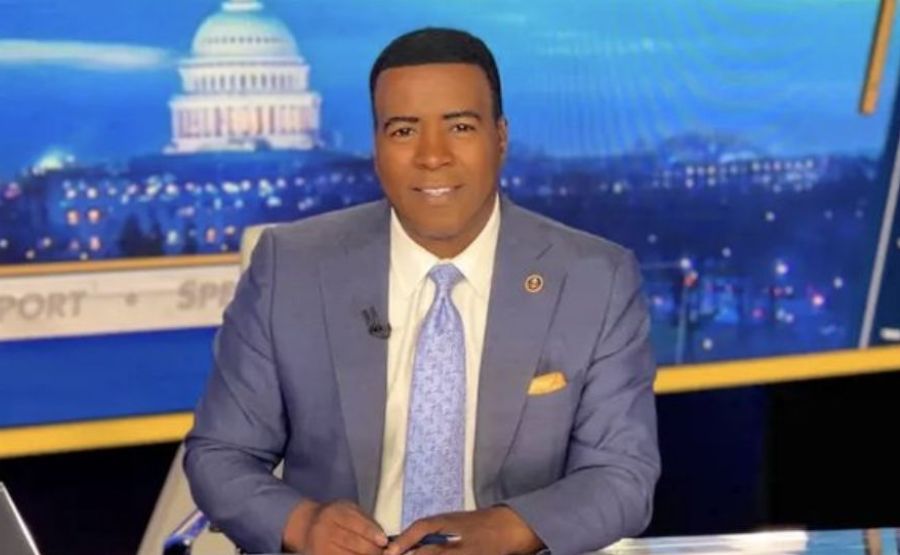
The Fox News years became the most visible and consequential stretch of Corke’s career. He covered the Obama, Trump, and Biden administrations in succession, also adding the earlier Bush coverage from his NBC years to make four full presidential administrations — a distinction shared by only a few correspondents in the history of American television.
He reported from more than fifty countries, covering trade summits, terrorism, diplomatic negotiations, and international policy across multiple continents. He traveled aboard Air Force One on presidential trips abroad. He covered every election cycle since joining Fox News, providing both field reporting and periodic guest-anchor duties on Fox News @ Night.
His prominence grew sharply in 2020, when Fox assigned him to cover the national protests that erupted following the death of George Floyd. The summer of 2020 was a journalistic pressure test — hours of live coverage, shifting events across dozens of cities, competing narratives requiring careful verification. Corke’s coverage was part of Fox’s sustained field presence during those weeks.
In 2025 and 2026, he took on an additional role, announcing the annual Congressional Baseball Game on Fox Sports 1. The assignment was something of a full-circle moment — a veteran political correspondent returning to the sports broadcast world that first trained him.
His ongoing law degree at UDC David A. Clarke School of Law, expected for completion in 2027, points to a man who refuses professional stasis. Whether that credential leads him toward legal analysis, media law, or simply informs his existing reporting remains to be seen.
Personal Life: Privacy as Principle
Few aspects of Kevin Corke’s life generate more public curiosity — and more misinformation — than his personal life. Across a decade of online biography sites and gossip aggregators, various claims have proliferated: that he is married to a woman named Rebecca Ramanda Corke, that he has two children, that his wife is an anesthesiologist, or alternatively a business consultant.
The primary source told a different story. In 2022, Corke stated directly on Twitter: “I am not married.” That public denial contradicts most of what circulates online. A 2020 family obituary that mentioned his siblings made no reference to a spouse — an absence that would be unusual if he were partnered.
What is clear is that Corke has made an active and deliberate choice to protect his private life. For a White House correspondent who covers politically sensitive topics from inside one of America’s most polarized news organizations, that choice is not difficult to understand. Shielding personal relationships from the scrutiny that accompanies his professional position is a reasonable protective instinct.
What can be said is this: Corke is a life member of Kappa Alpha Psi fraternity, an organization with deep roots in African-American professional and civic life. He speaks some Spanish. He has traveled to more than forty countries. He is a committed basketball fan. He reads widely in history and biography — genres that complement the career he has built as a chronicler of power. He was invited to address cadets at the Riverside Military Academy in 2019, speaking on integrity and ethical decision-making.
These are the textures of a private life managed with care and intention.
Legacy and Influence
Kevin Corke’s legacy is not one of the grand, defining dispatch — the single broadcast that reshaped a nation’s understanding of itself. It is something quieter and arguably more durable: the cumulative credibility of consistent, professional journalism across multiple networks, multiple administrations, and multiple categories of story.
He demonstrated that a Black journalist from Detroit could move through sports broadcasting, local news, network political reporting, and national correspondent work without being tokenized into any single role. At ESPN he was a legitimate sports anchor. At NBC he was a legitimate White House correspondent. At Fox News he became one of the network’s more trusted field reporters, respected by colleagues across ideological lines for his command of the beat.
His trajectory also offers a model for aspiring broadcast journalists rarely discussed explicitly: range matters. Corke’s decade in Denver taught him things a straight political journalism path never would have — how to hold live audience attention, how to pivot between scripted and spontaneous material, how to make the complicated feel immediate. Those skills traveled directly into his White House reporting.
His return to law school in his sixties is perhaps the most telling detail of his professional character. It suggests a journalist who has never fully accepted the ceiling of his current role — who sees expertise not as a destination but as a practice.
Final Words
Kevin Corke’s career is a study in what disciplined ambition looks like over the long run, rather than what it looks like in a single celebrated moment. He did not build his reputation through scandal coverage, viral moments, or network star-making machinery. He built it through decades of consistent, competent reporting from consequential locations — the White House lawn, a Virginia college campus under siege, protest lines across American cities, diplomatic venues on five continents.
The tensions in his story are real. He works for a network that critics argue operates as advocacy rather than journalism, and that charge carries weight in the broader conversation about American media. Corke’s own reporting style — measured, fact-forward, visibly disciplined — sits in some tension with the louder corners of the network’s programming. Whether that tension represents journalistic independence or a comfortable institutional arrangement depends on where one stands in that debate.
What resists easy dismissal is the body of work itself. Four presidential administrations. Multiple Emmy Awards. Breaking news reporting under genuine pressure. A law degree pursued in the sixth decade of a life already well-accomplished. These are not the markers of a man coasting.
In the landscape of American broadcast journalism — increasingly populated by opinion, performance, and partisan alignment — Corke’s career represents something worth paying attention to: a reporter who believed, across thirty-plus years, that showing up and doing the work carefully was enough.
It turns out it was more than enough.
FAQs
1. Where was Kevin Corke born and raised?
Corke was born on February 6, 1965, in Detroit, Michigan. He grew up in the city before pursuing higher education in Colorado.
2. Where did Kevin Corke attend college?
He earned both his bachelor’s and master’s degrees in journalism from the University of Colorado Boulder. He also received the prestigious Littauer Fellow citation from Harvard University’s Kennedy School of Government for academic excellence and leadership.
3. How did Kevin Corke begin his journalism career?
He started as a sports anchor and reporter at KUSA-TV (9News) in Denver, Colorado, beginning in 1989. He worked there for approximately a decade before moving to ESPN.
4. What did Corke do at ESPN?
He anchored SportsCenter, the network’s flagship program, and served as a coordinating producer on live broadcasts. He covered major sporting events including the Olympic Games. His team won a Sports Emmy Award in 2003.
5. When did Corke shift from sports to political journalism?
In 2004, when he joined NBC News as a national correspondent based in Washington, D.C., and entered the White House Press Corps during the Bush administration.
6. What was Kevin Corke’s role during the Virginia Tech shooting coverage?
He was the first NBC News correspondent to arrive on the scene at Virginia Tech on April 16, 2007, and provided live field reports during one of the deadliest mass shootings in American history. His coverage later contributed to a News & Documentary Emmy Award in 2009.
7. Why did Corke leave NBC News?
He departed NBC in December 2008 at the end of the Bush administration. He subsequently worked in media consulting and as a news anchor at WTVJ-TV in Miami before joining Fox News.
8. When did Kevin Corke start working for Fox News?
He joined Fox News Channel on January 5, 2014, as a Washington-based senior national correspondent.
9. How many presidential administrations has he covered?
Four: George W. Bush (at NBC News), and Barack Obama, Donald Trump, and Joe Biden (at Fox News).
10. Is Kevin Corke married?
In a 2022 post on Twitter, Corke publicly stated he is not married. Numerous online sources have made incorrect claims about a spouse; those claims appear to be unfoundedHe keeps his personal life very private.
11. What awards has Kevin Corke won?
As a member of ESPN’s SportsCenter team, he received several national and regional Emmy Awards, including a Sports Emmy for Outstanding Studio Show – Daily (2003) and a News & Documentary Emmy for Outstanding Live Coverage of a Current News Story – Long Form (2009).
12. What is Kevin Corke currently working on beyond Fox News?
As of 2025–2026, he is pursuing a law degree at UDC David A. Clarke School of Law, expected to be completed in 2027. He also began announcing the Congressional Baseball Game on Fox Sports 1 in 2025.
13. What fraternity does Kevin Corke belong to?
He is a life member of Kappa Alpha Psi Fraternity, Inc., a historically African-American Greek-letter organization.
14. Has Kevin Corke reported internationally?
Yes. He has reported from more than fifty countries, covering terrorism, trade, diplomacy, and international policy across multiple continents. He also traveled aboard Air Force One on presidential foreign trips.
15. What distinguishes Kevin Corke’s journalistic approach?
His career is marked by cross-disciplinary versatility — moving credibly from sports broadcasting to local news anchoring to national political correspondence — combined with a measured, fact-centered on-air style that has remained consistent across networks and administrations. His pursuit of a law degree in his sixties suggests an ongoing commitment to expanding his analytical capabilities rather than consolidating past achievements.
Discover more, learn every day, and fuel your curiosity with Daily Discover.