Laura Clery: The Comedian Who Built an Empire on Honesty
In an era when the internet rewards performance over authenticity, Laura Clery chose to make vulnerability her brand—and in doing so, reached tens of millions of people who had never seen themselves reflected in a comedy sketch before.
Quick Bio
| Detail | Information |
| Full Name | Laura Marie Clery |
| Born | July 22, 1986 |
| Birthplace | Downers Grove, Illinois, USA |
| Nationality | American |
| Occupations | Actress, Comedian, Author, Social Media Creator, Podcaster |
| Key Characters | Helen Horbath (Help Helen Smash), Ivy, Pamela Pupkin |
| Major Works | Idiot (2019, nominated Audie Award for Humor); Idiots: Marriage, Motherhood, Milk & Mistakes (2022) |
| Television | ‘Til Death (2008–2010), Disaster Date (2009–2010), 2 Broke Girls, The League |
| Social Reach | 14M+ Facebook, 7.6M TikTok, 3.1M Instagram (as of 2026) |
| Former Spouse | Stephen Hilton (m. 2012, div. 2023) |
| Children | Alfred “Alfie” Sound Hilton (b. 2019), Penelope “Poppy” Marilyn Hilton (b. 2021) |
| Other Ventures | BOIBS apparel company, Idiot podcast |
The Funny Girl from Downers Grove
Laura Clery did not grow up expecting to build a media company from a smartphone in her living room. She grew up in Downers Grove, a quiet suburb southwest of Chicago, in a world far removed from Hollywood’s machinery. Even as a child, she understood intuitively that laughter was the most reliable tool she owned.
She was the class clown, the one who could imitate anyone, the one teachers struggled to quiet. That natural aptitude for comic performance was less a choice than a compulsion—a way of making herself legible to the world. At seventeen, she graduated early from a local private high school and boarded a plane, reportedly with roughly forty dollars in her pocket, chasing a dream she couldn’t yet fully articulate.
She went first to New York, then eventually to Los Angeles, where the entertainment industry had room for a thousand versions of her and space for almost none. The Midwest had given her a grounded sensibility and a hunger for connection. Hollywood, at first, gave her very little in return.
See also “Beckett O’Brien: The Comedian’s Son Who Stays Quiet”
Hollywood’s Revolving Door
Clery’s early career was a lesson in institutional friction. She secured small roles in short films—Stranded (2006), The Hitchhiking Game (2008), How Deep Is the Ocean (2009)—and landed recurring television work on the Brad Garrett sitcom ‘Til Death between 2008 and 2010. She appeared on MTV’s Disaster Date, in episodes of 2 Broke Girls and The League, and in the 2014 feature film The Longest Week. By any measure, she was working.
But working in Hollywood and thriving in Hollywood are entirely different conditions. Clery was continually at the mercy of casting directors, producers, and development executives whose criteria shifted constantly. She did not control her own story. She was available to be chosen or discarded.
She found a brief creative lifeline in 2013 when she co-wrote and starred in Hungry, a web series produced by Russell Simmons’ ADD Network. Writing her own material for the first time revealed something important: she was a creator, not just a performer. That distinction would prove decisive.
The Pivot That Changed Everything
In 2015, at a personal and professional crossroads, Clery began uploading comedy to YouTube. The audience was modest. The platform was saturated. The algorithm did not favor newcomers without existing infrastructure.
Then Facebook changed the equation. The platform was building its video arm in earnest in 2016 and 2017, actively seeking creators who could anchor it. Clery recognized the opening. Facebook had reached without the crowding of YouTube, and it rewarded consistent, native content with organic amplification. Her choice to join the platform’s revenue-sharing scheme early on was motivated more by a true entrepreneurial spirit than by good fortune.
In the early months, she boosted her posts with her own money to seed an audience. The investment worked. Then came Helen.
Helen Horbath and the Ugly Beauty of Going Viral
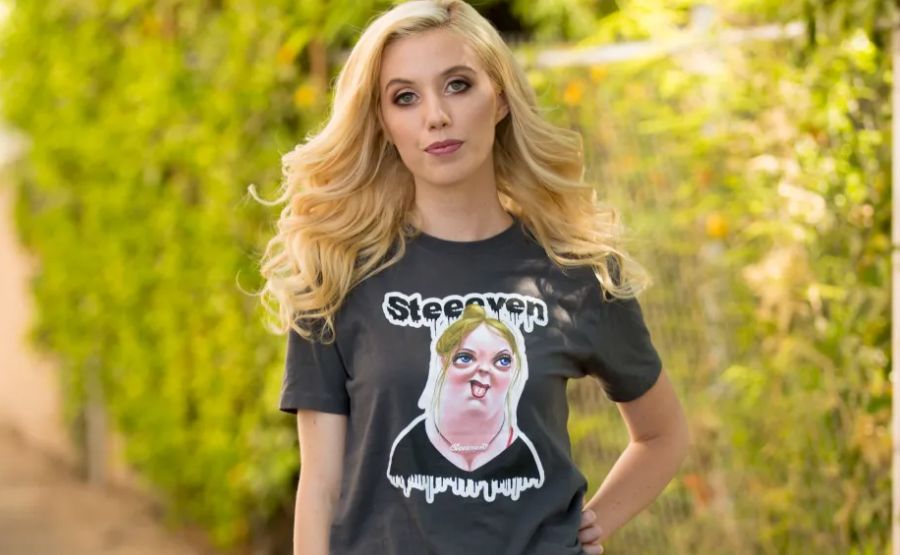
The character of Helen Horbath emerged from a moment of idle experimentation. Clery picked up a Snapchat filter that distorted her face—stretching her jaw wide, squaring her features—and turned to her husband Stephen with a spectacularly terrible pickup line. The clip she posted afterward changed the trajectory of her career.
Helen was everything Clery’s model-adjacent physical appearance was not: graceless, oblivious, desperately pursuing a man clearly out of her league. The character’s appeal resided precisely in that gap. Clery, tall and conventionally striking, was hiding behind a grotesque digital mask to play the unloved, the unbeautiful, the one who tries too hard and fails gloriously. Audiences recognized something true in it.
The Help Helen Smash series exploded. Monthly views on the Helen content jumped from 14 million to over 100 million within weeks in mid-2017. The New York Times profiled Clery as an emblem of how social media video stars were increasingly choosing Facebook over YouTube. Facebook itself featured her at VidCon, signaling her status as one of the platform’s flagship creators.
Helen was joined by other characters—Ivy, the self-absorbed Instagram influencer performing with depth she doesn’t possess; Pamela Pupkin, a cascade of obliviousness. All were played by Clery. All landed because they were not merely satirical. They held something recognizable and quietly sad beneath the joke.
The Architecture of an Empire
By 2017, Laura Clery had stopped being a performer waiting to be cast. She was a chief executive of her own creative operation, producing, directing, writing, and starring in her content while managing the audience relationships that sustained it.
She launched the Idiot podcast in January 2018, co-hosted with Christian McLaughlin and produced by Studio71. The show accumulated nearly 200 episodes and maintained a near-perfect rating on Apple Podcasts, covering addiction, relationships, parenting, mental health, and sobriety with the kind of candor that professional media rarely permits.
In 2019, she partnered with Comedy Central for The Laura Clery Project, a Snapchat sketch series she directed, wrote, and starred in. The same year, she published her debut memoir, Idiot: Life Stories from the Creator of Help Helen Smash, through Gallery Books. The book earned an Audie Award nomination for Humor in 2020. Its 2022 follow-up, Idiots: Marriage, Motherhood, Milk & Mistakes, extended the personal chronicle into parenthood.
She also founded BOIBS, a family-focused apparel line born from a direct provocation: a stranger publicly shamed her for breastfeeding her child. The company converted private indignation into public enterprise—a pattern consistent with her larger creative philosophy.
Her business model resisted dependence on any single platform or revenue stream, distributing her intellectual property across merchandise, books, brand partnerships, podcasting, and social media. By the mid-2020s, she had accumulated combined viewership in the billions.
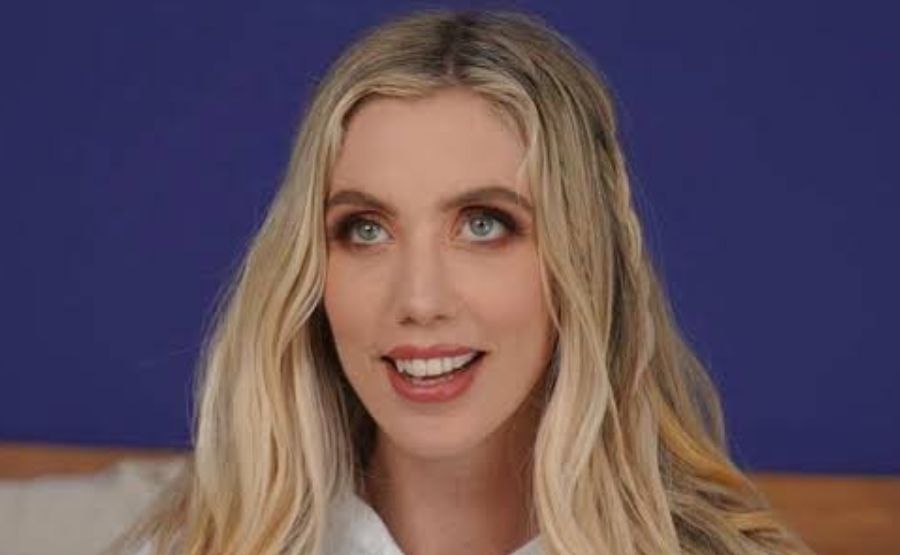
Personal Life, Private Struggles, and the Courage of Disclosure
Clery’s willingness to discuss her own history of substance abuse has defined her public persona as much as any character she plays. She began using cocaine in her early twenties, in a period she describes not as destitution but as profound internal emptiness. She held her apartment. She kept booking work. The decline, she insists, was not visible from the outside.
“For me, rock bottom was more internal,” she told Katie Couric in 2019. “I was not on Skid Row. I was still managing to book jobs. But I got to the point where I didn’t care if I woke up in the morning.”
Her recovery involved total abstinence, daily practices of gratitude and meditation, and a fundamental shift in how she understood her own purpose. She did not merely stop using drugs; she reconstructed her identity around something more durable. Sobriety became the premise of everything else—her marriage, her content, her advocacy.
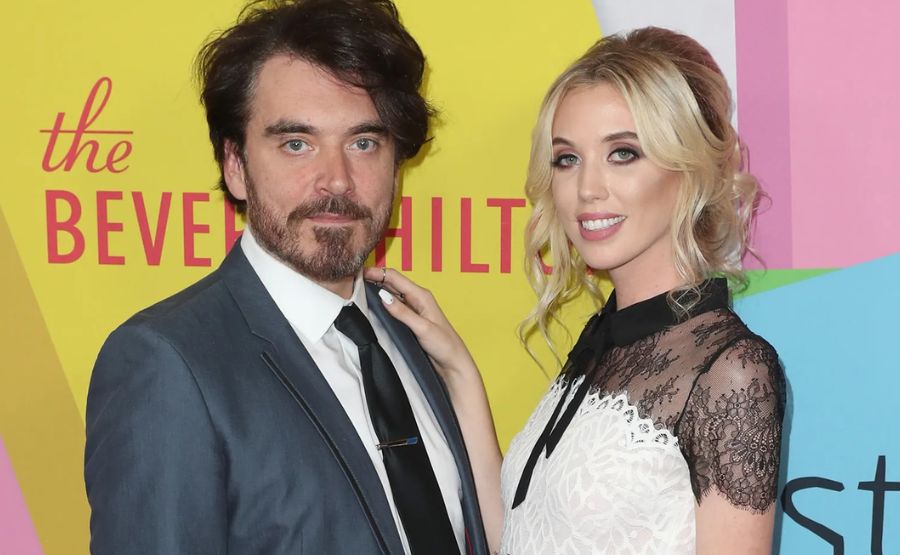
She married Stephen Hilton in 2012, after meeting him during the period when both were navigating their own struggles. Hilton, a British composer whose credits includes working with Hans Zimmer on films like Ocean’s Eleven and Quantum of Solace, contributed both personal complexity and artistic ambition in equal measure.He appeared in her videos consistently, most memorably as the hapless object of Helen Horbath’s relentless affection. The marriage felt, from the outside, like a genuinely functional partnership.
Their son Alfred, known as Alfie, was born in April 2019. Clery announced publicly in 2021 that Alfie is autistic, bringing her audience into a dimension of parenting that Instagram aesthetics typically obscure. Daughter Penelope—Poppy—was born in March 2021.
In August 2022, Clery announced the couple’s separation in a YouTube video. The divorce was finalized in 2023. In public, she was measured: they had grown apart, they shared co-parenting responsibilities, they lived approximately a mile from each other for the children’s convenience. Privately, the situation was considerably darker.
Hilton had relapsed in early 2025, framing it publicly as an intentional creative experiment. Court records showed he had been arrested in December 2022 on a charge of battery against a cohabitant, with bail set at $20,000. By mid-2025, Clery had obtained a domestic violence restraining order after concerns about child safety during unsupervised visits. She later disclosed that Hilton had allegedly hacked her Facebook account—her primary professional platform—deleting years of archived content. Legal proceedings continued through 2025 and into 2026.
Clery addressed these events directly with her audience, again choosing transparency over image management. “I guess it just makes it a little trickier when you’ve got kids in the mix,” she said in one podcast episode, visibly emotional. “My heart just breaks for the kids.”
The death of a cousin to addiction, a loss Clery has spoken about with visible grief, further sharpened her advocacy work. She told NewsNation, “I know what an incredible woman she was.” “She just had a disease.” The anguish of surviving something that killed a loved one—and realizing that survival depended on both hard work and luck—informs every aspect of recovery-related content she produces.
The ADD Question and the Neurodivergent Audience
Clery has disclosed her diagnosis of attention deficit disorder, which Hilton also shared. Their discussions of ADD—including a memorable episode featuring neuroscientist Dr. Daniel Amen—reached audiences who rarely saw their own cognitive experiences treated as a normal, manageable aspect of a successful life. The disclosure was quiet but consequential. Neurodivergent viewers found in Clery a figure who was thriving without hiding what made her different.
Controversy, Complexity, and the Limits of Openness
No portrait of Clery is complete without acknowledging the tensions in her story. Her marriage, celebrated publicly for years, concealed serious dysfunction. Her ex-husband’s political shift toward far-right content—which she was careful to distance herself from while declining to control—complicated the image of the partnership their audience had come to know.
Her style of radical personal disclosure, which built her following, also exposes her to a particular kind of parasocial risk: audiences who feel they know her personally, and whose investment in her life can become demanding. The line between community and surveillance, between sharing and oversharing, is one that digital creators navigate without a map.
Critics have occasionally noted that the memoir format—funny, confessional, ultimately redemptive—can flatten genuine complexity into palatable narrative. Her books work partly because they follow a recognizable arc: chaos, consequence, recovery, growth. The messier truth, as her post-divorce experience suggests, does not always resolve so cleanly.
Legacy and Influence
Laura Clery did not invent the confessional comedy format. She did not create the character-based sketch video. What she did was demonstrate that Facebook—a platform industry consensus had already written off as a creator space by 2016—could sustain a genuine entertainment franchise built by a single woman with a phone and a Snapchat filter.
She helped legitimize a path for creators who lacked the infrastructure of traditional media, and whose content was too personal, too unglamorous, or too specific to the granularity of real life to succeed in conventional entertainment formats. She built her audience by removing the aspirational filter that governed most digital content. The people who followed her were not aspiring to be her; they were relieved to recognize themselves in her.
Her recovery advocacy has reached people who would not have sought out a traditional treatment narrative. Her public parenting of a neurodiverse child has given visibility to experiences that remain underrepresented in mainstream media. Her BOIBS venture, whatever its commercial trajectory, was a direct response to the policing of women’s bodies in public—an act of commerce that began as an act of defiance.
Invisible Narratives announced in 2021 that Clery was attached to a comedy series called The Nanny, written with Teachers scribes Katy Colloton and Katie O’Brien, suggesting that the traditional industry she once failed to crack had begun circling back toward her on her own terms.
As of mid-2026, Clery has over 14 million Facebook followers, 7.6 million TikTok followers, and 3.1 million Instagram followers—numbers that continue to grow despite years of personal upheaval that would have destroyed less resilient public presences.
Final Words
Laura Clery’s story resists the simple satisfactions of the rise-and-triumph narrative. She found success by abandoning the industry that wouldn’t have her, building something new on platforms whose longevity no one could guarantee. She built a persona grounded in honesty and then lived, publicly, through experiences that tested that honesty’s limits.
She is not a saint of recovery or a perfect mother or an uncomplicated feminist icon. She is a woman who faced real damage—addiction, a marriage that became dangerous, the particular exhaustion of raising children while navigating public conflict—and kept turning up. She kept making content. She kept talking.
That consistency, more than any single viral moment, is the real measure of what she has built. An audience that returns not for performance but for presence. A body of work that is genuinely funny and genuinely personal and genuinely imperfect—which is, finally, the only kind that lasts.
FAQs
1. Where was Laura Clery born and raised?
She was born on July 22, 1986, in Downers Grove, Illinois, a suburb southwest of Chicago, where she spent her childhood and early adolescence before moving to Los Angeles at seventeen.
2. How did Laura Clery first gain widespread attention?
She first gained widespread attention through Facebook Video, where her character Helen Horbath—created using a Snapchat face-distorting filter—went massively viral in 2016 and 2017, with monthly views surging into the hundreds of millions.
3. Who is Helen Horbath?
Helen Horbath is a fictional character Clery created for the Help Helen Smash series: a socially oblivious woman who pursues her apparently uninterested crush (played by Clery’s real-life husband) with relentless, terrible pickup lines. The character’s grotesque filter stands in deliberate contrast to Clery’s conventional appearance.
4. What other characters has Clery created?
Her major recurring characters include Ivy, a vain and delusional Instagram model, and Pamela Pupkin, an exuberantly clueless persona. Each trades in deadpan earnestness rather than broad satirical contempt.
5. What is Laura Clery’s book Idiot about?
Published in 2019, Idiot: Life Stories from the Creator of Help Helen Smash is a memoir in essay form covering Clery’s cocaine addiction, her mental health struggles, her path to sobriety, and the relationship that became her marriage to Stephen Hilton. It was nominated for an Audie Award for Humor in 2020.
6. Did Laura Clery struggle with addiction?
Yes. Clery has described a period of serious cocaine addiction in her early twenties. She has been open about the fact that her lowest point was primarily internal rather than visibly catastrophic, and that recovery required complete abstinence rather than moderation.
7. Who was Stephen Hilton and what was his relationship to her career?
Stephen Hilton is a British composer whose credits include film scores for Quantum of Solace and Hans Zimmer collaborations. He became a frequent on-screen presence in Clery’s videos and co-hosted content about their shared experiences with addiction and recovery. The couple married in 2012 and divorced in 2023.
8. What happened between Laura Clery and Stephen Hilton?
They separated in August 2022 and finalized their divorce in 2023. Co-parenting became contentious after Hilton relapsed in early 2025. Clery obtained a domestic violence restraining order in 2025 following safety concerns. Legal disputes continued through 2025 and into 2026.
9. Does Laura Clery have children?
She has two children with Stephen Hilton: son Alfred “Alfie” Sound Hilton, born in April 2019, and daughter Penelope “Poppy” Marilyn Hilton, born in March 2021. Clery publicly disclosed in 2021 that Alfie is autistic.
10. What is BOIBS?
BOIBS is a family-focused apparel company Clery founded after a stranger shamed her for breastfeeding in public. It was conceived as an act of advocacy as much as a commercial enterprise.
11. Why did Clery choose Facebook over YouTube?
She entered Facebook Video in 2016 when the platform was actively building its video infrastructure and rewarding early creators with organic reach. She recognized that YouTube was saturated while Facebook offered a new, less competitive surface for growing an audience. She became one of the first participants in Facebook’s creator revenue-sharing program.
12. What is the Idiot podcast?
Idiot with Laura Clery launched in January 2018, co-hosted with Christian McLaughlin and produced by Studio71. Over nearly 200 episodes, it has addressed addiction, parenting, mental health, relationships, and sobriety, accumulating a near-perfect audience rating on Apple Podcasts.
13. Has Laura Clery worked in traditional television?
Yes. Her television credits include a recurring role on the Fox sitcom ‘Til Death alongside Brad Garrett (2008–2010), MTV’s Disaster Date (2009–2010), 2 Broke Girls, and The League. She also appeared in the 2014 film The Longest Week. As of 2021, she was attached to a television comedy project called The Nanny through Invisible Narratives.
14. What advocacy work does Clery engage in beyond comedy?
She actively advocates for addiction recovery, using her platforms to destigmatize substance abuse and share resources.She has talked about how addiction claimed the life of a cousin.She also advocates for breastfeeding rights, neurodiversity awareness through parenting content about her son Alfie, and mental health openness.
15. What is Laura Clery’s significance in the creator economy?
Clery demonstrated that Facebook could support a fully professional entertainment franchise built by an independent creator, predating many of the platform’s current creator tools. She showed that radical personal transparency—covering addiction, marriage, parenting failure, and public grief—could sustain a larger and more loyal audience than aspirational content. Her model influenced how creators approach vulnerability as a long-term brand asset.
Discover more, learn every day, and fuel your curiosity with Daily Discover.