Pilar Sanders Ethnicity: Multiracial Identity, Resilience, and Reinvention in the Public Eye
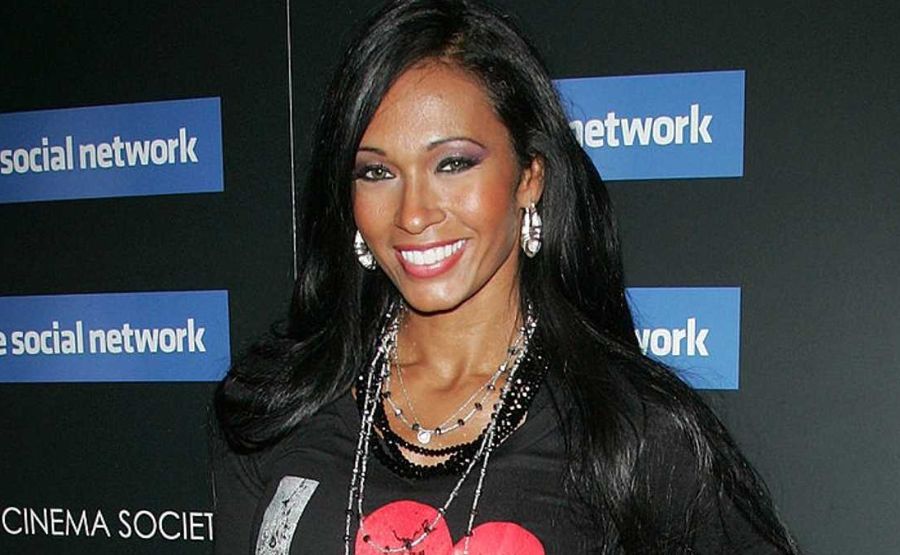
She matters not because she was once married to a football legend, but because she has spent three decades refusing to be defined by that fact.
Quick Facts
| Detail | Information |
| Full Name | Pilar Michelle Biggers Sanders |
| Born | October 10, 1974, Elmira, New York, USA |
| Nationality | American |
| Ethnicity | Multiracial — African American, Filipino, and Puerto Rican |
| Parents | Daniel “Dan” Biggers (African American, from South Carolina; former boxer, worked at General Electric) and Jeanette Biggers (Filipino and Puerto Rican heritage) |
| Siblings | Scottie Biggers, Kandie Biggers |
| Education | Elmira Free Academy (graduated 1992); attended Syracuse University |
| Key Roles | Model, actress, fitness entrepreneur, certified trainer, TV personality, philanthropist |
| Former Spouse | Deion Sanders (married May 1999; divorced 2013) |
| Children | Shilo Sanders (b. 2000), Shedeur Sanders (b. 2003), Shelomi Sanders (b. 2003) |
| Notable Works | Deion & Pilar: Prime Time Love (Oxygen, 2008), Football Wives (VH1, 2010), Walker, Texas Ranger, The Jamie Foxx Show, Veronica’s Closet |
| Business Ventures | Pilar Fit 4Life, Essence of Beshalom Foundation |
| Certifications | NASM Certified Personal Trainer; Black Belt in Taekwondo |
| Estimated Net Worth | Approximately $5 million |
The Tapestry of Origins
Pilar Sanders carries three cultural inheritances in a single body, and that layering has shaped everything from how she looks to how she has survived.
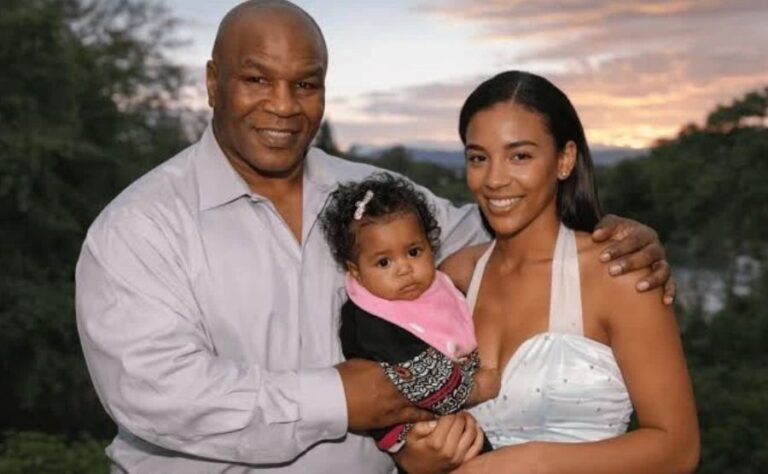
She was born Pilar Michelle Biggers on October 10, 1974, in Elmira, New York, a mid-size city in the Southern Tier region tucked between the Chemung River and the Appalachian foothills. Her father, Daniel “Dan” Biggers, was an African American man originally from South Carolina who worked for General Electric and also had a history as a boxer. Her mother, Jeanette, brought Filipino and Puerto Rican ancestry into the household — a blend that gave Pilar a striking, difficult-to-categorize appearance that would eventually serve her well in the modeling world.
This multiracial background was not, by her own account, a source of confusion during childhood. It was simply the texture of her home. Elmira, while not a cultural crossroads of New York City’s magnitude, had its own quiet diversity, and the Biggers household — which also included siblings Scottie and Kandie — was grounded in working-class stability, Christian faith, and a clear expectation that its children would excel. Her father’s boxing background spoke to something physical and disciplined. Her mother’s dual heritage — Filipino and Puerto Rican — represented the diaspora of two communities that have each navigated their own complex relationships with American identity, and both streams flowed into Pilar’s sense of self.
What does it mean to be African American, Filipino, and Puerto Rican simultaneously in late twentieth-century America? It means occupying spaces that no single box adequately contains. It means being “other” in ways that shift depending on who is doing the looking. For Pilar, this identity became something she has never loudly performed but has quietly embodied throughout a public life that has tested her at every turn.
See also ”Lil Scrappy Net Worth: The Street’s Accountant — A Life Measured in Beats, Battles, and Reinvention”
From Elmira to the Catwalk
Pilar graduated from Elmira Free Academy in 1992 and enrolled at Syracuse University, where she balanced academics with a quickly sharpening eye for opportunity.
She did not wait for the entertainment industry to come to her. During her high school years and then into her early college period, she began cultivating a career in modeling, securing representation with two of the industry’s most prestigious agencies: Ford Models and Irene Marie. The combination was significant — Ford was a global powerhouse with decades of influence over the fashion world, and Irene Marie was a respected South Florida firm with a strong track record of launching multicultural talent.
She left Syracuse before completing her degree, dropping out during her senior year to pursue a full-time modeling contract — a gamble that reflected either extraordinary confidence or a clarity of ambition that most undergraduates never develop. Print campaigns and runway work formed the foundation, but Pilar’s ambitions extended further than magazine pages and fashion shows. She caught the acting bug quickly, and in the mid-1990s began booking television roles.
Her acting credits during this period read like a map of the era’s most popular primetime and late-night programming: guest appearances on Walker, Texas Ranger, The Jamie Foxx Show, Veronica’s Closet, and LL Cool J’s In the House. These were not starring roles. They were the kind of persistent, building-block appearances that mark a young actor constructing a career one call sheet at a time. She also appeared in feature films including The Mod Squad, Streets of Blood, and Percentage. None of these projects made her a household name. But they established her as a working professional with range and determination.
Marriage, Celebrity, and the Reality TV Experiment
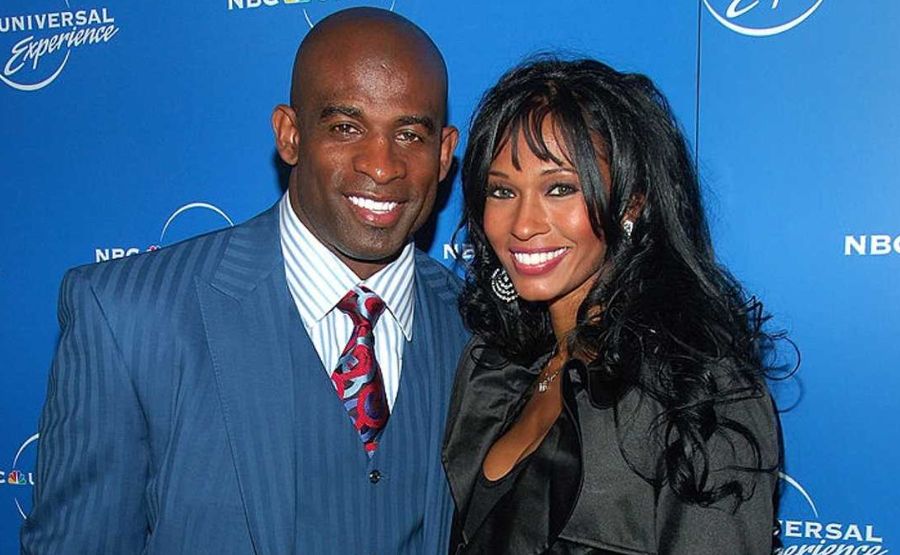
Pilar met Deion Sanders in the mid-1990s through her work in entertainment circles, and the two married on May 21, 1999, in a lavish ceremony that signaled the scale of life she was entering.
Deion Sanders was not merely famous. He was one of the most flamboyant, commercially powerful, and culturally significant athletes America had ever produced — a two-sport professional who had won Super Bowls with the San Francisco 49ers and Dallas Cowboys, appeared in MLB games, and turned the phrase “Prime Time” into a personal mythology. Marrying him meant stepping into a life of immense wealth, enormous scrutiny, and a kind of celebrity that operates by its own chaotic physics.
Together they had three children: Shilo (born 2000), Shedeur (born 2003), and Shelomi (born 2003). By all outward appearances — palatial homes in Texas, luxury travel, their children enrolled in elite sports programs — the Sanders household was the embodiment of American success.
In 2008, they brought cameras into that household. Pilar was both a subject and a co-producer in Deion & Pilar: Prime Time Love, which broadcast on the Oxygen Network. She had creative control over how her family’s story would be told. The show offered an intimate look at the negotiation of ego, ambition, and domesticity inside a spectacularly privileged marriage. She also appeared on the VH1 reality series Football Wives in 2010, which positioned her among the partners of other NFL players navigating the peculiar pressures of that world.
These reality appearances were a double-edged proposition. They humanized her and gave her a platform. They also permanently attached her identity to Deion’s orbit in the public imagination — a gravitational pull she would spend years trying to break free from.
The Divorce: A Public Unraveling
What happened between Pilar and Deion Sanders after 2011 was not a quiet dissolution. It was one of the most bitterly contested celebrity divorces of its decade.
Deion filed for divorce in December 2011, citing adultery — a claim Pilar denied under oath, weeping in the courtroom as she testified. In April 2012, police were called to the couple’s home in Prosper, Texas, following an alleged domestic dispute. Pilar was arrested on suspicion of assault, but the picture that emerged in subsequent hearings was complicated: an orthopedic surgeon testified that Pilar had required surgery for injuries to her elbow and thumb sustained during the same confrontation, and a month later Deion himself faced accusations of destroying a cellphone during the incident.
A two-day protective order hearing resulted in Pilar being ordered to remain at least 500 yards from the family’s Dallas-area mansion.Deion was given interim custody of the kids. What followed was a protracted legal war fought in Texas courts over the prenuptial agreement Pilar had signed before their wedding — a document she challenged as invalid — and the custody of their three children.
The trial’s courtroom drama was documented in real time by television cameras and tabloid reporters. At one point, Pilar’s attorneys attempted to introduce allegations about steroid use; Deion stood up, muttered under his breath, and walked out of the courtroom, returning only after the lunch break. He attributed the exit to disbelief. The judge struck the steroid testimony from the record.
In March 2013, a jury of 11 of 12 voted to award Deion full physical and legal custody of their two sons, Shilo and Shedeur, while granting the couple shared custody of their daughter Shelomi. The prenuptial agreement was upheld. Pilar received $100,000 she had been paid when she originally signed the document, plus the $1 million guaranteed upon divorce by its terms. She was also ordered to pay Deion $2.2 million in a defamation judgment related to statements made after the proceedings.
In an especially surreal postscript, court documents from this period show Pilar filing paperwork declaring herself a “Moorish National Aboriginal” — a legally dubious maneuver suggesting she believed herself exempt from American courts. Legal observers dismissed the claim, and it did not affect the outcome of the proceedings.
The financial strain was real. Reports surfaced that she owed Capital One approximately $6,000 and had not paid. Months of negative headlines had tarnished her public image. And she was navigating all of this while her three children watched their parents dismantle the household they had grown up in.
Personal Life: Struggle, Reinvention, and Identity
After the divorce was finalized, Pilar did not retreat.
She was linked romantically to Odell Beckham Jr. for a period, and later announced a relationship with James Prince, the influential CEO of Rap-a-Lot Records, in 2019. These relationships unfolded quietly compared to the noise of her marriage. Whether either represented lasting love or the kind of companionship that helps a person rebuild after catastrophic public exposure, only she knows.
What is clearly documented is the physical and personal reconstruction she undertook. Pilar had always been athletic — her sports background included soccer, tennis, track, and swimming — but after the divorce she channeled that discipline into a professional identity of her own making. She became a NASM Certified Personal Trainer and earned a black belt in Taekwondo, a discipline that requires not just physical rigor but the kind of sustained mental fortitude that her post-divorce years demanded.
She also deepened her philanthropic commitments. She co-founded Prime Time Achievers, a summer camp for children, alongside Deion during their marriage. After the split, she founded the Essence of Beshalom Foundation, aimed specifically at helping young girls develop self-confidence and practical life skills. The name Beshalom — derived from Hebrew, meaning “in peace” — offered a quiet signal about where she was trying to move.
Her relationship with her identity as a multiracial American woman has threaded through all of this. Pilar has never given a landmark interview on the subject of being African American, Filipino, and Puerto Rican simultaneously. She has not written a memoir or mounted a public campaign around mixed-race identity politics. Instead, she has simply lived as that person — in a culture that frequently tries to force multiracial individuals into monolithic categories — and let the complexity speak for itself.
Pilar Fit 4Life: Building on Her Own Terms
The clearest expression of Pilar Sanders’ post-divorce self is Pilar Fit 4Life, the wellness brand and fitness video series she launched after 2013.
The platform offers workout routines, nutritional guidance, and motivational content — a blend that positions Pilar not as a passive celebrity lending her name to a product, but as a practitioner who has done the physical and emotional work herself. Her NASM certification and her Taekwondo black belt are not decorative credentials. They represent years of disciplined study and training that undergird the credibility of her programming.
She promotes the brand primarily through social media, where she has built an engaged following. In recent years, she has also identified herself as an NIL (Name, Image, and Likeness) specialist, working particularly with her daughter Shelomi as the landscape of college athletics has transformed under new compensation rules.
The fitness work is, in many ways, the most authentically Pilar enterprise of her career — built entirely on her own expertise, without Deion Sanders’ name or resources, without a major network’s backing, and without the glamour infrastructure that supported her earlier modeling and acting work.
Legacy and Influence: A Mother in the Spotlight
By 2025 and 2026, Pilar Sanders’ most visible public role has become the one she cannot fully control: mother of athletes that millions of people care about deeply.
Shedeur Sanders entered the 2025 NFL Draft as a projected top-five pick — a quarterback who had led Colorado to a 9-3 season under his father’s coaching, thrown for over 4,000 yards, and won the 2024 Johnny Unitas Golden Arm Award. He was passed over in round after round in what became one of the draft’s defining controversies before the Cleveland Browns selected him at pick 144 in the fifth round. Pilar was present at his celebration, dancing with Shedeur and Shelomi in a TikTok video that went viral. Her son went on to start seven games for Cleveland in his rookie season.
Shilo Sanders, the elder son, played safety at Colorado before going undrafted and signing with the Tampa Bay Buccaneers — then being released in August 2025 following an ejection from a preseason game. Shelomi Sanders pursued basketball, playing at Jackson State, the University of Colorado, and Alabama A&M.
Pilar has attended games, posted support on social media, worn custom jerseys, and shown up publicly in ways that affirm motherhood as her most consistent public identity. In April 2025, she attended Shedeur’s jersey retirement ceremony at Folsom Field. Through the 2025 NFL season, she was visible at Browns games in Cleveland, including a December 2025 matchup against the Buffalo Bills where her fur coat generated its own round of social media commentary.
She and Deion Sanders, by all accounts, avoid each other in public settings. Their children serve as the only bridge across a divide that the courts, the tabloids, and years of mutual allegations have made permanent. Yet both have shown up — separately — for the milestones that matter.
Final Words
Pilar Sanders is a complicated figure rendered simple by a media culture that prefers its narratives clean.
The simple version: she was a model and actress who married a famous athlete, had a spectacularly ugly divorce, and is now best known as the mother of future NFL players. This account is not wrong. It is merely insufficient.
The fuller version is of a multiracial woman born to a boxer and a mother of Filipino and Puerto Rican descent in a mid-size New York city, who built a modeling career through discipline rather than luck, navigated the particular pressures of celebrity marriage with more agency than she was usually credited for, survived a public dismantling that would have ended lesser people, and then rebuilt herself through physical discipline, entrepreneurship, and devotion to her children.
Her legacy is still being written. Her sons are in the NFL. Her daughter plays college basketball. Her fitness brand continues. The legal and personal wounds from her marriage have not fully healed — she still, as of 2026, pushes back against narratives she believes misrepresent her. But she keeps going. That persistence, unheroic and unglamorous as it often is, may be the most honest thing about her.
She is not a cautionary tale. She is not a triumph narrative. She is a person of considerable complexity, still in motion, still defining herself on terms that the public does not fully understand and that she has never been compelled to fully explain.
That, in its own way, is enough.
FAQs
1. What is Pilar Sanders’ ethnicity?
She is multiracial — her father, Dan Biggers, was African American with roots in South Carolina, and her mother, Jeanette, brought Filipino and Puerto Rican ancestry into the family.
2. Where was Pilar Sanders born and raised?
She was born on October 10, 1974, in Elmira, New York, where she also grew up and attended Elmira Free Academy before enrolling at Syracuse University.
3. How did Pilar Sanders’ multiracial background influence her career?
Her diverse appearance made her a sought-after model in an industry that, particularly in the 1990s, was beginning to place greater commercial value on multicultural faces. Her background also contributed to a broadly inclusive approach in her later fitness and wellness work.
4. When did Pilar Sanders and Deion Sanders marry?
They married on May 21, 1999. It was Deion’s second marriage and Pilar’s first.
5. How many children do Pilar and Deion Sanders have together?
Three: Shilo Sanders (born 2000), Shedeur Sanders (born 2003), and Shelomi Sanders (born 2003).
6. Why did Pilar and Deion Sanders divorce?
Deion filed for divorce in December 2011, citing adultery. Pilar denied the accusation. The divorce became one of the most publicly acrimonious celebrity splits of the 2010s, involving a domestic dispute, competing allegations, a custody trial, and a defamation lawsuit.
7. Who received custody of the children after the divorce?
A jury awarded Deion full physical and legal custody of their two sons. The couple received shared custody of their daughter Shelomi. Pilar was given a visitation schedule.
8. What was the financial outcome of the divorce?
The prenuptial agreement was upheld. Pilar received the $1 million specified in the document upon divorce, in addition to the $100,000 she had received when she originally signed it. She was also ordered to pay Deion $2.2 million in a defamation judgment.
9. What is Pilar Fit 4Life?
It is Pilar’s wellness brand and fitness video series, offering workout routines, nutritional guidance, and motivational content. She is a NASM Certified Trainer and holds a black belt in Taekwondo.
10. What acting roles is Pilar Sanders known for?
She had guest appearances on Walker, Texas Ranger, The Jamie Foxx Show, Veronica’s Closet, and In the House, and appeared in films including The Mod Squad. She co-produced and starred in the Oxygen reality series Deion & Pilar: Prime Time Love (2008) and appeared on VH1’s Football Wives (2010).
11. What philanthropic work has Pilar Sanders done?
She co-founded Prime Time Achievers, a youth summer camp, and established the Essence of Beshalom Foundation, which focuses on helping young girls build self-confidence and life skills.
12. What is Pilar Sanders’ estimated net worth?
Approximately $5 million, derived from modeling contracts, acting work, her fitness business, and her divorce settlement.
13. How has Pilar Sanders been involved in her children’s athletic careers?
She has been consistently present at games and milestone events. In 2025, she attended Shedeur’s jersey number retirement at Folsom Field and celebrated at his draft watch party when he was selected by the Cleveland Browns. She regularly attends games and posts support for all three of her children across social media.
14. What is Pilar Sanders doing as of 2026?
She continues running Pilar Fit 4Life, operates her wellness and fitness brand on social media, identifies as an NIL specialist working with her daughter, and remains an active presence in her children’s athletic careers. Her son Shedeur is a quarterback for the Cleveland Browns; Shilo is a free agent following his Buccaneers release; and Shelomi continues her college basketball career at Alabama A&M.
Discover more, learn every day, and fuel your curiosity with Daily Discover.