Matthew Garrison Chapman: The Quiet Son Who Built His Own Empire
What makes Matthew Garrison Chapman worth studying is precisely what makes him easy to overlook: in a world where celebrity children race toward the spotlight their parents created, he turned away from it and built something entirely his own.
Quick Facts
| Full Name | Matthew Garrison Chapman |
| Born | September 25, 1987, Nashville, Tennessee, USA |
| Nationality | American |
| Parents | Amy Grant (mother) & Gary Chapman (father) |
| Stepfather | Vince Gill |
| Siblings | Gloria “Millie” Chapman Long (b. 1989); Sarah Cannon Chapman Besenius (b. 1992); Corrina Grant Gill (half-sister, b. 2001) |
| Key Professional Roles | Co-founder, President & CTO, LabCanna Biosciences, Inc. |
| Company Distinction | LabCanna holds Tennessee’s first-ever hemp processing license (2016) |
| Business Partner | Derek Besenius (brother-in-law, co-founder) |
| Residence | Nashville, Tennessee |
| Marital Status | Not publicly disclosed |
| Notable Achievement | Built award-winning CBD/hemp enterprise voted Best in Nashville six consecutive years |
A Different Kind of Inheritance
Some inheritances arrive in the form of money. Others arrive as expectation.
Matthew Garrison Chapman received both. Born in 1987 in Nashville to Amy Grant — the woman anointed “Queen of Christian Pop” — and Gary Chapman, a gifted if often overshadowed Christian singer-songwriter, Matthew entered the world at the precise moment his mother’s career was cresting toward mainstream stardom. The house he grew up in was filled with song, faith, spiritual purpose, and a particular kind of pressure that attaches itself to children of the famous: the quiet demand to either continue the legacy or be measured against it forever.
He chose a third path. And that choice tells you almost everything about who Matthew Chapman is.
See also ”Lexie Spiranac: The Architect Behind the Brand”
Nashville Roots: The World He Was Born Into
Nashville in the late 1980s was the center of two distinct universes that rarely overlapped. There was the country music establishment on Music Row, and there was the parallel solar system of Contemporary Christian Music — a booming industry with its own charts, stars, and devoted audience. Matthew Chapman was born at the intersection of both.
His mother needed no introduction in CCM circles. Amy Grant had debuted as a teenager, carved out a devoted Christian following, and then pulled off something rare: she crossed over. Albums like Unguarded and Lead Me On brought her beyond church audiences. By 1991, Heart in Motion and its breakout single “Baby Baby” made her a genuine pop star, topping mainstream charts in multiple countries. She had Grammy Awards. She had cultural weight.
His father occupied a different space. Gary Chapman was a talented vocalist, songwriter, and television host well regarded within Christian music — but he worked perpetually in the long shadow of his wife’s success. He acknowledged the difficulty openly. In a candid 1997 interview, Gary admitted to jealousy, recalling the deflating experience of performing between Amy’s sets at her own concerts while the crowd drifted into side conversations. The resentment that can accumulate in that kind of imbalance left its mark on the Chapman household.
Matthew grew up alongside two younger sisters: Gloria Mills, known within the family as “Millie,” born in 1989, and Sarah Cannon, born in 1992. The three siblings formed a tight unit inside a home where faith, music, and the particular stresses of celebrity marriage coexisted uneasily.

When the Family Broke
Matthew was eleven years old when his parents formally separated in 1998. Amy filed for divorce the following spring, citing irreconcilable differences, and the divorce was finalized in June 1999. He was twelve when the legal dissolution was complete.
The split was not merely a private family matter. It became a public scandal of some intensity. Amy Grant’s name had been linked romantically to country star Vince Gill, whom she had met in 1993 during a televised Christmas special. The evangelical Christian world — the community that had built her career — felt betrayed. Christian bookstores pulled her products from shelves. The backlash was swift and loud. A woman who had been the spiritual beacon for millions of American churchgoers was now being denounced from pulpits.
None of that theological warfare was Matthew’s fault or responsibility. But he lived inside it. The dissolution of his parents’ 17-year marriage, the furious public reaction, the coverage in newspapers — all of it formed the backdrop of his adolescence. His mother later reflected in interviews that the marriage had been troubled from its very beginning: “It had been rocky from the get-go,” she told AARP in 2011. That honesty perhaps helped her children understand they hadn’t lost something perfect.
What they had lost, structurally, was the unified home. In 2000, Amy married Vince Gill. Matthew Chapman, then 13, was now living with a stepfather who was himself a country music legend. The transition, by Amy Grant’s own cheerful admission, was not smooth. She joked to Katie Couric in 2013 that their wedding photographs captured “grim-faced” children. “Vince and I were the only excited ones,” she replied.
She meant it affectionately. But behind the humor was a real challenge: a blended household, with Gill’s teenage daughter Jenny from his first marriage joining a household with three Chapman children who had not asked for any of this reorganization.
Growing Up in the Blended House
What followed the rocky wedding was something more complicated and ultimately more heartening than the initial photographs suggested.
Vince Gill was careful with the Chapman children. He did not try to replace Gary Chapman. He gave space where space was needed. Amy Grant later told Good Housekeeping that Gill had arrived as a partner who understood a fundamental truth: “In any home, blended or not, if the man and wife are loving each other well, you have a much better chance of parenting well.” His presence, however unexpected it was for the three Chapman siblings, gradually stabilized.
The birth of Corrina Grant Gill in March 2001 — one year into the new marriage — completed the blended family in an unexpected way. Vince himself told AARP The Magazine in 2011 that Corrina became “the glue of this whole family,” connecting blood lines that had previously converged only by circumstance.
Matthew navigated all of this quietly. He remained in Nashville, close to the landscape of his childhood. He attended school without generating the tabloid attention that might have followed a child who wanted it. His public profile during these years was essentially nonexistent — a deliberate posture, it would turn out, that he has maintained ever since.
The Choice Not to Sing
In celebrity families, the children who reject the family trade often face a secondary scrutiny: why not? What are you hiding? What are you afraid of?
The question is practically irrelevant in Matthew’s situation. He has never publicly explained why he did not pursue music. There are no interviews in which he discusses the decision. What exists instead is the simple fact: he didn’t go that way. He had musical heritage on both sides of his family, grew up in Nashville, was exposed to two Grammy-winning parents and a country music stepfather who is widely regarded considered one of his generation’s best guitarists.And he built a cannabis company.
There is something almost radical about that choice in the context of his family. Not defiant, exactly. More like self-determined in a way that required him to locate himself outside every inherited identity — son of Amy Grant, son of Gary Chapman, stepson of Vince Gill — and figure out who Matthew Chapman actually was.
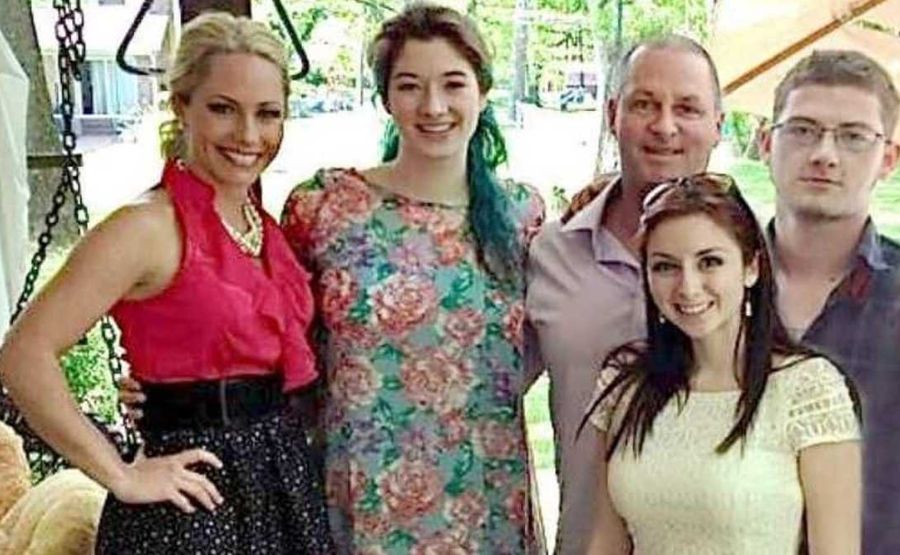
Building LabCanna: The Pioneer Phase
In January 2016, Matthew Chapman and his brother-in-law Derek Besenius co-founded LabCanna Biosciences, Inc. in Nashville. The timing was precise and deliberate. The Federal Farm Bill of 2014 had created a pathway for states to launch Industrial Hemp Research Programs, and Tennessee had moved to establish one. Matthew and Derek were among the earliest participants.
The bet paid off. In April 2016, LabCanna was awarded the first-ever hemp processing license issued by the State of Tennessee. It was also among the first companies to receive a hemp grower’s license in the state. The TenneCBD product line launched before the year was out.
That first-mover advantage is not a minor distinction. In an industry where credibility, legality, and consumer trust would prove to be the primary competitive battlegrounds, holding the inaugural state license established LabCanna as the foundational operation in Tennessee’s emerging hemp economy. It gave the company something money can’t buy: institutional legitimacy from day one.
Matthew’s mother was openly supportive. Amy Grant told Closer Weekly that her son’s company had secured “the first license to process hemp in the state of Tennessee” and added: “I’m very proud of them.” His father Gary, not one to miss a moment of paternal pride, shared a Facebook post around the same time expressing that pride directly: “So proud of my son and the talented young men he collaborates with to produce this incredible product.Many will benefit.”
For a young man who had spent much of his life in proximity to two famous parents without finding his own platform, the enthusiasm of both his estranged parents converging on his achievement was notable.
LabCanna’s Architecture: What He Actually Built
LabCanna is not a boutique CBD shop. It is a vertically integrated cannabis enterprise.
The company grows its own hemp — including on a farm owned by Amy Grant herself, a detail that Sarah Chapman revealed in a profile with nFocus Magazine. It processes that hemp through its own licensed facilities. It manufactures finished products under the TenneCBD brand. It wholesales to other retailers, offers private-label manufacturing services for clients who want to bring their own hemp products to market, and operates its own retail dispensary, LabCanna East, at 1006 Gallatin Avenue in East Nashville.
That retail location opened in January 2019. By the end of that year, Nashville Scene’s readers had voted it Best CBD Retailer in Nashville. The recognition wasn’t a one-time event. LabCanna East has held that title for six consecutive years, a streak that reflects sustained operational quality rather than novelty.
Matthew’s role evolved as the company scaled. He joined initially as Chief Operating Officer in June 2016, managing the logistics of building a regulated hemp business from scratch. By August 2020, he had been elevated to President and Chief Technology Officer, the dual title reflecting both his administrative authority and his ongoing focus on the science and product development side of the business.
Derek Besenius — Matthew’s sister Sarah’s husband — serves as CEO. Sarah works alongside them in the business. The family enterprise structure is unusual but appears to function: multiple accounts describe all three as genuinely hands-on, as likely to be found harvesting hemp on the farm as reviewing financials in the office.
LabCanna has also moved beyond pure commercial interests. The company partnered with the Last Prisoner Project in 2020, raising funds for cannabis prisoners seeking clemency. In 2021, it co-created Cultivate Tennessee, a political action fundraising campaign aimed at advancing thoughtful cannabis policy in the state. Matthew’s public-facing LinkedIn posts reflect an interest in the policy and definitional questions surrounding hemp law — including, notably, a post asking why 0.3% THC became the legal dividing line between hemp and marijuana.
Personal Life: The Deliberate Privacy
Matthew Garrison Chapman is, by the standards of his family’s public lives, essentially invisible.
He maintains no verified public presence on Instagram, Twitter, TikTok, or any other major social platform. He has given no recorded interviews. His photographs in public archives are sparse — one widely circulated image shows him at the Hollywood Walk of Fame in 2006 when Amy Grant received her star, a teenager standing beside famous parents at a ceremony he did not choose.
His relationship status has been the subject of routine speculation on celebrity gossip platforms, but no credible reporting has established a partner, a marriage, or a public romantic life of any kind. Whether he is in a relationship he has successfully kept private, or whether he has simply chosen to remain apart from that particular dimension of public narrative, is not known.
What is known: he lives in NashvilleHe has a strong stake in his company.He attends to the company with a seriousness that multiple sources characterize as genuine rather than performative. And he has consistently declined to leverage his parents’ fame for commercial promotion beyond what Amy Grant has volunteered on her own social channels.
That restraint is either admirable discipline or strategic wisdom, and it may be both.
The Sibling Landscape
Matthew’s relationship with his siblings, while private, provides context for understanding the family he navigated and the one he has built.
His sister Millie — Gloria Mills Chapman Long — moved to New York City, married Ben Long in 2019, and made news not for her famous parents but for donating a kidney to her best friend. The act of generosity helped bring Amy Grant and Gary Chapman together in a hospital waiting room for the first time in years, a moment Amy described to the Tennessean as unexpectedly healing.
His sister Sarah — Sarah Cannon Chapman Besenius — is his business partner. She married Derek Besenius in November 2019 in Nashville, with both her father Gary and her stepfather Vince walking her down the aisle — a detail that speaks to how the blended family architecture eventually settled into something functional.
His half-sister Corrina Grant Gill has moved in the opposite direction from Matthew, embracing her musical inheritance. She began releasing music in 2021 and performs occasionally alongside her parents.
Matthew sits between these trajectories: not publicly visible like Corrina, not quietly distinguished in another city like Millie, but embedded in Nashville, embedded in family, building something with the people closest to him.
Legacy and Lasting Influence
The concept of legacy tends to get attached to the famous. Amy Grant’s legacy is her music, her cultural bridge-building between Christian and mainstream audiences, her decades of recorded work. Gary Chapman’s legacy is the body of songs he wrote and the artists he influenced in CCM circles. Vince Gill’s legacy is a body of country work that earned him 22 Grammy Awards and membership in the Grand Ole Opry.
Matthew’s legacy is quieter but not insignificant.
He helped pioneer an entire regulatory category in his home state. LabCanna’s first-mover status in Tennessee’s hemp economy means that the industry standards, the consumer education infrastructure, the retail experience model — all of it was shaped in part by how Matthew and his partners chose to operate. Subsequent hemp businesses in Tennessee entered a landscape that LabCanna helped define.
The social commitment dimension — the Last Prisoner Project partnership, the pro-cannabis policy advocacy, the needs-based discount program for customers who cannot afford full retail prices — positions LabCanna as something more than a retail operation. It suggests an understanding that building an industry carries some responsibility for the communities that industry affects.
Perhaps most durably, Matthew Chapman demonstrates something useful about what celebrity adjacency can and cannot do. His parents’ fame gave him visibility he did not seek and pressure he did not ask for. It did not give him LabCanna. That took timing, business acumen, a willingness to enter a legally murky industry when it was still genuinely risky, and the ability to build and sustain an organization across nearly a decade. Those qualities are not hereditary.
Final Words
Matthew Garrison Chapman is 38 years old and has spent roughly half his life building a business that most people — even people who know exactly who his mother is — have never heard of.
That anonymity is partly by choice and partly a function of what he decided to build. Cannabis dispensaries are not the stuff of celebrity profiles, not yet. And Matthew does not appear to want a celebrity profile. He appears to want LabCanna to work.
What is striking about his story is how thoroughly it resists the narratives usually imposed on famous people’s children. He is not estranged from his family. He is not squandering a famous name. He is not chasing the spotlight or fleeing it melodramatically. He is simply working, in Nashville, with his sister and brother-in-law, on land that his mother owns, in an industry that didn’t fully exist when he decided to enter it.
There is something genuinely admirable in that. Not because commerce is admirable in itself, but because self-determination in the face of inherited identity is difficult, and Matthew Chapman appears to have achieved it without bitterness or spectacle.
He is, in the end, a man who had every reason to coast on his parents’ names and chose instead to earn his own. Whether that choice constitutes wisdom, stubbornness, or simply temperament, only he knows. What it has produced is real.
FAQs
1. Who is Matthew Garrison Chapman?
He is the eldest child of Amy Grant, the Grammy Award-winning Christian pop singer, and Gary Chapman, a contemporary Christian music singer-songwriter. He was born in Nashville in 1987 and is best known professionally as the co-founder and President/CTO of LabCanna Biosciences, Tennessee’s first licensed hemp processor.
2. Is Matthew Garrison Chapman a musician like his parents?
Not professionally. Despite both his parents being prominent figures in Christian music, Matthew did not pursue a music career. A person named Matthew Garrison who is a jazz bassist is sometimes confused with him, but that is a different individual. Matthew’s professional identity is as an entrepreneur in the hemp industry.
3. Describe LabCanna and explain its significance?
LabCanna is a vertically integrated hemp company based in Nashville that grows, processes, manufactures, and retails hemp and CBD products. Its significance stems partly from being the recipient of Tennessee’s very first hemp processing license in April 2016, making it the foundational hemp enterprise in the state. Its retail location, LabCanna East, has been voted Best CBD Retailer in Nashville for six consecutive years.
4. Who are Matthew’s co-founders at LabCanna?
His primary business partner is Derek Besenius, who is also his brother-in-law through marriage to Matthew’s younger sister Sarah Cannon Chapman. Sarah is also actively involved in the company’s day-to-day operations.
5. What is the relationship between Amy Grant’s farm and LabCanna?
Hemp plants for LabCanna are grown on a farm owned by Amy Grant herself. Amy has expressed public pride in the business, promoting it on her social media channels. The company’s use of her land reflects the family-enterprise nature of the operation.
6. Why did Matthew’s parents divorce?
Amy Grant and Gary Chapman separated in 1998 after 17 years of marriage. Amy filed for divorce in March 1999, citing irreconcilable differences. The marriage had reportedly been troubled for years, with tensions rooted in the significant disparity between Amy’s fame and Gary’s. The divorce was finalized in June 1999.
7. How did Matthew experience the family’s public scandal during the divorce?
He was 11 to 12 years old during the separation and divorce. His mother’s relationship with Vince Gill became a subject of intense public condemnation in evangelical Christian circles. Matthew was not a public participant in any of this, but he lived through it as a young person during a formative period of his adolescence.
8. What is Matthew’s relationship with his stepfather, Vince Gill?
Amy Grant has spoken about the difficult early years of the blended family, acknowledging that her children were not initially pleased about her marriage to Gill. Over time, however, the family stabilized. Gill was reportedly careful to give the Chapman children space. By the time of Sarah Chapman’s 2019 wedding, both Gary Chapman and Vince Gill walked her down the aisle — suggesting the family had reached a workable peace.
9. Is Matthew married?
His marital and relationship status is not publicly known. He has maintained strict privacy regarding his personal life, and no credible source has confirmed a spouse or partner.
10. Does Matthew have a social media presence?
He has interacted professionally on LinkedIn and has a profile linked to LabCanna. He does not appear to maintain verified personal accounts on Instagram, X (formerly Twitter), TikTok, or other consumer-facing platforms.
11. How does LabCanna engage with social causes?
Since 2020, LabCanna has partnered with the Last Prisoner Project, raising funds for cannabis prisoners seeking clemency. It also co-founded Cultivate Tennessee in 2021, a campaign to support pro-cannabis political action in the state. The company operates a needs-based discount program for customers who cannot afford standard retail prices.
12. What is Matthew’s title at LabCanna?
He joined LabCanna as Chief Operating Officer in June 2016. He was promoted to President and Chief Technology Officer in August 2020, reflecting his dual role in executive leadership and the technical/scientific dimensions of product development.
13. How does Matthew’s story differ from typical celebrity children?
Many celebrity children either extend their family’s fame or struggle publicly with the weight of it. Matthew has done neither in conventional ways. He has built a substantial business in a regulated industry without using his famous parents’ names as a marketing tool, without generating tabloid attention, and without apparent drama about his family’s complicated history.
14. What does “vertically integrated” mean in the context of LabCanna?
It means the company controls the full production chain: growing hemp, processing it, manufacturing finished products, and retailing them directly to consumers. This integration gives LabCanna control over quality at every stage and reduces reliance on outside suppliers.
15. What might Matthew’s long-term significance be?
In the broader hemp industry, he is a regulatory pioneer whose early work helped shape the Tennessee hemp market. Within his family, he represents a distinct model: inheriting musical legend without replicating it, and demonstrating that self-determination — even for a celebrity child — is both possible and productive.
Discover more, learn every day, and fuel your curiosity with Daily Discover.