Steve Bartman: The Fan Who Became a Curse, and the Reckoning That Followed
Quick Facts
| Detail | Information |
| Full Name | Steve Bartman |
| Born | October 1, 1977, Chicago, Illinois, USA |
| Nationality | American |
| Hometown | Northbrook, Illinois |
| Education | Notre Dame High School (Niles, IL); University of Notre Dame |
| Occupation | Financial services consultant |
| Known For | Fan interference during 2003 NLCS Game 6 |
| Key Recognition | 2016 Chicago Cubs World Series Championship Ring (received 2017) |
| Spokesperson | Frank Murtha (family friend and lawyer) |
| Notable Absence | Has given no public interviews since the 2003 incident |
A Boy Who Loved Baseball
Before the cameras, the police escort, and the death threats, Steve Bartman was simply a young man from a Chicago suburb who loved the Cubs.
He grew up in Northbrook, Illinois, in a house that sat beside a baseball field. His father used to hit balls for him and his friends to shag in the afternoons. It was the most ordinary kind of childhood imaginable — the kind that produces lifelong fans.
Bartman attended Notre Dame High School for Boys in Niles, Illinois, where he played varsity baseball, participated in theater, and volunteered in his community. He graduated in 1995 and went on to the University of Notre Dame, a school whose name would later strike observers as either fitting or ironic, depending on their theology. After college, he took a position at Hewitt Associates, a business process outsourcing firm in the Chicago area. He was, by every account, a quiet, kind, and thoroughly unremarkable young man.
Outside the office, he coached the Renegades, a youth baseball team for 13- and 14-year-olds based in Niles. He had played for the same team in 1992, the year they went 47-10 and won the Palatine League championship. He traveled to Mesa, Arizona, to watch Cubs spring training. He was, in short, the kind of fan who treats his team’s fortunes as a serious personal matter.
His neighbors and former teachers remembered him without hesitation as good, decent, and funny. One high school friend wrote to the Chicago Tribune after the incident: he was the kind of person you wanted to be around, and he would never do anything to intentionally hurt anyone. His father, when reporters arrived at the family home, said simply that he had taught his son to catch foul balls when they came near.
The father’s comment would be replayed with grim irony in the days that followed.
See also ”Albert Ezerzer: The Man Behind the Credit”
The Night Everything Changed
On October 14, 2003, the Chicago Cubs were five outs from the World Series.
They held a 3-2 series lead over the Florida Marlins in the National League Championship Series. They were winning Game 6 by a score of 3-0 in the eighth inning, with ace pitcher Mark Prior throwing a three-hit shutout.The Cubs hadn’t been to the World Series since 1945.They hadn’t won one since 1908. The entire North Side of Chicago was holding its breath.
Then Luis Castillo of the Marlins hit a high foul ball down the left-field line. Cubs outfielder Moises Alou ran toward the stands and leaped to make the catch. So did several fans sitting in the front row.
Bartman, seated in Aisle 4, Row 8, Seat 113, reached out. His left hand touched the ball first. The ball deflected. Alou didn’t catch it.
Cameras captured Alou’s explosive reaction — jumping up and down, screaming, slapping his knee in fury. The crowd heard the outfielder’s rage and understood it as an indictment. They turned on Bartman almost immediately.
What followed in that same inning was a collapse of historic proportions — but it was not caused by a single deflected foul ball. Castillo walked. Ivan Rodriguez singled. Then Cubs shortstop Alex Gonzalez, a reliable defender, dropped a routine ground ball that could have been an inning-ending double play. The Marlins kept hitting. By the time the carnage was over, Florida had scored eight runs. They won Game 7 the following night and went on to win the World Series.
Bartman had become a scapegoat before the eighth inning even ended.
The Violence of the Crowd
While the Marlins were scoring their eight runs, fans near Bartman began pelting him with debris. Beer. Cups. Insults. The police formed a protective ring around him before the game had finished.
He was led out of Wrigley Field in disguise — a security-arranged exit through a tunnel while thousands booed. His name, home address, and phone number were posted online within hours. Death threats arrived in waves. Television satellite trucks parked outside his family’s home. Illinois Governor Rod Blagojevich, apparently unable to resist performing for cameras, publicly suggested Bartman enroll in a witness protection program. Jeb Bush, the governor of Florida, offered him shelter in a state that his team had recently won.
The reaction was not limited to hot-tempered banter. It was organized, sustained, and genuinely dangerous. Bartman changed his phone number. He went into hiding. He stopped appearing in public. His employers at Hewitt Associates said he was unavailable. His lawyer friend Frank Murtha became his permanent spokesperson and gatekeeper — a role Murtha has maintained for more than two decades.
Five days after the game, the teenage players Bartman had been coaching held a rally for him in a Northbrook park. One of the boys called him a great coach and a great role model, and noted, with the clarity children sometimes have, that the foul ball had nothing to do with the rest of the game.
The boy was correct. Nobody was listening.
The Question Nobody Wanted to Answer
Whether Moises Alou would have actually caught the ball remains genuinely unresolved.
Video analysis — reviewed exhaustively in the years that followed — shows that Bartman was not the only fan reaching for the ball. At least six others extended their hands in the same direction at the same moment. The camera simply happened to frame Bartman most prominently, and Alou’s theatrical fury happened to point in his direction.
Even setting aside the crowd of reaching hands, one fact towers over everything else in the story: after Bartman touched the ball, the Cubs still had one out remaining in the inning. They still held a 3-0 lead. Alex Gonzalez’s error — a routine double-play ball fumbled — extended the inning in a way that had nothing to do with any fan.
Bartman did not cause Alex Gonzalez to drop a ground ball. He did not cause Mark Prior to lose command. He did not cause the Cubs to blow a 3-1 series lead after a catastrophic eighth inning. The sequence of failures that eliminated Chicago required many human beings, most of whom wore uniforms.
But crowds in mourning do not perform statistical analysis. They look for one face to blame, and in 2003, that face was a 26-year-old in a Cubs hat and headphones.
Personal Life: The Weight of Privacy
Almost nothing confirmed is known about Bartman’s private life beyond the publicly established facts.
He has never married publicly, never had children publicly, never returned to Wrigley Field in any documented way, and never commented on the incident in any recorded forum. Every book, documentary, and newspaper investigation that has tried to locate him has had to work through Murtha, and Murtha has consistently delivered one message: Bartman is happy, he is healthy, he remains a Cubs fan, and he values his privacy.
That consistent message, maintained across more than twenty years, tells its own story. Bartman is not hiding in shame. He is protecting something — a life, a self, a set of relationships — that the incident nearly destroyed. He turned down a six-figure offer to appear in a Super Bowl commercial. He turned down hundreds of interview requests. He declined a $25,000 offer to autograph a photo of himself at a sports collectors convention. When KFC mailed him a publicity letter in 2007 offering him free food if he stayed away from playoff games, it received no response.
Each refusal is a statement: his story belongs to him, not to the people who made it famous at his expense.
By 2013, when The New York Times investigated his whereabouts, he was confirmed to be still living in the Chicago area, still working in financial services consulting, still a Cubs fan. His friends from the old Northbrook baseball days did not betray him. The suburb where he grew up did not expose him.
He survived what was done to him. That, finally, may be the most remarkable thing about Steve Bartman.
The Ball, the Documentary, and the Culture
The physical object at the center of the story had its own strange arc.
A Chicago lawyer sitting nearby caught the ball after it deflected and quietly took it home. He later auctioned it for $113,824 to the Harry Caray Restaurant Group, who staged a nationally televised destruction event in February 2004. An Oscar-winning special effects artist used a combination of heat, pressure, and explosives to obliterate the ball outside the restaurant, in a ritual that combined genuine grief with naked theater. The steam captured from the boiling ball was later distilled into a drink offered at the restaurant. The remains went on permanent display in a sports museum.
All of this — the auction, the destruction, the spirit-in-a-glass — was done in Bartman’s name, to address pain he had caused, without his involvement or consent.
In 2011, Oscar-winning filmmaker Alex Gibney directed “Catching Hell,” a 30 for 30 documentary for ESPN. The film earned a 100% rating on Rotten Tomatoes and premiered at the Tribeca Film Festival. Gibney used the Bartman incident as a lens to examine crowd psychology, scapegoating, and the human need to personify collective failure. He drew a parallel to Bill Buckner, the Red Sox first baseman whose error in the 1986 World Series had similarly made him the singular villain in a complex story.
Bartman did not participate. He was, characteristically, nowhere to be found.
Redemption: The Ring
On July 31, 2017, the Chicago Cubs announced they were giving Steve Bartman a 2016 World Series Championship ring.
The Cubs had ended their 108-year title drought the previous fall, defeating the Cleveland Indians in a seven-game series. The championship, long overdue, dissolved much of the anguish that had festered since 2003. With that anguish gone, the organization was free to reckon honestly with what had been done to one of its own fans.
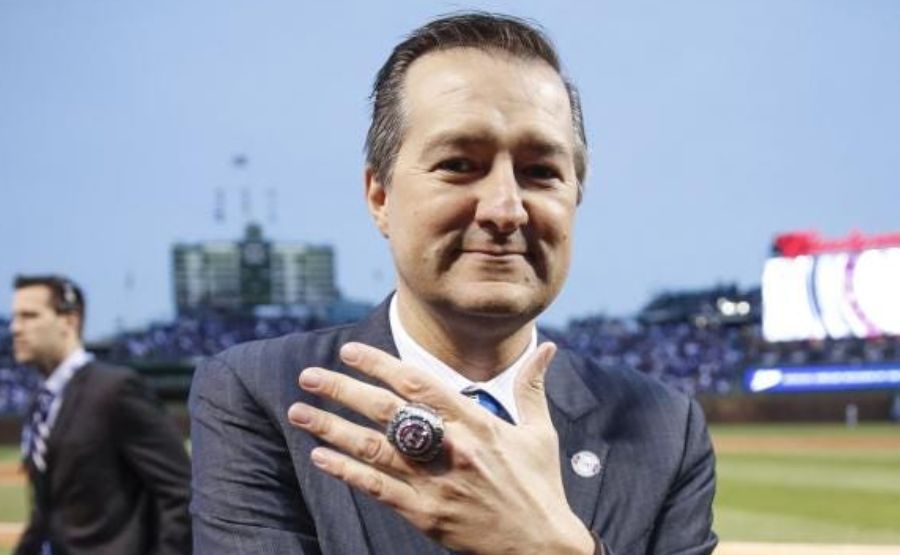
Cubs owner Tom Ricketts presented Bartman with the ring privately in his office at Wrigley Field. Bartman received the staff-tier ring rather than the player-tier version, but the symbolic weight of the gesture was clear. The Cubs statement was direct: “While no gesture can fully lift the public burden he has endured for more than a decade, we felt it was important Steve knows This organization has accepted him wholeheartedly and still does.
Bartman issued his most extensive statement since 2003 in response. He called himself unworthy of the honor, expressed gratitude to the Ricketts family, and said something that reverberated beyond the world of baseball:
“I hope that my experience will teach us all to see sports as entertainment, avoid harsh scapegoating, and confront the media and opportunistic profiteers for their actions.”business responsibly by upholding people’s right to privacy and refraining from using anyone for financial advantage or self-interest.”
That sentence — careful, measured, and impossible to misread — was the closest Bartman had come in fourteen years to speaking his truth publicly. He said that he would not give interviews or make further statements. He said he was relieved. He said he hoped the healing could begin.
Then he went quiet again.
Legacy and Influence
Steve Bartman is the most famous anonymous person in American sports.
His name is invoked whenever a fan interferes with a play. His story is taught in sociology courses on mob mentality. The ESPN documentary about him has been watched and re-watched by researchers, journalists, and athletes trying to understand how ordinary people become symbols of collective failure.
He has influenced how teams, players, and broadcasters discuss fan interference. After 2003, there was a genuine cultural reckoning with the reflexive impulse to blame a single fan for an entire inning’s collapse. Analysts began citing Bartman as a case study in faulty causation and misplaced anger. Players — including Moises Alou himself, who later acknowledged he likely would not have made the catch anyway — came forward in subsequent years to complicate the official narrative.
The Bartman seat — Aisle 4, Row 8, Seat 113 at Wrigley Field — became a tourist attraction. It is covered in Cubs stickers and regularly photographed by fans.
His story also shaped how the Cubs organization eventually communicated about its painful past. The decision to give Bartman the ring was not merely sentimental; it was an institutional acknowledgment that the team’s most devoted supporters had treated one of their own with stunning cruelty. The gesture mattered more than the ring.
More broadly, Bartman’s case has become a reference point for any discussion of how social media and crowd behavior amplify punishment. In 2003, before Twitter and Facebook existed in their current forms, his personal information spread virally across message boards and email chains. Observers have returned to his story repeatedly in the years since to ask: what would happen today, with the amplification those platforms provide?
The answer, they generally conclude, would be considerably worse.
Final Words
Steve Bartman did something that dozens of fans in those same stands were doing at the same moment. He reached for a foul ball. He touched it. He did not drop a ground ball. He did not walk a batter. He did not give up eight runs.
He was twenty-six years old. He was wearing headphones and watching his team close in on history. He loved the Cubs — had traveled to Arizona to watch them in spring training, had coached their youngest fans in suburban parks, had grown up beside a baseball field.
What happened to him was disproportionate in the way that mob behavior always is. The crowd needed a story, a face, a single point of blame for an enormity too complicated to assign to anyone in particular. Steve Bartman was in the wrong seat at the wrong moment, and the crowd supplied the rest.
The twenty years that followed were, in their own way, a referendum on character. He never sold his story. He never sought sympathy on camera. He never tried to transform his suffering into income or celebrity. He simply kept living, quietly, in the city that had tried to drive him from it.
When the Cubs finally won, and when they offered him a ring, he accepted it without fanfare or score-settling. His statement was gracious. His request was simple: leave him alone, and stop doing this to other people.
That combination — endurance, integrity, restraint, and the willingness to frame his experience as a lesson rather than a wound — is not a small thing. It may be the most admirable thing about the whole story.
He was made into a symbol against his will. He chose not to become one.
FAQs
1. What exactly did Steve Bartman do during the 2003 NLCS?
During the eighth inning of Game 6, with the Cubs leading 3-0 and five outs from the World Series, Bartman and several other fans reached for a foul ball hit by Florida’s Luis Castillo. The ball deflected off Bartman’s hands and away from Cubs outfielder Moises Alou. The Marlins went on to score eight runs in the inning and won both Game 6 and Game 7.
2. Was Bartman the only fan reaching for the ball?
No, it is evident from photos and video analysis that at least six other supporters are grabbing for the same ball at the same time. Bartman was simply the one the camera framed most prominently, and Alou’s reaction drew public attention specifically to him.
3. Would Alou definitely have caught the ball without the interference?
Genuinely uncertain. Alou himself later suggested he probably would have made the catch, but independent video analysis has not produced a definitive answer. What is certain is that even if the catch had been made, the Cubs still had to navigate the rest of the inning with a lead.
4. Did the foul ball cause the Cubs to lose the series?
No single play caused the Cubs to lose. After Bartman touched the ball, the Cubs still led 3-0 with one out remaining in the inning. A subsequent error by shortstop Alex Gonzalez on what should have been an inning-ending double play extended the Marlins’ rally far more consequentially than the foul ball.
5. How did Bartman’s life change after the incident?
He received death threats, had his personal information posted online, and went into effective hiding. He changed his phone number, avoided all public appearances, and communicated only through spokesperson Frank Murtha. He declined hundreds of interview requests and substantial commercial offers over the following two decades.
6. Did Bartman apologize for the incident?
Shortly after the game, his brother-in-law issued a statement expressing deep regret for the Cubs’ loss and sympathy for the players, coaches, and fans. Bartman himself has described his actions as unintentional and has expressed hope that his experience could teach others to avoid harsh scapegoating.
7. What happened to the actual ball?
A Chicago lawyer who retrieved the loose ball auctioned it for $113,824 to the Harry Caray Restaurant Group. The restaurant staged a nationally televised destruction event in February 2004, obliterating the ball with explosives in what was equal parts civic ritual and public spectacle.
8. What is the “Catching Hell” documentary?
A 2011 ESPN 30 for 30 film directed by Oscar-winning filmmaker Alex Gibney. It used Bartman’s story to examine the psychology of scapegoating in sports, drawing a parallel to Red Sox first baseman Bill Buckner and the 1986 World Series. The film earned universal critical praise but did not include Bartman’s participation.
9. Did Bartman ever return to Wrigley Field?
Not publicly. The Cubs invited him to return in 2013; he declined. His receipt of the World Series ring in 2017 took place in Cubs owner Tom Ricketts’ private office rather than in the stadium or before the public.
10. Why did the Cubs give Bartman a World Series ring?
After the Cubs’ 2016 championship ended their 108-year title drought, the organization chose to formally extend an olive branch to Bartman, acknowledging that he had suffered unfairly. The gesture was both symbolic and institutional — an organizational admission that Bartman had been treated unjustly by the fanbase.
11. Where is Steve Bartman today?
He continues to live quietly in the Chicago area, working in financial services. His spokesperson has confirmed he remains a Cubs fan. He has not given public interviews and has stated he does not plan to do so.
12. What did Bartman say when he received the ring?
He issued a written statement expressing gratitude, describing himself as “deeply moved” but “not worthy” of the honor. He thanked the Cubs organization by name, expressed hope that the gesture would begin a broader healing process, and specifically called out “harsh scapegoating” and “opportunistic profiteers” who exploit individuals for personal gain. He then declined all further interviews.
13. Is Steve Bartman considered a victim today?
Broadly, yes — though it took years for that consensus to form. Analysts, former players, and much of the Chicago fanbase now acknowledge that Bartman was unfairly singled out for a play that had multiple contributing factors, and that the treatment he received was grossly disproportionate to anything he could reasonably be held responsible for.
14. Did Moises Alou ever address his role in the incident?
Yes. In later years, Alou acknowledged that his dramatic reaction in the moment — the visible fury and outburst — contributed significantly to the crowd’s focus on Bartman. He has also indicated in various interviews that he was not certain he would have made the catch.
15. What is Bartman’s broader cultural significance?
He has become a defining case study in fan behavior, mob psychology, scapegoating, and media ethics. His story is cited in discussions of how crowds process collective failure, how social media amplifies punishment, and how the sports industrial complex can consume private individuals. He is, in the eyes of many observers, the clearest example in American sports history of an innocent person destroyed by manufactured blame.
Discover more, learn every day, and fuel your curiosity with Daily Discover.