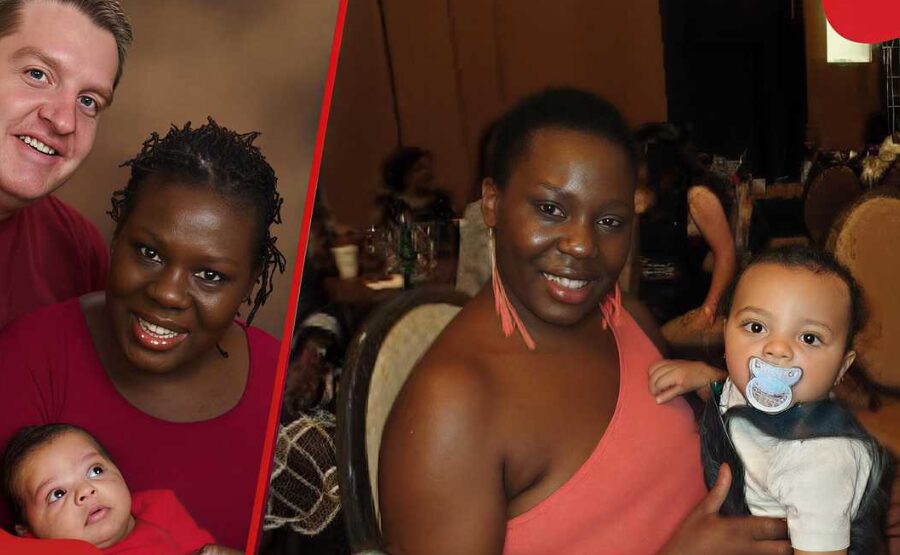
Linda Bazalaki: The Woman Who Kept Reinventing Herself
She won a crown at twenty, reshaped Uganda’s airwaves, went viral before “going viral” was a concept, and then quietly traded the spotlight for a stethoscope — and her story still matters because it refuses to end on a single note.
Quick Bio
| Detail | Information |
| Full Name | Linda Bazalaki |
| Estimated Birth | Early-to-mid 1970s, Kampala, Uganda |
| Nationality | Ugandan (resident in the United States) |
| Education | Bachelor of Commerce, Makerere University, Uganda |
| Major Title | Miss Uganda 1993; represented Uganda at Miss World 1993 |
| Career Roles | Actress · Voice artist · Air hostess · Loan officer · Registered nurse · Family Nurse Practitioner (FNP) |
| Spouse | Curtis Lahti (married 2008, Las Vegas) |
| Children | Two (details kept private) |
| Current Base | Mesa, Arizona / Las Vegas, Nevada, USA |
| Claim to International Fame | Viral stadium jumbotron marriage proposal, 2008 |
| Notable Firsts | First voice-over artist on Uganda’s first privately owned FM radio station; first voice-over on Uganda’s first privately owned TV station |
| Philanthropic Focus | Healthcare access initiatives in Uganda and the United States |
The Shape of a Life That Refuses Easy Labels
Uganda in the early 1990s was a country in recovery. Idi Amin’s devastation was barely a decade in the rearview mirror. Milton Obote had come and gone a second time. What replaced those years of ruin was something tentative and hungry: new institutions, new media, new ambition. It was into this particular moment that Linda Bazalaki stepped, first as a student actress at Makerere University, then as a beauty queen, then as something harder to classify.
She has been, over the course of roughly three decades, almost too many things to keep track of. That’s exactly what makes her intriguing.
See also ”Charles Ezekiel Mozes: A Life Defined by Chosen Quiet”
Origins: Kampala and a Classroom Stage
Linda Bazalaki grew up in Kampala, Uganda’s sprawling, hilly capital, in a household that put a premium on education and personal discipline. The specifics of her early schooling remain largely outside the public record — a feature common to her generation, who came of age before social media demanded a curated origin story.
What her own professional records reveal, however, is a striking theatrical thread. She was the lead actress in her school’s productions for six consecutive years, from 1986 to 1992, and was nominated best actress three years running during her time at Makerere University. That is not a footnote. That is a decade of sustained artistic commitment in a young woman who had not yet become publicly famous for anything.
Makerere, Uganda’s flagship public university, is where she pursued a Bachelor of Commerce — a degree that would prove unexpectedly useful across the many professional phases to come. She was clearly not someone who saw herself as purely ornamental, even at a point in her life when ornamental talent was the easiest path forward.
The Crown: Miss Uganda 1993
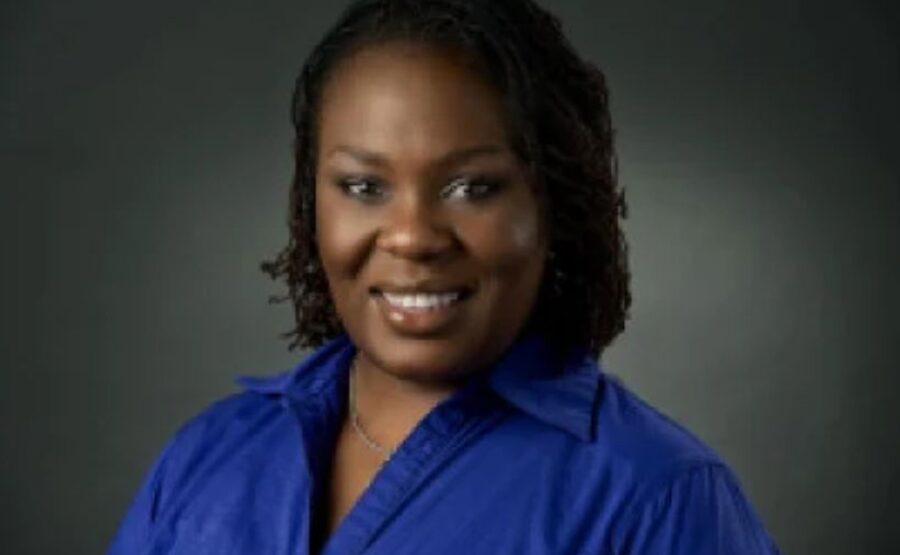
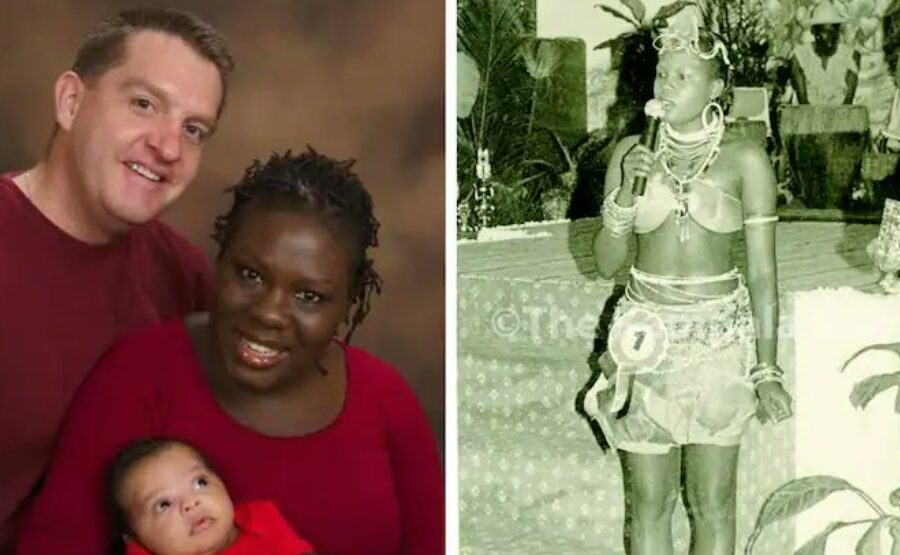
In 1993, Linda Bazalaki entered the Miss Uganda competition and won. She then represented her country at the Miss World pageant that same year — one of the most established international beauty competitions on earth.
The Ugandan pageant of that era was not the polished institution it would eventually become. It operated during a transitional period, still building consistency, still calibrating between local cultural relevance and international aspiration. Winning it required something more than looks: it demanded composure under pressure, the ability to carry a country’s pride, and the poise to represent a nation whose people were still, in many respects, rebuilding their sense of national identity.
Bazalaki embodied all of that. Contemporary accounts describe a woman of exceptional elegance and calm — not the manufactured serenity of someone coached to perform grace, but what appeared to be the real thing. Her self-composed poem, which she performed as part of her talent segment, spoke of love’s depths with literary weight. She didn’t reach for easy applause. She reached for substance.
The Firsts Nobody Talks About Enough
The beauty queen chapter is the one most people reach for first when they write about Linda Bazalaki. But her Voice123 professional profile — written in her own words — tells a more quietly radical story.
Before Uganda had a private FM radio station at all, she became the first voice-over artist on one when it launched. She then became the first voice-over on Uganda’s first privately owned television station. She wrote the broadcast scripts herself. She trained other voice artists. This was not a hobby or a pageant spin-off. This was founding-era work in an entirely new media ecosystem.
Uganda’s private broadcast market was embryonic in the early-to-mid 1990s. The state had long controlled the airwaves. When liberalization cracked that monopoly open, the new stations needed not just equipment but voices — people who could anchor the sound of something that had never existed before. Bazalaki was one of those people. She helped define what Ugandan commercial broadcasting sounded like from its very first days.
That is a historically significant fact. It tends to get lost in the headline about the baseball proposal.
Taking to the Skies: Alliance Air
At some point following her reign and her broadcast work, Bazalaki joined Alliance Air — the regional carrier associated with Captain Roy — as an air hostess. The role carried her across Africa and beyond, sharpening a facility with different cultures and professional environments that would define her later transitions.
In the 1990s, working as a flight attendant on an African airline was difficult but not particularly glamorous.It required discretion, adaptability, and the ability to manage others under pressure. For a woman who had spent years performing, voicing, and representing — and who held a commerce degree — the role made a kind of logical sense. She was, by this point, fluent in public-facing work.
The airline chapter also marked the beginning of her drift toward the world beyond Uganda. Her horizons were expanding, professionally and geographically.
Crossing Continents: America and Reinvention
Linda Bazalaki eventually relocated to the United States, a move that reshaped everything. She worked for a time as a loan officer in Las Vegas — a long distance, temperamentally and professionally, from the broadcast booth in Kampala or the catwalk of Miss Uganda. Yet the commerce degree made sense here too.
Then came the most unexpected reinvention of all. She retrained as a registered nurse and later qualified as a Family Nurse Practitioner. She currently practices in Mesa, Arizona, at Sun Valley Medical Centre. She has also served as Executive Assistant for Client Services at Aid For AIDS of Nevada, an organization focused on HIV/AIDS support services — work that reflects a sustained commitment to public health rather than a detached celebrity association.
The transition from beauty queen to healthcare practitioner is not as unusual as it might sound for women of her generation from East Africa, where community service and professional reinvention often run parallel tracks. But the depth of the reinvention — the years of nursing study, the clinical qualification, the specialist FNP credential — signals something deliberate. She was not trading on her name. She was building something new with her hands.
The Moment That Made Her Global
On May 31, 2008, inside a Major League Baseball stadium in Washington D.C. — Nationals Park, during a Washington Nationals game — a man named Curtis Lahti decided to propose to his girlfriend on the jumbotron kiss cam.
The woman he proposed to was Linda Bazalaki.
Her reaction — stunned, deeply moved, overwhelmed — was the kind of authenticity that television cameras almost never catch. It spread first through sports highlight packages, then through early YouTube sharing, then through the nascent blog culture of 2008, and then — years later — it resurfaced repeatedly on social media platforms in an era that had no shortage of proposal videos but still found this one distinctive.
Some sources describe this as a Seattle Mariners game; others place it at Nationals Park during a Washington Nationals contest. The discrepancy in reporting reflects the informal way the video spread. What is not in dispute is that the proposal was real, the reaction was genuine, and the clip circulated far beyond what anyone anticipated.
She said yes.
Later that year, they tied the knot in Las Vegas.
Personal Life: Privacy as a Value
Curtis Lahti and Linda Bazalaki are parents to two kids.Beyond that, almost nothing is confirmed in the public record — and that is entirely by design.
In an era when “influencer” culture demands granular personal disclosure, Bazalaki’s refusal to perform her family life publicly stands out as a considered position rather than evasiveness. She maintains an active presence on Instagram and Facebook, sharing fashion content, African beauty aesthetics, and glimpses of her lifestyle, but she has consistently kept her children and the details of her marriage away from public view.
What is publicly known about Curtis Lahti is minimal: he is described as an entrepreneur, a private individual, and by all verified accounts, a dedicated partner. Their marriage has lasted well over fifteen years.
The couple’s approach to privacy runs counter to the current incentive structure of social media, which rewards disclosure and personal exposure. That they have maintained both a public profile and genuine personal boundaries is itself a form of quiet resistance.
The Question of Legacy
What does Linda Bazalaki’s life add up to?
It depends on which chapter you’re reading. In Uganda, she remains a touchstone of early 1990s pageant history — a name invoked whenever the evolution of Miss Uganda is discussed. For media historians with an interest in sub-Saharan broadcast development, her role as the founding voice of private FM radio and television in Uganda is genuinely significant, even if underchronicled.
For a generation of internet users, she is the woman in that baseball video — the one whose reaction reminded people what unscripted joy actually looks like.
For her patients in Mesa, Arizona, she is a nurse practitioner who chose a career of direct human service after a life in the spotlight.
None of these versions of her story is incomplete. Each is real. The interesting thing about Linda Bazalaki is that all of them coexist in a single person who appears to have moved through each phase without obvious anxiety about losing the previous one.
She represents a model of public life that is increasingly rare: one in which early fame becomes a foundation rather than a ceiling, and in which reinvention is treated not as desperate adaptation but as natural extension.
Lasting Influence
Her impact on Uganda’s beauty pageant culture is difficult to quantify precisely, but she is routinely cited in retrospectives about the Miss Uganda competition as a benchmark of the title’s early serious representation on the international stage. Contestants who competed in the years following her reign encountered an institution that her participation had helped legitimize.
Her broadcast first matters in a different register. Uganda’s private media sector is now decades old and employs thousands. The people who built it in its first years — who became its first voices — did foundational work. Bazalaki was among them.
Her healthcare career, combined with her charity work supporting Ugandan healthcare access, adds another dimension: she did not use her public platform merely to extend her visibility. She converted it into something with a longer half-life.
Her viral moment, accidental as it was, contributed something smaller but not trivial: proof, in 2008, that authentic emotion still cuts through noise. That the clip continues to circulate in 2026 says something about the enduring appetite for unperformed feeling.
Final Words
Linda Bazalaki is not a figure whose history has been treated lavishly. There is no definitive biography, no exhaustive archive, no dedicated museum wing. Much of what is written about her online is imprecise — sources contradict each other on dates, confuse sports venues, and reach for drama where the facts are simply quiet.
What emerges, when you strip away the inaccuracies and look at the documented record, is the portrait of a woman who has been more accomplished than her public profile suggests, more private than her online presence implies, and more resilient than the feel-good framing of her viral moment allows.
She grew up at Makerere performing Shakespeare when Uganda’s democracy was still fragile. She helped launch private broadcasting when there was no template for it. She flew international routes for a regional airline during a period of enormous continental change. She studied nursing as a mature student in a foreign country. She raised two children largely out of the public eye.
She also appeared on a jumbotron looking genuinely surprised by love, and that three-second reaction has outlasted almost everything else in the public record.
There is something instructive in that imbalance — in the way a single unguarded moment can carry more biographical weight than decades of deliberate professional achievement. It is not a fact that flatters either media culture or the internet’s appetite for content. But it is, at least, a true fact about Linda Bazalaki: that whatever she has done, however she has changed, she remains recognizably herself.
That is not nothing. In the lives of public figures, it may be the hardest thing to hold on to.
FAQs
1. Who is Linda Bazalaki?
Linda Bazalaki is a Ugandan-born public figure best known as Miss Uganda 1993. She later worked as a broadcast voice artist, air hostess, loan officer, and is currently a Family Nurse Practitioner based in Mesa, Arizona. She is also known for her viral jumbotron marriage proposal in 2008.
2. When was Linda Bazalaki born?
Her exact birth date has not been publicly confirmed. Most reputable estimates place her birth in the early-to-mid 1970s, which would make her somewhere in her early-to-mid fifties as of 2026.
3. What did Linda Bazalaki win in 1993?
She won the Miss Uganda title and subsequently represented Uganda at the Miss World 1993 international pageant.
4. What were her broadcast firsts in Uganda?
According to her own professional profile, she was the first voice-over artist on Uganda’s first privately owned FM radio station, and separately the first voice-over on Uganda’s first privately owned TV station. She also wrote scripts and trained other voice artists at both outlets.
5. What was her education?
She holds a Bachelor of Commerce from Makerere University in Kampala, Uganda. She later pursued nursing qualifications in the United States, ultimately becoming a licensed Family Nurse Practitioner (FNP).
6. Who is Curtis Lahti?
Curtis Lahti is Linda Bazalaki’s husband, whom she married in Las Vegas in 2008. He is described as an entrepreneur. He keeps a very low public profile.
7. What happened at the 2008 baseball game?
During a Major League Baseball game in Washington D.C., Curtis Lahti proposed to Linda Bazalaki live on the stadium jumbotron kiss cam. Her authentic, emotional reaction was captured on camera and spread widely online, becoming one of the earliest viral sports proposal moments.
8. Do they have children?
Indeed, Linda Bazalaki and Curtis Lahti are parents to two children.They have kept all details about their children private.
9. Where does Linda Bazalaki live and work now?
She lives in the Las Vegas area and practices as a Family Nurse Practitioner at Sun Valley Medical Centre in Mesa, Arizona. She has also worked with Aid For AIDS of Nevada.
10. Does she still work in media or voice-over?
She maintains profiles on voice-over platforms and continues to be active on social media. Her primary professional identity is currently in healthcare, though her media background remains part of her documented career.
11. What languages does she speak?
Public sources do not comprehensively document her languages, but her broadcasting work, international travel career, and long residency in the United States suggest fluency in English. As a Ugandan, Luganda and possibly other local languages are likely part of her background.
12. What philanthropic work has she done?
She has participated in charitable healthcare initiatives in Uganda and supported HIV/AIDS service organizations in the United States through her professional work with Aid For AIDS of Nevada.
13. Is she active on social media?
Yes. She maintains an Instagram and Facebook presence where she shares fashion, beauty, and lifestyle content informed by African aesthetics. She is selective in what she shares and avoids publicizing her children or private family life.
14. Why does her story attract sustained public interest?
Her story combines several elements that resonate independently: a historic pageant win, genuine broadcasting firsts, a romantic viral moment, and a professional reinvention into healthcare. Each audience finds a different entry point.
15. What is the single most underappreciated fact about Linda Bazalaki?
Her role as a broadcast pioneer. Being the founding voice of private FM radio and private television in Uganda is historically significant work that tends to be overshadowed by the pageant crown and the jumbotron video. It deserves fuller recognition.
Discover more, learn every day, and fuel your curiosity with Daily Discover.